IndexStyle

A dictionary of design styles, written from the works themselves.

It is plain HTML. It opens on any browser and any device, with no app and no account, and machines read the same page.

Terms776

Dictionary

Search by style name or describe what you are making. Name matches come first; purpose, desired effect and medium add relevant alternatives.

TryBauhausa premium recruiting websitea trustworthy finance app

24/776 shown

625

Pixilation — AI-generated interpretation
AI interpretation, not a reference

Pixilation

ピクシレーション / 1910s– / Technique / Animation Techniques

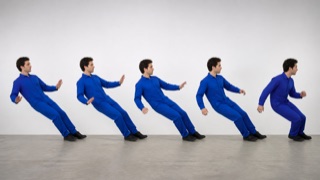
Pixilation treats live actors as stop-motion figures, photographing one held pose at a time. It turns walking into gliding and makes impossible movement or substitution while keeping real bodies and real places on screen.

People gliding without stepping / Rigid body movement jumping between staged poses / People or objects appearing, disappearing or exchanging in one frame / Real streets and rooms where only gravity and time become discontinuous
design.mdimage prompt

626

Hurufiyya — AI-generated interpretation
AI interpretation, not a reference

Hurufiyya

フルーフィーヤ / mid-20th century– / Style / Modern and Contemporary Art Movements

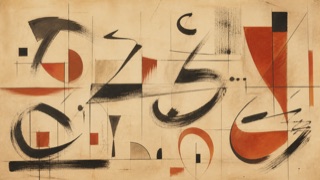
From the mid-twentieth century, Hurufiyya transformed Arabic words, fragments and individual letters into elements of modern painting, sculpture and graphic composition rather than reproducing traditional calligraphy. Letters move among meaning, bodily mark, cultural identity and abstract form.

Repeated single Arabic letters or partly unreadable fragments / Writing embedded in grids, spirals, color fields or figures / Hand pressure coexisting with modern abstract composition / Deliberate switching between legibility and pure form

design.mdimage prompt

627

Saqqakhaneh — AI-generated interpretation
AI interpretation, not a reference

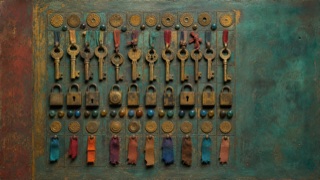
Saqqakhaneh

サッカーハーネ派 / late 1950s–1960s / Style / Modern and Contemporary Art Movements

In late-1950s and 1960s Iran, Saqqakhaneh artists reworked street shrines, votive objects, talismanic seals, locks, beads, numbers and letters into modern repetition, accumulation and abstraction in painting and sculpture.

Repeated talismanic seals, numbers and letters filling the field / Accumulations of locks, keys, beads, ribbons and votive objects / Tightly gridded or axially compressed talismanic composition / Layered earth, metal, turquoise and red surfaces

design.mdimage prompt

628

Casablanca Art School — AI-generated interpretation
AI interpretation, not a reference

Casablanca Art School

カサブランカ美術学校 / 1962–1970s / Style / Modern and Contemporary Art Movements

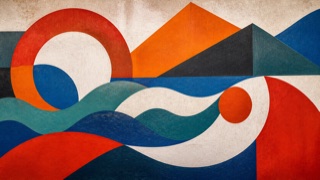
In post-independence Morocco, the Casablanca Art School challenged colonial art education by connecting abstraction to Amazigh rugs, jewelry, calligraphy and painted ceilings, then carrying the same language beyond framed painting into posters, magazines, street exhibitions and murals.

Geometric and organic abstraction built from flat color and contour / Repetition and symmetry learned from Amazigh rugs, jewelry and signs / Strong red, orange, blue and green on earth color or white / One language crossing painting, poster, magazine and outdoor mural

design.mdimage prompt

629

Khartoum School — AI-generated interpretation
AI interpretation, not a reference

Khartoum School

ハルツーム派 / 1960s–1970s / Style / Modern and Contemporary Art Movements

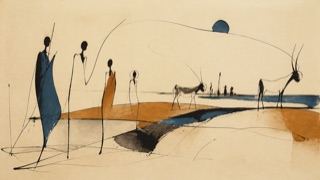
In post-independence Sudan, the fluid and contested Khartoum School recombined African, Islamic, Arab and Western references within modern art. Arabic calligraphic rhythm, simplified people and animals, local craft and narrative moved into abstraction.

Arabic writing transforming into human, animal and abstract contours / Groups of elongated bodies and mask-like faces / Wide space and line in ink, earth color, blue and white / Local craft and story sharing a field with modern painting

design.mdimage prompt

630

Nsukka Group — AI-generated interpretation
AI interpretation, not a reference

Nsukka Group

ンスッカ・グループ / 1970s– / Style / Modern and Contemporary Art Movements

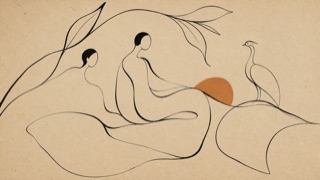
Around the University of Nigeria, Nsukka, Uche Okeke and later artists extended the flowing lines of uli body and wall drawing and signs including nsibidi into contemporary work on paper, print, textile and sculpture. Fine line and open ground carry narrative and abstraction together.

Long flowing black lines with changing weight / Large negative shapes and open ground enclosed by line / People, animals and plants compressed into signs / Uli and nsibidi references crossing paper, textile, print and sculpture

design.mdimage prompt

631

Punk Fashion — Punk dress in Paris, 1981 — photo attributed to Gilui in the uploader’s copyright claim — No machine-readable author provided. Gilui assumed (based on copyright claims). — Wikimedia Commons / CC BY-SA 2.5

Punk Fashion

パンク・ファッション / mid-1970s– / Style / Subculture Style

Punk fashion grew from 1970s music, shops and street culture, cutting, fastening and rewriting ready-made clothing into a confrontational message that included body and hair. DIY alteration, restraint hardware, metal and slogans made dress an editable medium rather than a finished commodity.

Torn T-shirts with exposed seams and fasteners / Safety pins, chains, zips and bondage hardware / Handwritten slogans, band names and repurposed insignia / Upright hair, hard makeup and body piercings

design.mdimage prompt

632

Airbrush Surrealism — AI-generated interpretation
AI interpretation, not a reference

Airbrush Surrealism

エアブラシ・シュルレアリスム / late 1960s–mid-1980s / Style / Illustration Styles

A commercial-illustration style that uses seamless airbrushed gradients to place realistic objects at impossible scales and positions. Gloss, space, lightning, and diagrammatic cutaways merge into images that look more perfect than photographs and stranger than reality.

Realistic objects floating in dark space / Seamless gradients across chrome, glass, and skin / Lightning, stars, rainbows, and luminous diagram lines / Dream logic built from conflicting scales and viewpoints

design.mdimage prompt

633

Blob World — AI-generated interpretation
AI interpretation, not a reference

Blob World

ブロブ・ワールド / mid-2010s– / Style / Digital Art

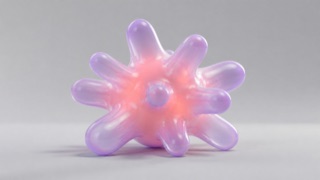
A 3D illustration and motion style built from meticulously rendered soft masses, membranes, hair, and fluids. It makes tactility legible before object identity, placing corporate and music imagery between playfulness and unease.

Rounded 3D masses with no obvious function / Overstated wet, furry, translucent, or rubbery surfaces / Holes, folds, and protrusions that suggest bodies / A central form slowly deforming in an empty space

design.mdimage prompt

634

Corporate Cyberspace — AI-generated interpretation
AI interpretation, not a reference

Corporate Cyberspace

コーポレート・サイバースペース / early–late 1990s / Style / Digital Retro

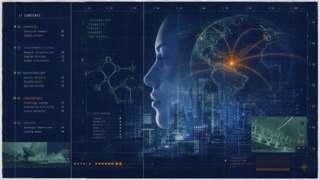
A 1990s commercial style that places the novelty of DTP, telecom, biotech, and multimedia between experimental typography and corporate order. Distortion and transparency appear without destroying the information structure.

Thin sans-serif type stretched, blurred, or made translucent / Digital collages of people, circuits, molecules, and cities / Blue-violet, green, and orange glowing on dark grounds / Corporate order retained through hairlines, numbers, and coordinates

design.mdimage prompt

635

Corporate Grunge — AI-generated interpretation
AI interpretation, not a reference

Corporate Grunge

コーポレート・グランジ / late 1980s–mid-1990s / Style / Contemporary Branding

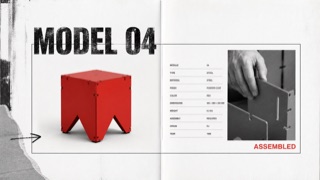
A controlled transfer of distressed type, rupture, and layering from music publishing into corporate advertising and product catalogues. Illegibility is not the goal; traces of rebellion sit around otherwise ordered product information.

Distressed or overprinted display headlines / Tilted subheads alongside orderly body copy / Rough monochrome photography with one red or yellow overprint / Torn edges, hand marks, and copier noise used selectively

design.mdimage prompt

636

Cyberdelia — AI-generated interpretation
AI interpretation, not a reference

Cyberdelia

サイバーデリア / late 1980s–mid-1990s / Style / Digital Retro

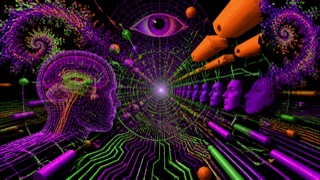
A style that imagines early cyberculture as psychedelic perceptual expansion rather than a cold terminal. Fractals, kaleidoscopes, acid color, and coarse 3D lettering connect rave, CD-ROM, and hacker-era futurism.

Fractal, kaleidoscopic, and vortex repetition / Fluorescent green, violet, and orange glowing on black / Deeply extruded early 3D type and wireframes / Eyes, brains, circuits, and space layered as expanded perception

design.mdimage prompt

637

Deco-Luxe — AI-generated interpretation
AI interpretation, not a reference

Deco-Luxe

デコ・リュクス / early–late 1980s / Style / Historical Styles

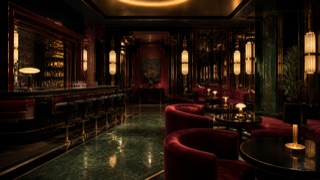
An 1980s revival that reconnects Art Deco and Streamline Moderne with wealth, finance, hotels, and nocturnal consumption. It is darker and glossier than its source period, using metal and mirrors to stage success itself.

Black, deep green, or burgundy with gold and brass / Fans, steps, rays, and streamlines repeated at large scale / Strong reflections from mirror, polished stone, and lacquer / Narrow geometric lettering with wide tracking and symmetry

design.mdimage prompt

638

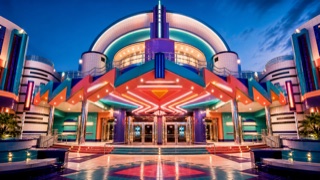
Decoplex — AI-generated interpretation
AI interpretation, not a reference

Decoplex

デコプレックス / early 1990s– / Style / Historical Styles

A third-wave Deco revival mixing Golden Age Hollywood, early aviation, and WPA mural memory into 1990s entertainment architecture and commercial graphics. It is brighter, more dimensional, and more narrative than Deco-Luxe.

Geometric wings, clouds, globes, stars, and aircraft / Stepped entrances, giant columns, and exaggerated-perspective murals / Bright teal, violet, gold, and coral / Metallic dimensional type inside theatrical symmetrical frames

design.mdimage prompt

639

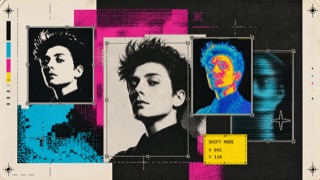
Early Cyber — AI-generated interpretation
AI interpretation, not a reference

Early Cyber

アーリー・サイバー / late 1980s–early 1990s / Style / Digital Retro

A visual language exposing the first shock of Macintosh and desktop publishing tools freely distorting text, photographs, thermal images, and pixels. Discovery matters more than finish, leaving screen and print boundaries visibly unstable.

Coarse bitmap, thermal, and low-resolution portraits / Stretched, inverted, or bitmapped type / Irregular windows, tools, coordinates, and cursor fragments / Fluorescent color over monochrome early-DTP experiments

design.mdimage prompt

640

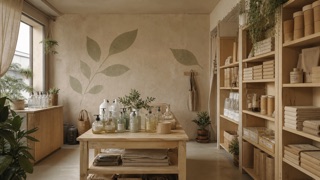
Eco-Beige — AI-generated interpretation
AI interpretation, not a reference

Eco-Beige

エコ・ベージュ / late 1980s–mid-1990s / Style / Furniture and Interiors

An early-1990s consumer aesthetic that turns away from 1980s gloss through unbleached cloth, branches, pale wood, earth walls, and natural color. It is less raw nature than a staged appearance of restraint and environmental virtue.

Low-saturation ecru, sand, and pale gray-green / Linen, raffia, branches, pale wood, and rough plaster / Small serif type and widely spaced labels / Quiet product photography arranging plants and craft materials

design.mdimage prompt

641

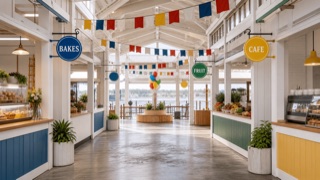
Festival Marketplace — AI-generated interpretation
AI interpretation, not a reference

Festival Marketplace

フェスティバル・マーケットプレイス / early 1980s–early 1990s / Style / Signage and Display

A postmodern commercial-space style that simplifies old ports and markets into flags, balloons, carts, and painted signs, making walking itself festive. It edits the past as a stage for shopping and tourism rather than preserving it literally.

Continuous overhead flags, banners, balloons, and confetti / Circular marks, dotted dividers, and cheerful serif type / Small repeats of red, blue, yellow, and green on white / Carts and signs pulling sightlines along a pedestrian route

design.mdimage prompt

642

Frasurbane — AI-generated interpretation
AI interpretation, not a reference

Frasurbane

フラサーバン / late 1980s–mid-1990s / Style / Publishing and Editing

An early-1990s style that quiets grunge disruption for affluent, suburbanized adult publishing and advertising. Serif type, classical illustrations, and soft-focus photography are slightly displaced by underlines and overlap to stage an urbane life.

Mixed-weight and italic serif type with long underlines / Classical sculpture, armillary spheres, botanical plates, and old machinery / Sepia or monochrome soft-focus product photography / Textured paper and wide whitespace with small misalignments

design.mdimage prompt

643

Global Village Coffeehouse — GVC Coffee Cup — contemporary graphic example by Kariyahunter, 2025; not a historical 1990s artefact — Wikimedia Commons / CC0

Global Village Coffeehouse

グローバル・ヴィレッジ・コーヒーハウス / late 1980s–mid-1990s / Style / Illustration Styles

A commercial aesthetic combining early-internet global-village optimism with coffeehouse culture, environmentalism, and hand-drawn revival. Woodcut-like suns, hands, eyes, globes, and steam present technology as communal and human.

Woodcut-like suns, moons, hands, eyes, globes, and coffee cups / Hand-drawn spirals connecting steam, waves, and plants / Blue, violet, and orange airbrush color over earth tones / Irregular borders with naive serif or handwritten type

design.mdimage prompt

644

Indie Sleaze — AI-generated interpretation
AI interpretation, not a reference

Indie Sleaze

インディー・スリーズ / mid-2000s–early 2010s / revival / Style / Subculture Style

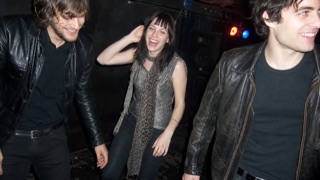
An aesthetic documenting the night of clubs, indie rock, and blog culture through direct flash, disheveled clothes, narrow silhouettes, and inexpensive digital cameras. Roughness works as proof of presence rather than failed fashion photography.

Hard frontal flash in dark venues / Black slim clothing mixed with leather, glitter, and animal print / Red-eye, blown highlights, tilted frames, and cropped bodies / Handwritten marks, blog images, and event-photo sequences

design.mdimage prompt

645

McBling — AI-generated interpretation
AI interpretation, not a reference

McBling

マックブリング / early–late 2000s / Style / Subculture Style

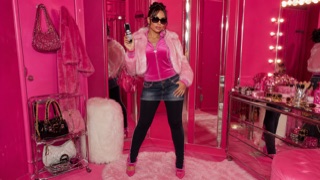
A 2000s consumer aesthetic gathering celebrity culture, mobile phones, logos, rhinestones, pink, and denim around visible wealth and immediate fun. Unlike Y2K futurism, it foregrounds present attention, brand display, and bodily decoration.

Rhinestones, chrome, glitter, and luminous logos / Hot pink, black, white, and gold in hard contrast / Layered low-rise silhouettes, velour, denim, and fur / Frontal poses displaying phones, sunglasses, and bags

design.mdimage prompt

646

Pacific Punk Wave — AI-generated interpretation
AI interpretation, not a reference

Pacific Punk Wave

パシフィック・パンク・ウェーブ / mid-1970s–early 1980s / Style / Regional Graphics

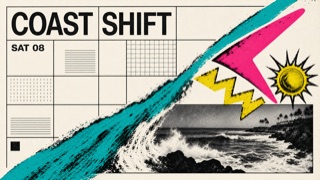
A US West Coast graphic style mixing punk, Swiss New Wave, Italian Radical design, and 1950s kitsch. Strict typography is deliberately derailed by diagonals, waves, neon color, and comic imagery.

Abrupt changes between heavy and light type on diagonals / High-contrast pink, turquoise, yellow, and black / Boomerangs, waves, zigzags, and comic-like shapes / A disciplined grid broken once by a kitsch image

design.mdimage prompt

647

Paperback Chic — AI-generated interpretation
AI interpretation, not a reference

Paperback Chic

ペーパーバック・シック / late 2010s– / Style / Publishing and Editing

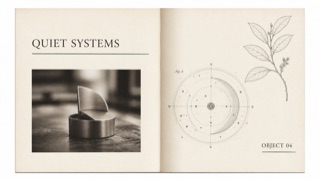
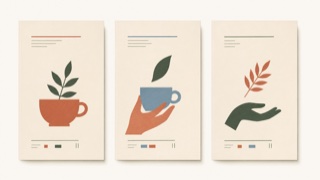
A brand style that uses soft color, literary serif type, flat cut-paper illustration, and generous space to make everyday products resemble new independent-press books. Luxury comes from edited intimacy rather than gloss.

Didone or retro serif display type / Soft cream, muted orange, green, and blue fields / Flat plant and figure illustrations resembling cut paper or printmaking / Vertical cover-like whitespace and small explanatory text

design.mdimage prompt

648

Pixelscape — AI-generated interpretation
AI interpretation, not a reference

Pixelscape

ピクセルスケープ / early–mid-2000s / Style / Internet Aesthetics

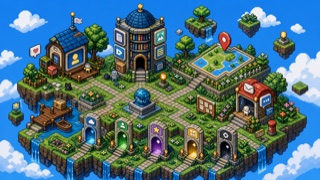
An early-2000s web style that densely draws cities, rooms, and landscapes as small isometric pixels, turning an entire site into an explorable world. Its defining feature is spatial navigation, not pixel art in isolation.

Isometric cities and rooms seen from above / Dense placement of tiny people, furniture, and signs / Tile-based floors, walls, water, and roads / Buttons and links embedded as objects in the landscape

design.mdimage prompt

Editorial policy

IndexStyle is not a list of every term used around design. An independent entry must describe a visual language that can be recognised, reproduced and distinguished from its neighbours. Editorial standard

Back to top