Early Cyber
アーリー・サイバー / late 1980s–early 1990s / Style / Digital Retro
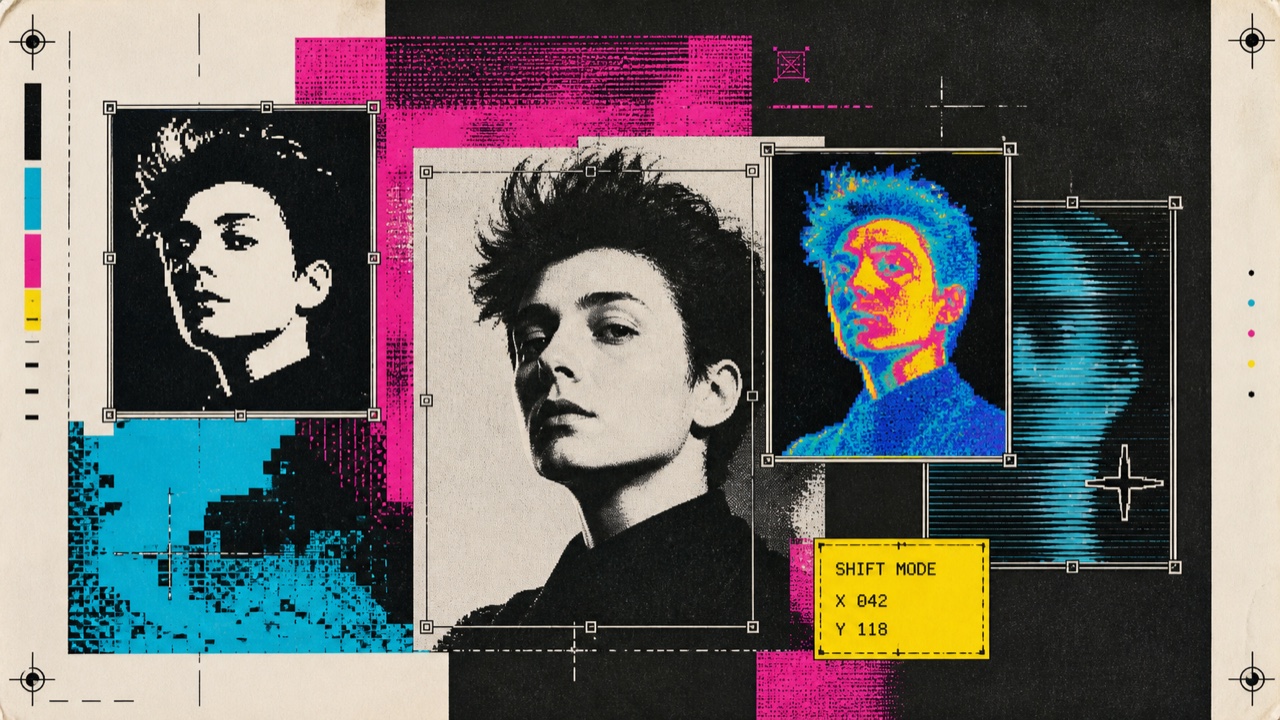
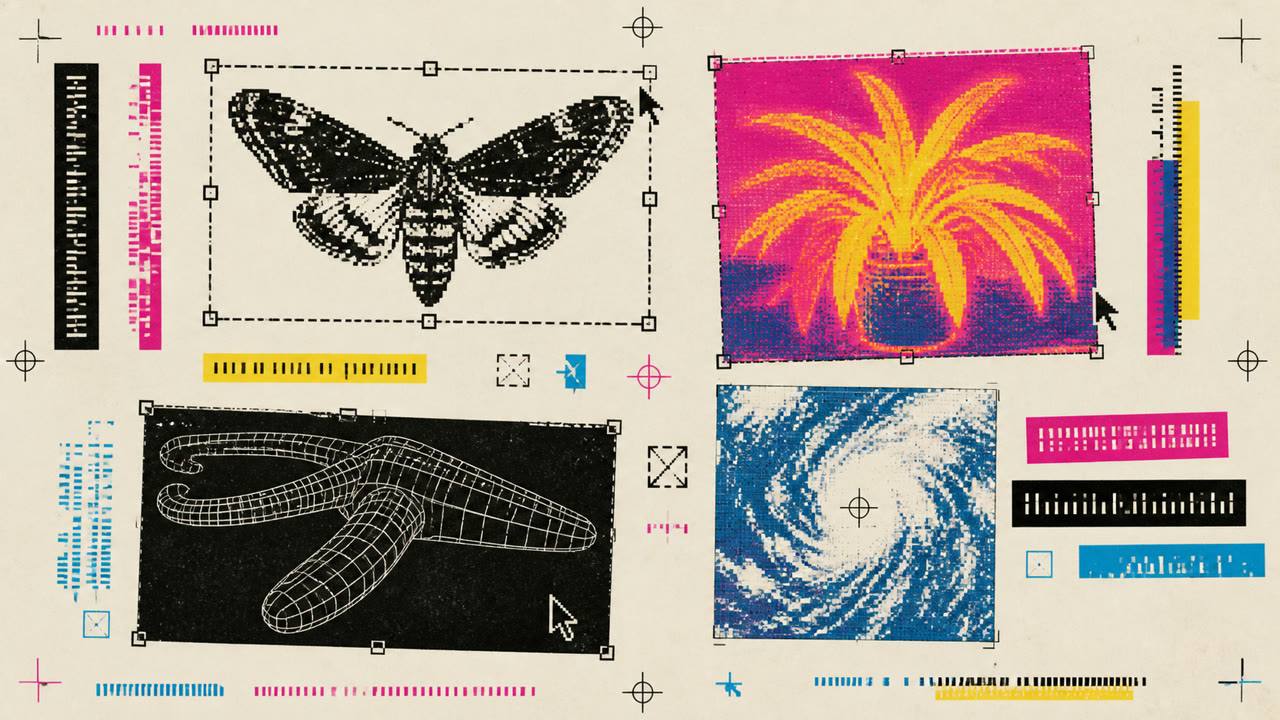
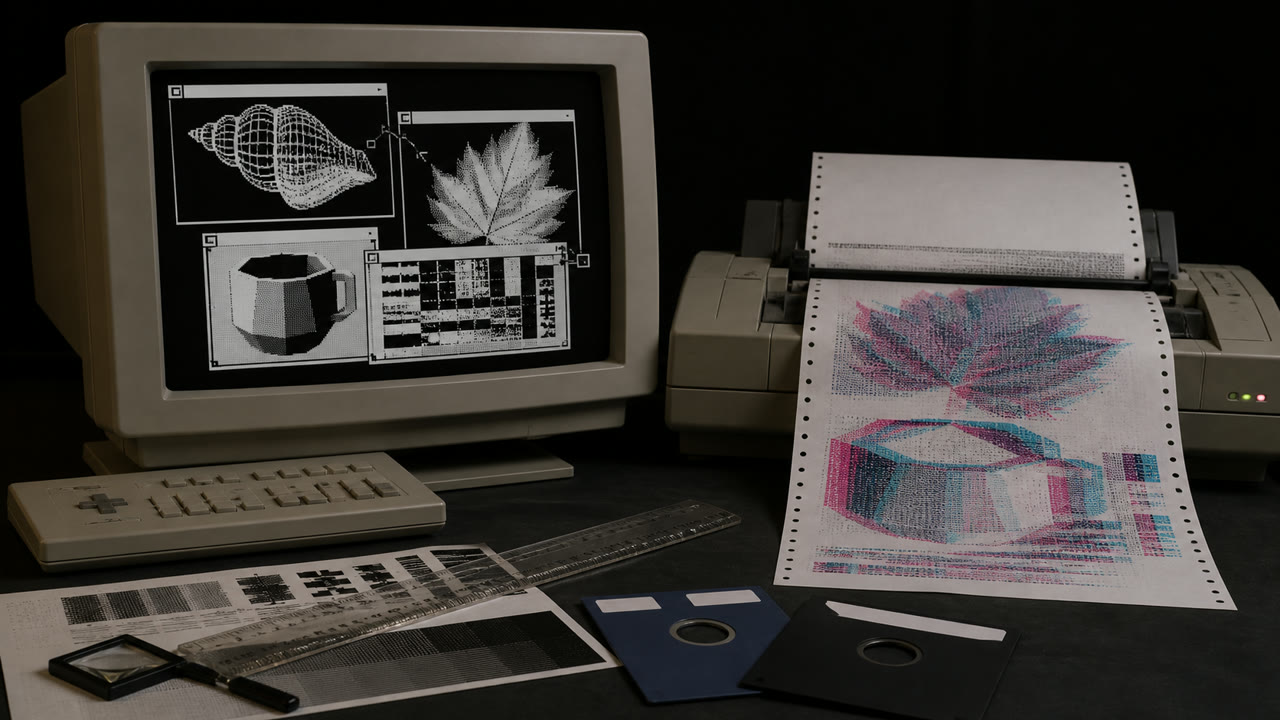
A visual language exposing the first shock of Macintosh and desktop publishing tools freely distorting text, photographs, thermal images, and pixels. Discovery matters more than finish, leaving screen and print boundaries visibly unstable.
At a glance
Visual cues
- Coarse bitmap, thermal, and low-resolution portraits
- Stretched, inverted, or bitmapped type
- Irregular windows, tools, coordinates, and cursor fragments
- Fluorescent color over monochrome early-DTP experiments
Best used for
- Exhibitions showing the arrival of DTP and personal computing with its original disorder intact
- Music and technology promotion that reconstructs digital experimentation before it became polished
Use this style
Take the compact brief into a project or hand the structured version to an AI tool.
Detailed guidance and sourcesProduction rules, reference works, comparisons, research and citation formats
Dictionary entry
- Type
- Mix bitmap and early digital faces, breaking width, direction, or resolution in one place at a time.
- Composition
- Overlap rectangles governed by different rules, retaining UI fragments and print whitespace on one plane.
- Material
- Use 1-bit imagery, coarse scans, color separation, and early CGI at visibly low resolution.
- Caution
- Applying a later glitch filter everywhere loses the specificity of discovering the tools. Constrain transformations to what period hardware and software could produce.
- Further study
- April Greiman and early digital graphics / Emigre and desktop publishing / early rave and computer-art imagery
Related entries
- Cyberdelia (サイバーデリア)Same Digital Retro lineage.Compare Early Cyber and Cyberdelia
- The New Aesthetic (ニュー・エステティック)Shared effects: Futurity / Technique / Rebellion.Compare Early Cyber and The New Aesthetic
More from Digital Retro
Continue through styles in the same Digital Retro family, prioritised by shared effects.
- Vaporwave (ヴェイパーウェイヴ)Shared effects: Futurity / Rebellion.
- Corporate Cyberspace (コーポレート・サイバースペース)Shared effects: Futurity / Technique.
- Vectorheart (ベクターハート)Shared effects: Futurity / Technique.
Browse all Digital Retro entries
Cite this entry
The dictionary is meant to be linked to. Take whichever form fits where you are writing.
- Link
- https://indexstyle.org/styles/early-cyber
- Markdown
- [Early Cyber — IndexStyle](https://indexstyle.org/styles/early-cyber)
- HTML
- <a href="https://indexstyle.org/styles/early-cyber">Early Cyber — IndexStyle</a>