Hurufiyya
フルーフィーヤ / mid-20th century– / Style / Modern and Contemporary Art Movements
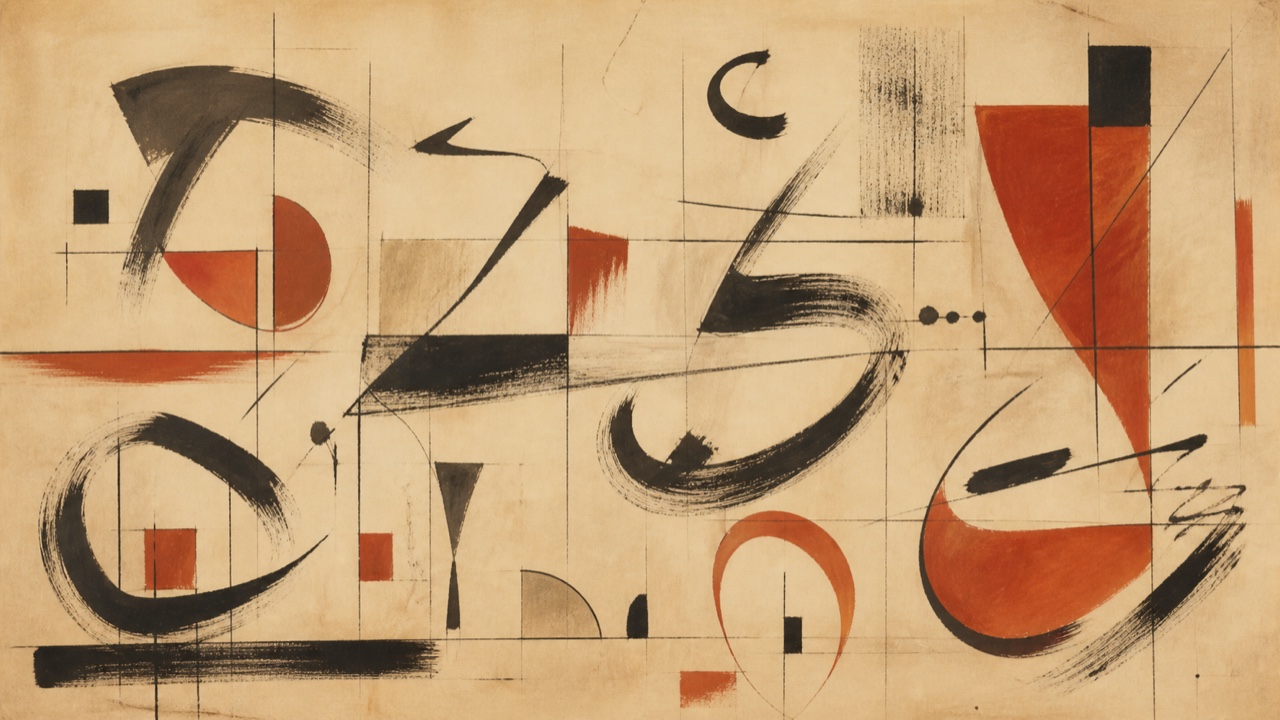
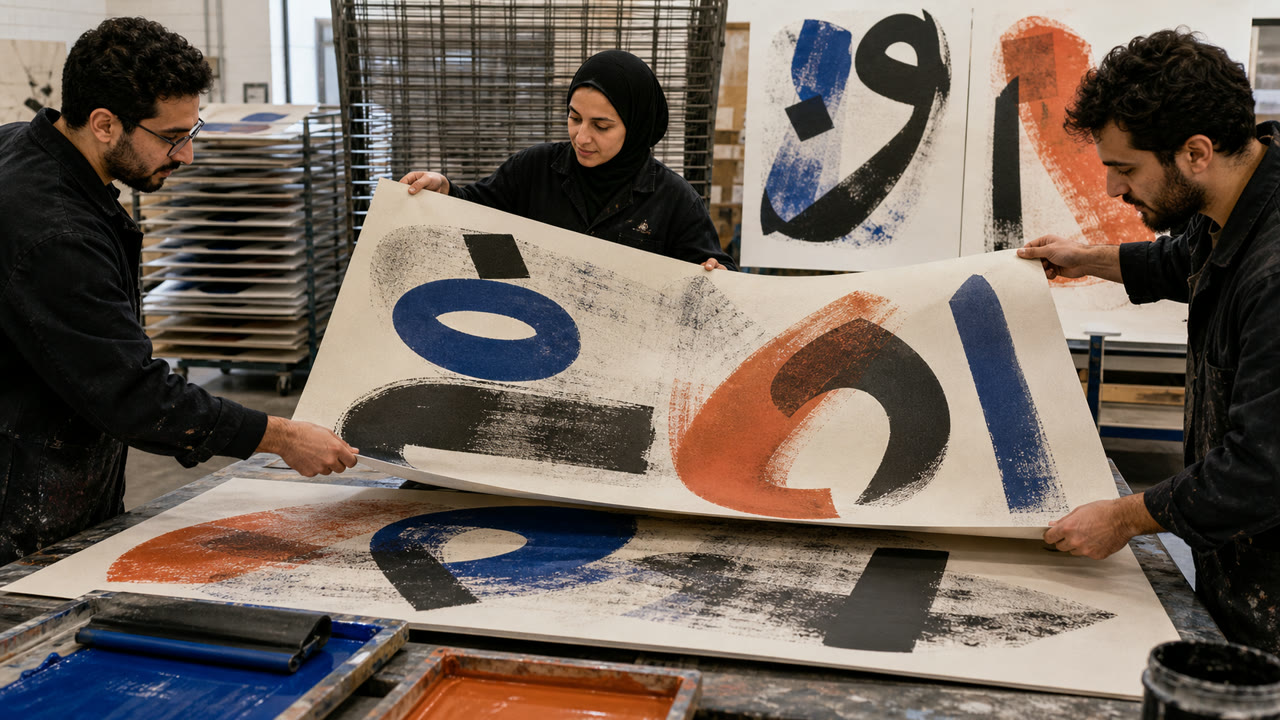
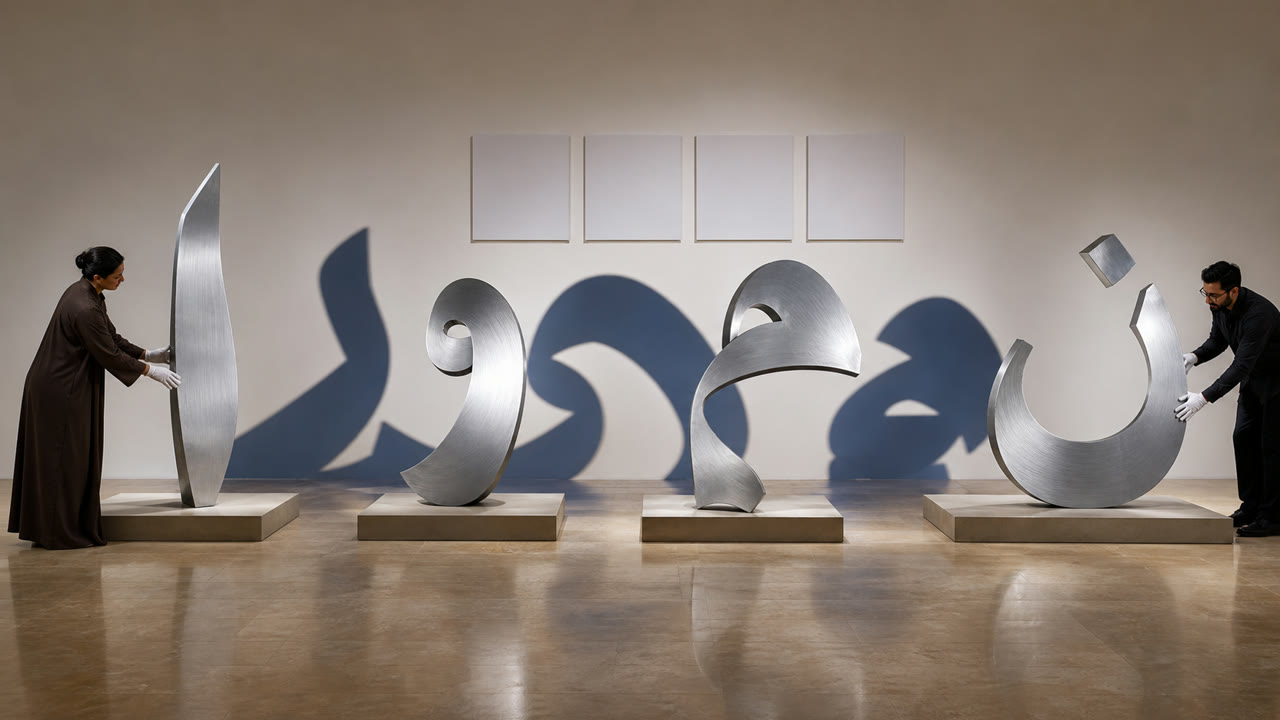
From the mid-twentieth century, Hurufiyya transformed Arabic words, fragments and individual letters into elements of modern painting, sculpture and graphic composition rather than reproducing traditional calligraphy. Letters move among meaning, bodily mark, cultural identity and abstract form.
At a glance
Visual cues
- Repeated single Arabic letters or partly unreadable fragments
- Writing embedded in grids, spirals, color fields or figures
- Hand pressure coexisting with modern abstract composition
- Deliberate switching between legibility and pure form
Best used for
- Treating language, displacement and belonging as tension between readable text and abstraction
- Using Arabic script as the structure that carries both meaning and form rather than as scenery
Use this style
Take the compact brief into a project or hand the structured version to an AI tool.
Detailed guidance and sourcesProduction rules, reference works, comparisons, research and citation formats
Dictionary entry
- Type
- Verify the letter, word, dialect and writer, and state where reading ends and formal transformation begins.
- Composition
- Do not contain writing in a decorative strip; repeat or break it across the main structure of grid, field, body and void.
- Material
- Preserve resistance specific to ink, oil, paper or metal and do not substitute randomly rotated fonts for a physical hand.
- Caution
- Arabic-looking signs used as exotic pattern erase both meaning and lineage. Distinguish the movement from traditional calligraphy and name maker, region, language and modern context.
- Further study
- Mid-twentieth-century Arabic-letter modernisms / Letter form, identity and abstraction / Madiha Omar, Shakir Hassan Al Said and Dia al-Azzawi
Related entries
- Kufic (クーフィー体)Shared effects: Luxury / Trust.Compare Hurufiyya and Kufic
- Saqqakhaneh (サッカーハーネ派)Same Modern and Contemporary Art Movements lineage.Compare Hurufiyya and Saqqakhaneh
More from Modern and Contemporary Art Movements
Continue through styles in the same Modern and Contemporary Art Movements family, prioritised by shared effects.
- Khartoum School (ハルツーム派)Shared effects: Rebellion / Trust.
- Neue Slowenische Kunst (ノイエ・スロヴェニッシェ・クンスト)Shared effects: Rebellion / Trust.
- Sots Art (ソッツ・アート)Shared effects: Rebellion / Trust.
Browse all Modern and Contemporary Art Movements entries
Cite this entry
The dictionary is meant to be linked to. Take whichever form fits where you are writing.
- Link
- https://indexstyle.org/styles/hurufiyya
- Markdown
- [Hurufiyya — IndexStyle](https://indexstyle.org/styles/hurufiyya)
- HTML
- <a href="https://indexstyle.org/styles/hurufiyya">Hurufiyya — IndexStyle</a>