IndexStyle

A dictionary of design styles, written from the works themselves.

It is plain HTML. It opens on any browser and any device, with no app and no account, and machines read the same page.

Terms776

Dictionary

Search by style name or describe what you are making. Name matches come first; purpose, desired effect and medium add relevant alternatives.

TryBauhausa premium recruiting websitea trustworthy finance app

24/776 shown

337

Hanafuda — Hanafuda cards, ca. 1870 — Wikimedia Commons / Public domain

Hanafuda

花札 / 18th century– / Style / Games and Play

Japanese cards that compress twelve months of flowers, birds, wind and moon into 48 sheets. Their bold flat-color stylization against black came out of a long history of redesigning the deck to slip past bans, and it was where Nintendo began.

Monthly flower-and-bird designs / Black borders, flat color / Extreme simplification / Ribbon and animal combinations

design.mdimage prompt

338

Natural History Plate — Haeckel, Art Forms in Nature, jellyfish — Wikimedia Commons / Public domain

Natural History Plate

博物図譜 / 18th–19th century / Style / Natural History Illustration

The name for the naturalist's plates that showed unknown life as both taxonomy and wonder, with botanical illustration sitting under it as the branch that narrowed to plants. The symmetrical compositions of Haeckel's Kunstformen der Natur became the junction where science plates flowed into Art Nouveau's language of form.

Symmetrical specimen layouts / Taxonomic completeness / Precision beside ornament / Systematic plate numbering

design.mdimage prompt

339

Calligraphic Revival — Lettering by Johnston, ca. 1915 (CC BY 2.0) · © mikeyashworth from UK

Calligraphic Revival

カリグラフィー復興 / 1906– / Style / Type Classification

The modern revival of Western writing begun when Johnston rebuilt the foundational hand from medieval manuscripts. Through the Underground letters and Gill, the written hand became a source of modern design.

The broad pen's angle / The foundational skeleton / Reconstruction from manuscripts / The breathing of letter and space

design.mdimage prompt

340

Sheet Music Cover — Sheet music cover by Winslow Homer (CC0)

Sheet Music Cover

楽譜表紙 / 1820s–1920s / Style / Printed Ephemera

Lithographed covers kept alive by the piano in the parlor. Illustration of the song's scene combined with ornamental lettering into a single picture, and before the record sleeve existed this was how music was shown.

Scenes of the song / Ornamental title lettering / Lithographic color / Publishers' stock frames

design.mdimage prompt

341

Ise Katagami — Ise katagami stencil (CC0)

Ise Katagami

伊勢型紙 / Muromachi period– / Technique / Stencil Printing

Dyeing stencils cut from persimmon-tannin laminated paper: drill, tool and stripe cutting produce continuous patterns so fine that the stencils themselves startled fin-de-siècle Europe as an art of line.

Cut continuous patterns / The brown of tannin paper / Hairline parallel stripe cutting / Positive-negative design

design.mdimage prompt

342

E-Sugoroku — Hanabutai atari sugoroku (CC0)

E-Sugoroku

絵双六 / Edo period– / Layout / Games and Play

Japan's pictorial board sheets dividing one page into a story of squares. Careers and pilgrimages arranged in spiral progressions show the sugoroku sheet as ancestor of information design and game UI.

Spiral or field progression / A scene in every square / Start and goal / A narrative held on one sheet

design.mdimage prompt

343

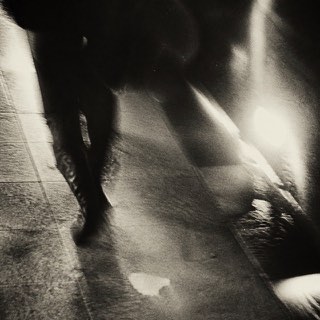
Provoke — AI-generated interpretation
AI interpretation, not a reference

Provoke

プロヴォーク / 1968–1970 / Style / Photography Movements

The magazine Provoke called itself provocative materials for thought. Working through are-bure-boke, coarse grain and blur and lost focus, it stripped photography of tidy meaning and gave seeing back its rawness.

Rough grain (are) / Blur and defocus affirmed / High-contrast black / Fragmentary framing

design.mdimage prompt

344

Typology Photography — Bernd & Hilla Becher, Typology (Winding Towers) — Wikimedia Commons / CC BY-SA 4.0 · © Vidar00

Typology Photography

タイポロジー写真 / 1959– / Style / Photography Movements

The Bechers' method of shooting one kind of structure under identical conditions and hanging the results in a grid. Repetition under overcast light, dead-on and without people, turns individuals into types, and by way of the Düsseldorf school it became a grammar of contemporary photography.

Grid presentation / Even overcast light / Strict frontality / Typification through repetition

design.mdimage prompt

345

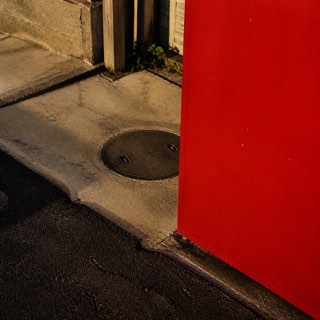
New Color Photography — AI-generated interpretation
AI interpretation, not a reference

New Color Photography

ニューカラー / 1976– / Style / Photography Movements

The art photography of the everyday in color, legitimized by Eggleston's MoMA show. Dye-transfer density gave banal scenes gravity and overturned the rule that color was vulgar.

Nameless everyday scenes / Dye-transfer saturation / Casual oblique composition / The intensity of red

design.mdimage prompt

346

The Decisive Moment — Henri Cartier-Bresson, Mother Playing Tennis 1950 — Wikimedia Commons / Public domain

The Decisive Moment

決定的瞬間 / 1932- / Technique / Photographic Techniques

A way of shooting that waits for the event and the shape of the frame to coincide, then releases once. Cartier-Bresson set it out in his 1952 book and made using the whole uncropped frame part of the method.

The frame used to its edges, uncropped / A black border left by the full negative / Figure and background aligning for one instant / A street sharp into the distance

design.mdimage prompt

347

Group f/64 — Adams, The Tetons and the Snake River 1942 — Wikimedia Commons / Public domain

Group f/64

グループf/64 / 1932–1935 / Style / Photography Movements

A manifesto for straight photography from Weston, Adams and their circle, who took as their banner the edge-to-edge sharpness of an aperture stopped to f/64. Rejecting the haze of Pictorialism, they held that large-format precision and full tonal range were themselves the beauty of a photograph.

All-over deep focus / Large-format precision / A rich grayscale / Directness refusing manipulation

design.mdimage prompt

348

Photo Essay — Urbain Faurec, Vu magazine, Madagascar at War 1940 — Wikimedia Commons / Public domain

Photo Essay

フォトエッセイ / 1936–1972 / Layout / Publishing and Editing

The page form LIFE perfected: photographs edited into narrative arcs. Spread-scale contrasts, opening and closing images and the voice of captions gave photography a story grammar.

Sequenced narrative arcs / Size contrast across spreads / The full-page key image / Captions that narrate

design.mdimage prompt

349

FSA Documentary — Lange, Migrant Mother 1936 — Wikimedia Commons / Public domain

FSA Documentary

FSAドキュメンタリー / 1935–1944 / Style / Photography Movements

The documentary program of Depression-era America's Farm Security Administration. Lange's Migrant Mother and 270,000 archived negatives defined the public role of documentary.

Portraits preserving dignity / Living conditions described / The archive as state project / Field information in captions

design.mdimage prompt

350

Japanese Realism Photography — Ken Domon, Shoeshine Boy in Ginza, ca. 1951 — Wikimedia Commons / Public domain

Japanese Realism Photography

リアリズム写真運動 / 1950–1958 / Style / Photography Movements

The postwar Japanese movement Domon Ken led under 'absolutely unstaged, absolute snapshots.' Hiroshima and Children of Chikuho faced society directly, drawing amateur monthly contests into the reconnection of photography and life.

The unstaged principle / Social subjects faced directly / Close wide-angle work / Coarse-grained prints

design.mdimage prompt

351

Lomography — Cross-processed shot from an LC-A (CC BY 3.0) · © Toomore Chiang

Lomography

ロモグラフィー / 1992– / Style / Photographic Genres

A movement that wrote the accidents of the Soviet LC-A toy camera into a charter. Vignetting, color casts and cross-processed saturation were all affirmed under ten rules and the instruction not to think but to shoot, which made it the forerunner of post-digital love for analog.

Heavy vignetting / Cross-process color shifts / Multiple-exposure chance / Shooting from the hip

design.mdimage prompt

352

Daguerreotype — Daguerreotype portrait (CC0)

Daguerreotype

ダゲレオタイプ / 1839–1860s / Technique / Photographic Techniques

The first practical photography, fixing an image directly onto a silvered plate. A one-of-a-kind picture reversed as in a mirror and housed in velvet like jewelry is where the experience of owning an image begins.

The mirrored silver plate / A unique reversed image / Jewel-like cased presentation / Painfully fine detail

design.mdimage prompt

353

Instant Photography — Washington Square Arch on Polaroid 600 film 2021 — Wikimedia Commons / CC BY-SA 3.0 · © TFSyndicate

Instant Photography

インスタント写真 / 1948– / Technique / Photographic Techniques

Polaroid made the picture appear on the spot. The white-bordered square, the soft color of chemical development and the fact that only one copy exists became a language of intimacy that outlived digital and carries on in Instax.

The white-bordered square / Tender drifting color / The wait for development / One-of-a-kind materiality

design.mdimage prompt

354

Stereograph — Stereograph, The Stereograph as an Educator — Wikimedia Commons / Public domain

Stereograph

ステレオ写真 / 1850s-1930s / Technique / Photographic Techniques

Two views of one scene taken from slightly separated positions, mounted side by side and sent to each eye through a viewer so the scene reads as depth. Placing an object large in the foreground to force that depth was the standard move.

Two nearly identical views side by side / A curved card mount / An object set large in the foreground / Description printed on the back

design.mdimage prompt

355

Carte de Visite — Carte de visite by Disdéri 1860s — Wikimedia Commons / Public domain

Carte de Visite

名刺判写真 / 1854–1900s / Style / Publishing and Editing

Disdéri patented a card-sized portrait made in quantity. Printing eight poses on a single glass plate made portraiture cheap enough to democratize it, and the collecting of celebrity cards and the album culture around them are where the shared face begins.

Card-sized mounts / Full-length studio poses / The studio's logo on the back / Album collecting

design.mdimage prompt

356

Spirit Photography — Mumler, Mary Todd Lincoln with a “spirit”, c. 1872 — Wikimedia Commons / Public domain

Spirit Photography

心霊写真 / 1862–1930s / Style / Photographic Genres

The 19th-century trade in ghosts produced by double exposure. From Mumler's portrait of Lincoln's widow to the séance boom, it fed on the very belief that a photograph proves something, a style built from media deception and desire.

Translucent superimposed figures / Composites with mourning portraits / The séance-record format / Staged evidentiality

design.mdimage prompt

357

Snapshot Aesthetic — Anastasia Nikolaevna, mirror self-portrait with a Kodak Brownie 1914 — Wikimedia Commons / Public domain

Snapshot Aesthetic

スナップショット美学 / 1888– / 1960s art adoption / Style / Photographic Genres

An aesthetic that takes the failures of amateur photography since Kodak, the tilted horizon, the head cut off at the edge, the flatness of the flash, and claims them on purpose. The intimacy of the family album became a grammar for art photography from Winogrand to Goldin.

Tilted framing / Subjects cut by the frame / Direct flash / Album intimacy

design.mdimage prompt

358

Photomicrography — Snow crystal by Bentley, c. 1905 — Wikimedia Commons / Public domain

Photomicrography

顕微鏡写真 / 1840s– / Technique / Photographic Genres

Scientific photography that records, through a microscope, structures the eye cannot reach. Bentley's snowflakes proved the scientific image could be beautiful, and that claim runs on through polarized color and fluorescence to the Nikon Small World of today.

Structures beyond sight / Specimens on black / Polarized and fluorescent color / The wonder of symmetry

design.mdimage prompt

359

Purikura — Purikura 2007 (CC0)

Purikura

プリクラ / 1995– / Style / Photographic Genres

Japan's photo-sticker culture: doodles, mori enhancement and big-eye retouching plus tiny shareable stickers completed the grammar of edit-then-share selfies before social media existed.

Mori and big-eye retouching / Doodles and stamps / Tiny stickers to share / Staged booth lighting

design.mdimage prompt

360

Karesansui — Rock garden of Ryōan-ji (CC BY-SA 3.0) · © Stephane D'Alu

Karesansui

枯山水 / Muromachi period– / Style / Garden Styles

A Japanese garden that uses no water at all, representing waterscape and cosmos through raked sand and set stones. The fifteen rocks of Ryōan-ji compose by subtraction, and minimalists worldwide still cite them as the archetype for designing emptiness.

Water implied in raked gravel / Asymmetric stone groupings / A fixed viewpoint from the veranda / Radical subtraction

design.mdimage prompt

Editorial policy

IndexStyle is not a list of every term used around design. An independent entry must describe a visual language that can be recognised, reproduced and distinguished from its neighbours. Editorial standard

Back to top