Pixelscape
ピクセルスケープ / early–mid-2000s / Style / Internet Aesthetics
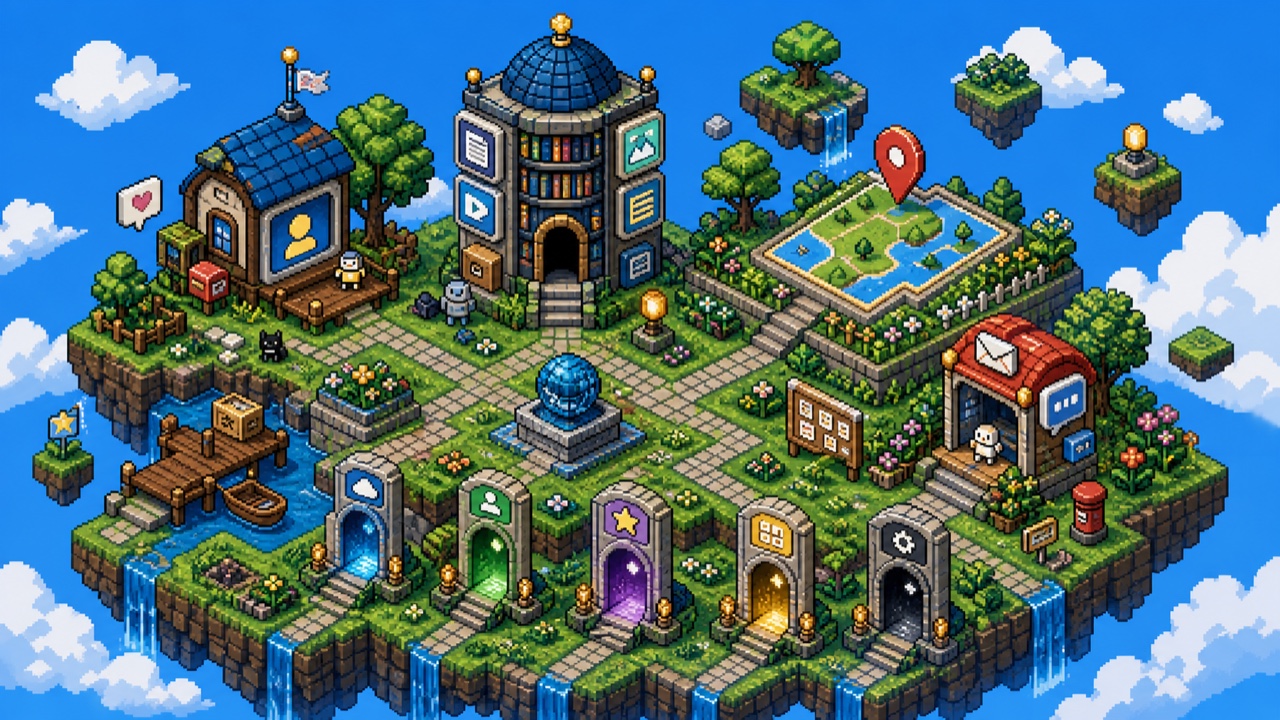
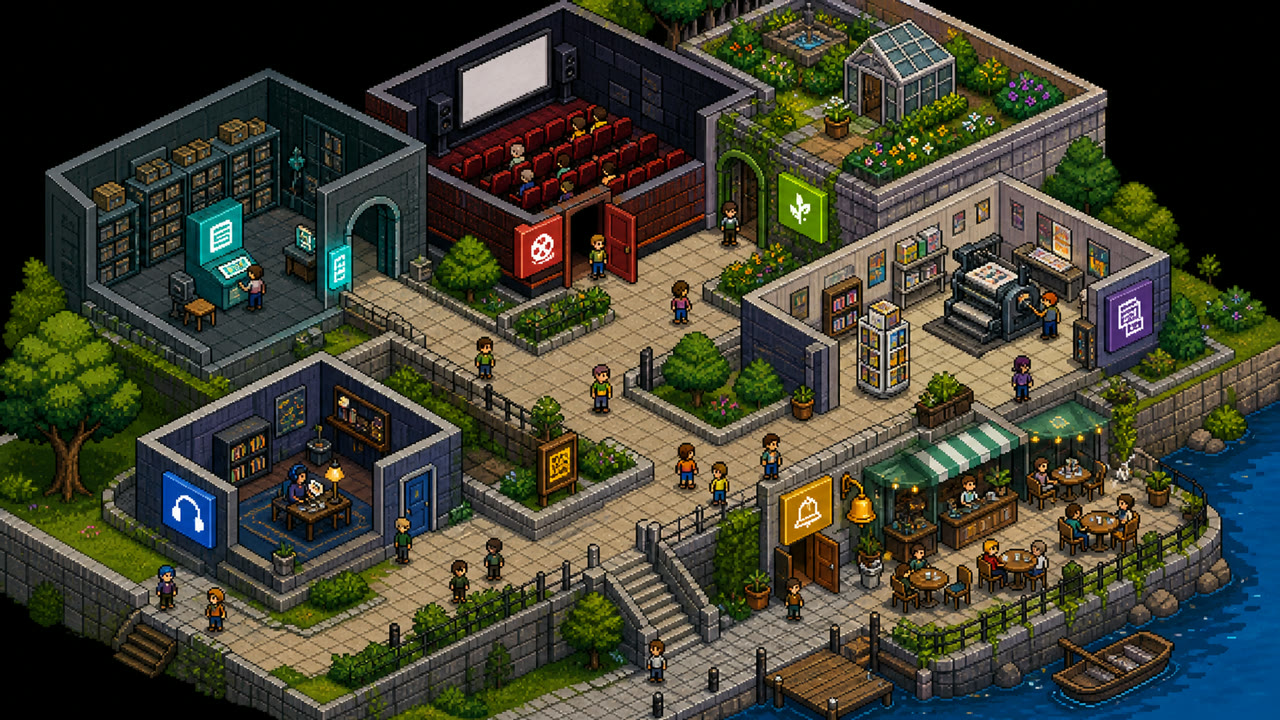
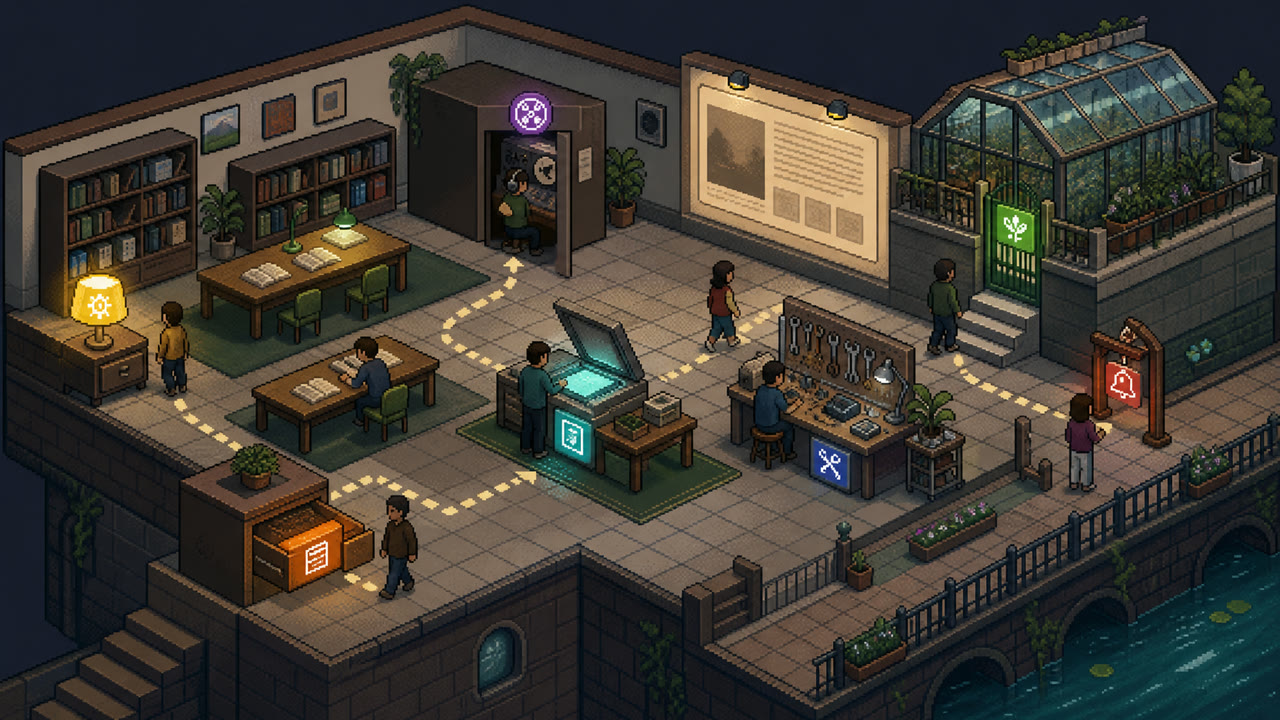
An early-2000s web style that densely draws cities, rooms, and landscapes as small isometric pixels, turning an entire site into an explorable world. Its defining feature is spatial navigation, not pixel art in isolation.
At a glance
Visual cues
- Isometric cities and rooms seen from above
- Dense placement of tiny people, furniture, and signs
- Tile-based floors, walls, water, and roads
- Buttons and links embedded as objects in the landscape
Best used for
- Games, city guides, and cultural venues whose entrance should feel like exploring a world
- Reconstructing early-web pixel culture as site structure rather than a single illustration
Use this style
Take the compact brief into a project or hand the structured version to an AI tool.
Detailed guidance and sourcesProduction rules, reference works, comparisons, research and citation formats
Dictionary entry
- Type
- Fit type to the pixel grid and place it in-world as signage or screens; move long copy to a fixed separate panel.
- Composition
- Define one isometric tile size, then use roads and buildings to guide attention toward destinations.
- Material
- Use a limited palette, integer scaling, tiles, and sprites with image interpolation disabled.
- Caution
- One isometric illustration is not enough. Links, movement, and information hierarchy must correspond to places in a navigable site.
- Further study
- early-2000s pixel-art websites / isometric tiled worlds / navigation embedded in illustrated space
Related entries
- Isometric Pixel Art (アイソメトリック・ピクセルアート)Shared effects: Play / Technique.Compare Pixelscape and Isometric Pixel Art
- Web 1.0 (ウェブ1.0)Shared effects: Nostalgia / Play.Compare Pixelscape and Web 1.0
More from Internet Aesthetics
Continue through styles in the same Internet Aesthetics family, prioritised by shared effects.
- Weirdcore (ウィアードコア)Shared effects: Nostalgia / Play.
- Flash Era Web Animation (Flash黄金期のウェブ)Shared effects: Play / Nostalgia.
- VSCO Girl (VSCO Girl)Shared effects: Play / Nostalgia.
Browse all Internet Aesthetics entries
Cite this entry
The dictionary is meant to be linked to. Take whichever form fits where you are writing.
- Link
- https://indexstyle.org/styles/pixelscape
- Markdown
- [Pixelscape — IndexStyle](https://indexstyle.org/styles/pixelscape)
- HTML
- <a href="https://indexstyle.org/styles/pixelscape">Pixelscape — IndexStyle</a>