IndexStyle

A dictionary of design styles, written from the works themselves.

It is plain HTML. It opens on any browser and any device, with no app and no account, and machines read the same page.

Terms776

Dictionary

Search by style name or describe what you are making. Name matches come first; purpose, desired effect and medium add relevant alternatives.

TryBauhausa premium recruiting websitea trustworthy finance app

24/776 shown

721

Sots Art — AI-generated interpretation
AI interpretation, not a reference

Sots Art

ソッツ・アート / 1970s–1980s / Style / Modern and Contemporary Art Movements

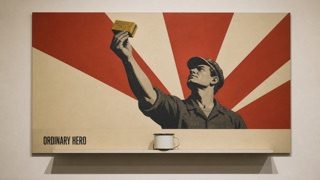
Unofficial Soviet art that dismantled Socialist Realism and propaganda through Pop-like quotation, repetition, and irony, precisely restaging heroes, flags, slogans, and advertising flatness before shifting one relation out of place.

Exact quotation of red flags, stars, leaders, and workers / Slogans beside advertising-like flat design / Heroic pose colliding with an everyday object or void / Poster-restricted red, white, black, and gold
design.mdimage prompt

722

VSCO Girl — AI-generated interpretation
AI interpretation, not a reference

VSCO Girl

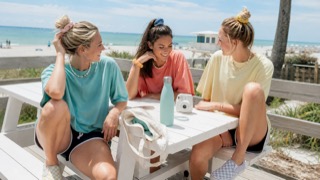
VSCO Girl / 2018–2020 / Style / Internet Aesthetics

A late-2010s teen internet aesthetic in which VSCO and short-form media standardized oversized shirts, shorts, scrunchies, shell necklaces, reusable bottles, and bright seaside color into a recognizable bundle of dress and objects.

Oversized shirt, shorts, and Birkenstocks or slip-ons / Scrunchies, shell necklaces, and friendship bracelets / Reusable bottle and straw as environmental-signaling objects / Natural light, beaches, and pale blue-peach phone photography

design.mdimage prompt

723

Twee Style — AI-generated interpretation
AI interpretation, not a reference

Twee Style

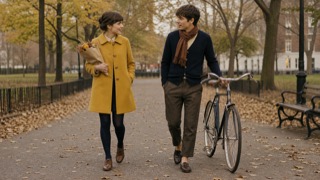
トゥイー・スタイル / mid-2000s–early 2010s / revival / Style / Fashion History

A mid-2000s indie-pop and vintage style joining Peter Pan collars, A-lines, colored tights, loafers, bangs, records, books, and analog props into a sweet, knowingly performed urban look later revived under names such as Whimsy Twee.

Peter Pan collar, A-line mini, and cardigan / Colored tights, loafers, Mary Janes, and beret / Bangs, glasses, old camera, book, or record / Mustard, navy, red, and brown in small prints or dots

design.mdimage prompt

724

Yami Kawaii — AI-generated interpretation
AI interpretation, not a reference

Yami Kawaii

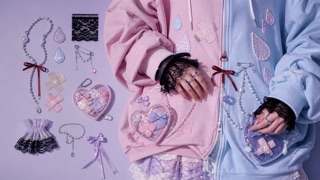
病みかわいい / mid-2010s– / Style / Japanese Street Fashion

A Japanese fashion and illustration language combining kawaii pastel, round type, and characters with bandages, syringes, pills, tears, and words for distress, using cuteness as an opening for difficult mental-health communication rather than as a way to trivialize illness.

Pastel pink, blue, and white with small red-black accents / Bandages, syringes, pills, plasters, and tears / Round characters beside brief words for pain or isolation / Oversized hoodies, uniform references, and medical-looking accessories

design.mdimage prompt

725

Buffalo Style — AI-generated interpretation
AI interpretation, not a reference

Buffalo Style

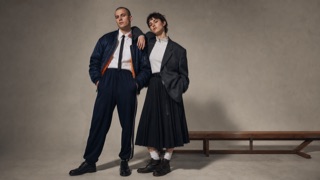
バッファロー・スタイル / 1983–1989 / Style / Fashion History

An authored 1980s London styling language developed around Ray Petri and the Buffalo collective, recombining sportswear, tailoring, military surplus and street dress through purposeful casting, fashion portraiture and challenges to fixed masculinity and high-low hierarchy.

Track trousers or cycling wear paired with shirts, ties, and tailoring / Flight jackets, polished leather shoes, and white socks joined across different clothing functions / Street casting and close crew-like portraiture rather than runway uniformity / Sport/formal, masculine/ambiguous, and luxury/everyday held in one silhouette

design.mdimage prompt

726

Belgian New Beat Graphics — AI-generated interpretation
AI interpretation, not a reference

Belgian New Beat Graphics

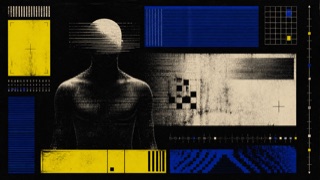
ベルギー・ニュー・ビート・グラフィックス / 1987–1992 / Style / Music Graphics

A late-1980s Belgian graphic lineage where New Beat's slow, heavy electronics met club print moving into early digital production, linking flyers, posters, records and label clothing through dark grounds, processed photography, primitive CG, short capitals and signal color.

Processed figures, early CG and geometry layered in one image / One acid yellow, red, blue or metallic gradient driven against black / Condensed or extended sans-serif capitals used as a short large title / One club or label identity extended across flyer, record, bomber and T-shirt

design.mdimage prompt

727

Nu-Metal Style — AI-generated interpretation
AI interpretation, not a reference

Nu-Metal Style

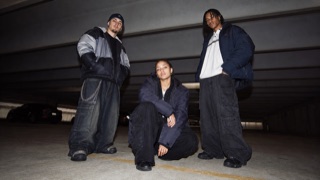
ニュー・メタル・スタイル / mid-1990s–early 2000s / Style / Subculture Style

A mid-1990s to early-2000s subcultural dress system translating the metal–hip-hop hybrid into extremely wide jeans, oversized sports layers, heavy skate shoes, chains, piercings and individualized band imagery, circulating through suburban retail and music television as a deliberately low, enlarged silhouette.

Extremely wide low-waisted jeans with large rear pockets / Oversized sports shirt, puffer or plain band-shirt-shaped top / Heavy skate shoes, wallet chain and lip or brow piercing / Low stance photographed with rough direct flash in parking lots, suburbs or backstage

design.mdimage prompt

728

Witch House Graphics — AI-generated interpretation
AI interpretation, not a reference

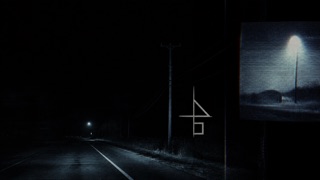
Witch House Graphics

ウィッチ・ハウス・グラフィックス / 2009–2012 / Style / Internet Aesthetics

A 2009–2012 visual system that joined crushed night photography, treated found video, VHS decay and deliberately obstructed type into one Tumblr- and blog-circulated identity. Its form comes from digital obscurity and repetition, not from occult props alone.

Crushed night photography in black, gray, blue and bone / Treated-video frames with scanlines, color bleed or vertical drag / Short names slowed by substituted glyphs and geometric characters / A repeated low-resolution image held at a distance by large black fields

design.mdimage prompt

729

Rivethead Style — AI-generated interpretation
AI interpretation, not a reference

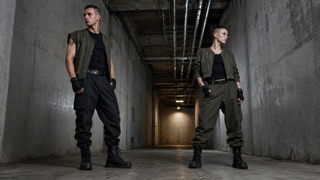
Rivethead Style

リベットヘッド・スタイル / late 1980s–1990s / Style / Subculture Style

A late-1980s and 1990s industrial-dance dress system that reduced military utility, punk disruption and workwear to a few club-ready parts. Black, gray and olive layers, cropped hair, cargo or BDU trousers, heavy boots and a short flight-jacket silhouette stay distinct from ornate Goth and fluorescent Cybergoth.

Plain black, gray or olive top under a short MA-1-like or work layer / Cargo or BDU trousers meeting heavy combat or work boots / Shaved or undercut hair with only a few tags, belts or fingerless gloves / Worn matte surfaces and a low, stable, practical club silhouette

design.mdimage prompt

730

Dungeon Synth Cover Art — AI-generated interpretation
AI interpretation, not a reference

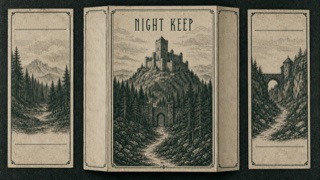
Dungeon Synth Cover Art

ダンジョン・シンセ・カバーアート / early 1990s– / Style / Music Graphics

A cover-art system around dungeon synth, which emerged from the early-1990s black-metal milieu and gathers castles, ruins, forests, ancient kingdoms and chivalric imagery onto cassettes and small-scale releases. It does not reconstruct one historical period; it compresses a mixed pre-modern imaginary into a landscape and a physical object that opens onto the music's fictional world.

A pre-modern landscape combining a castle, ruin, forest or mountain path into one distant view / Fine lines recalling woodcut, engraving or old illustration, limited to black, parchment and deep green / A central image that survives a small cassette face, with a thin frame and short vertical title hierarchy / One fictional world continued across J-card, handmade label and folded booklet

design.mdimage prompt

731

Egyptian Revival — Egyptian Revival façade, 2 Place du Caire, Paris, 1828 — photo: Tangopaso — Wikimedia Commons / Public domain

Egyptian Revival

エジプシャン・リヴァイヴァル / late 18th–19th century / Style / Historical Styles

A revival style in late-eighteenth- and nineteenth-century Europe and the United States that transferred ancient Egyptian architecture and ornament to modern monuments, cemeteries, theatres and furniture. Obelisks, pylon-shaped entrances, papyrus and lotus capitals, and winged sun disks were organized into massive symmetrical compositions to project permanence, exoticism and the authority of discovery.

Tapering obelisks and pylon-shaped entrances with battered walls / Bundled columns with abstracted papyrus or lotus capitals / Bands of winged sun disks, sphinxes, cobras or hieroglyphs / Heavy walls with small openings and a symmetrical monumental front

design.mdimage prompt

732

Richardsonian Romanesque — American Museum of Natural History, side entrance, New York — photo: Fordmadoxfraud — Wikimedia Commons / Public domain

Richardsonian Romanesque

リチャードソニアン・ロマネスク / 1870s–1890s / Style / Historical Styles

A late-nineteenth-century American architectural style in which H. H. Richardson recast medieval Romanesque round arches as rough masonry, deep openings, asymmetrical towers and low-spreading masses. Rather than surface decoration, stone weight, shadow depth and broad arches grouping entrances gave churches, libraries, courthouses and stations their public force.

Broad, deeply recessed round arches grouping entrances and windows / Thick rough-faced masonry crossed by bands of contrasting stone / Asymmetrical towers with conical roofs above a low horizontal silhouette / Openings stepping back into the wall, with carving confined to capitals and voussoirs

design.mdimage prompt

733

Second Empire — Carl Pfeiffer, Metropolitan Savings Bank building, New York, 1867 — photo: Beyond My Ken — Wikimedia Commons / CC BY-SA 4.0

Second Empire

セカンド・エンパイア様式 / 1852–1880s / Style / Historical Styles

A nineteenth-century style originating in the opulent public architecture of France's Second Empire and spreading to civic buildings, hotels and houses in Europe and the United States. A mansard roof enclosed a useful upper story, while dormers, a central pavilion, bracketed cornices and quoins turned that added floor into urban prestige.

A double-pitched mansard roof with a regular line of dormers / Central or end pavilions projecting from the front / A deep cornice carried on repeated brackets / A symmetrical facade layered with quoins, pediments and iron roof cresting

design.mdimage prompt

734

Divine Machinery — AI-generated interpretation
AI interpretation, not a reference

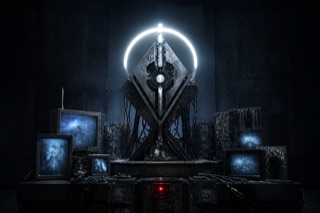
Divine Machinery

ディヴァイン・マシナリー / 1990s– / 2020s named revival / Style / Post-internet Styles

A visual system that connects religious iconography to circuit boards, communications equipment and medical devices, presenting machines not as convenient tools but as objects of awe, ritual and belief. It has a lineage in contemporary art since the 1990s and gained the name Divine Machinery online in the 2020s. Unlike Cyberpunk's city and resistance narratives, it searches for meaning and transcendence in failing technology.

Crucifixes, sacred hearts or saints wired directly to circuit boards, cables and monitors / LED halos, transmission towers, servers or medical devices staged frontally like an altar / Cold white, blue and warning red punctuating a dark space while glitches and signal loss remain visible / Religious symmetry or triptychs overlaid with repeating circuits and terminals

design.mdimage prompt

735

Italo Disco Cover Art — AI-generated interpretation
AI interpretation, not a reference

Italo Disco Cover Art

イタロ・ディスコのジャケット / late 1970s–late 1980s / Style / Music Graphics

The sleeve system through which Italian-produced dance music of the late 1970s and 1980s compressed fantasies of space, speed, night and elsewhere into the square record cover. Smooth airbrushed bodies and machines, chrome, lightning, dark cosmic color and italic titles turned studio-made artificiality into a futuristic stage. Unlike later Synthwave, it belongs to the period's mixture of print, photography and hand-rendered illustration.

Expanded italics, scripts or chrome lettering racing diagonally / Airbrushed bodies, cars, spacecraft, planets and lasers with seamless surfaces / Magenta, cyan and electric accents glowing from black or deep navy / Speed lines, grids, lightning and distant horizons converging on one central image

design.mdimage prompt

736

Krocha — AI-generated interpretation
AI interpretation, not a reference

Krocha

クロッハ / 2007–2009 / Style / Subculture Style

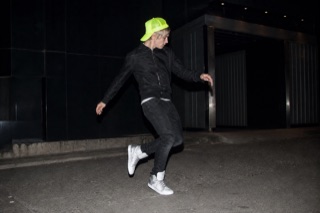
A highly visible Austrian youth club style that peaked from 2007 to 2009. Deep tans, carefully shaped hair, extremely slim jeans, white, gold or silver footwear and oversized trucker or neon Flash Caps were bound to the movement of Hardstyle and Jumpstyle. Its scope is a specific time, vocabulary and dance culture around Vienna, not generic 2000s neon.

An oversized trucker or neon Flash Cap worn shallowly at the back of the head / Slim jeans with white, gold or silver sneakers or boxing boots / A strong tan, light dyed and shaped hair, and sharply outlined sunglasses / The contrast of narrow legs and large shoes emphasizing Hardstyle or Jumpstyle footwork

design.mdimage prompt

737

Partille-Johnny — AI-generated interpretation
AI interpretation, not a reference

Partille-Johnny

パルティレ・ジョニー / late 2000s / Style / Subculture Style

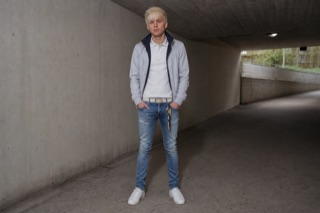
A late-2000s Swedish youth look associated with Partille outside Gothenburg and Täby outside Stockholm. Bleached styled hair, slim jeans, visible belts or branded accessories and hair ribbons tied to jeans turned accessible retail clothing into signs of belonging. Because the name combines a place and a person-type, documentation must separate participants' self-understanding from outside ridicule.

Bleached hair swept sideways or raised to make the fringe and crown strongly outlined / Body-hugging slim jeans and a belt held visibly at the waist / Narrow hair ribbons or small accessories tied to the jeans / A clean full look of polo or shirt, light jacket and bright footwear

design.mdimage prompt

738

Vectordelia — AI-generated interpretation
AI interpretation, not a reference

Vectordelia

ベクターデリア / mid-2000s–early 2010s / retrospective name / Style / Digital Retro

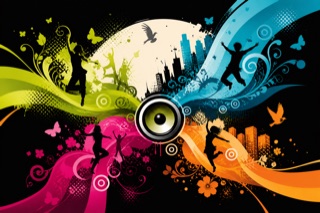
A mid-2000s to early-2010s visual language that made flat vector graphics proliferate across advertising, music graphics and game interfaces. Vivid curves, flowers, birds, human silhouettes, speakers, splashes and gradient blocks spread outward from a center. It was named Vectordelia or Frutiger Metro retrospectively; it predates and is distinct from Microsoft's typographic Metro interface.

Thick curves, vines, flowers, splashes and concentric rings growing outward from a center / Dancing people, birds, butterflies, skylines and speakers layered as silhouettes / Lime, cyan, magenta and orange planes and gradients colliding with black or white / Thin humanist sans-serif type contrasting with expansive vector ornament

design.mdimage prompt

739

Glasgow Style — Margaret Macdonald — The May Queen (1900), photo: dalbera (Flickr) — Wikimedia Commons / CC BY 2.0

Glasgow Style

グラスゴー・スタイル / c. 1890–1920 / Style / Fin de Siècle Art

A decorative-art language developed around Glasgow at the turn of the twentieth century. Elongated figures, stems and abstract roses meet linear frames and restrained fields of colour. It belongs to Art Nouveau's regional history, but its tall proportions and geometric divisions distinguish it from a general vocabulary of flowing plants.

Attenuated figures, stems and fine vertical lines / Roses and heart-shaped leaves reduced to lines and planes / Green, purple and pale pink against light grounds or dark contours / Straight frames and grids interrupted by small plant curves

design.mdimage prompt

740

Chicago School — Reliance Building, Chicago — photo: Jay Carriker — Wikimedia Commons / CC BY-SA 2.5 · © Jay Carriker ( User:JCarriker )

Chicago School

シカゴ派の商業建築 / 1880s–early 1900s / Style / Modern Architecture

A language of late-nineteenth-century commercial high-rises in Chicago, making repeated floors and large windows legible on the facade. Chicago windows combine a broad fixed pane with narrower opening panes. Terracotta and concentrated entrance ornament coexist with this regular structure, distinguishing it from the later International Style.

A wide fixed window between two narrower opening windows / A repeated grid of piers and floor bands / Projecting window bays and large glazed areas / Pale terracotta or stone with ornament concentrated near entrances

design.mdimage prompt

741

Usonian — Frank Lloyd Wright — Rosenbaum House, garden elevation; photo: Blake Wylie — Wikimedia Commons / CC BY-SA 3.0

Usonian

ユーソニアン住宅 / 1930s–1950s / Style / Modern Architecture

Frank Lloyd Wright's approach to a simpler American home from the 1930s onward. Low roofs, natural materials and connected living spaces open toward a garden while controlling exposure to the street. It shares the Prairie School's horizontal emphasis, but puts the economy of a smaller dwelling and everyday life at its centre.

Low, often single-storey roofs with deep eaves / Timber, brick or stone joined to continuous glazing / Living, dining and kitchen areas connected rather than heavily divided / Restrained street openings and larger garden-facing windows

design.mdimage prompt

742

Dutch Structuralism — Herman Hertzberger — Centraal Beheer, Apeldoorn; photo: Apdency — Wikimedia Commons / CC BY-SA 3.0

Dutch Structuralism

オランダ構造主義建築 / late 1950s–1980 / Style / Modern Architecture

A post-war Dutch architectural movement that connected human-scale units through shared places. Rooms, passages, courtyards and changes of level form an aggregate that allows encounters and different uses. Its identity lies in the relationship between a persistent structure and its occupants, rather than modular repetition alone.

Small spatial units aggregated into a larger building / Passages, courts and shared places given the weight of rooms / Voids, steps and openings interrupting a visible grid / Spaces left open to interpretation through furniture and use

design.mdimage prompt

743

New Formalism — Minoru Yamasaki — Pacific Science Center arches; photo: Dietmar Rabich — Wikimedia Commons / CC BY-SA 4.0

New Formalism

ニュー・フォーマリズム建築 / 1955–1975 / Style / Modern Architecture

An American architectural style of the mid-1950s through the 1970s that recast classical order in modern structures. Symmetrical masses, colonnades, raised bases and patterned screens make ceremonial fronts for civic and commercial buildings. Its monumentality comes from modern proportions and repeated slender forms rather than a literal reconstruction of an ancient order.

A symmetrical single volume on a raised base / Repeated slender columns or arches / A broad flat roof over geometric screens / Smooth stone or concrete with sculptural thin structures

design.mdimage prompt

744

Warli Painting — Warli painting — Omrmankar — Wikimedia Commons / CC BY-SA 4.0

Warli Painting

ワルリ絵画 / living tradition / paper and canvas since 1970s / Style / Mural Traditions

A painting tradition of Warli communities in Maharashtra and Gujarat, joining white geometric figures and lines on earth-coloured walls. Work, animals, dance and ritual share a largely unoverlapped plane. Later paper and cloth works extend the practice; the community and the subject remain essential to reading its forms.

White marks on brown or red earth grounds / Figures built from joined triangles, circles and slender limbs / Circular or spiral dance beside scenes of everyday activity / People, animals, trees and fields arranged without perspectival depth

design.mdimage prompt

Editorial policy

IndexStyle is not a list of every term used around design. An independent entry must describe a visual language that can be recognised, reproduced and distinguished from its neighbours. Editorial standard

Back to top