IndexStyle

A dictionary of design styles, written from the works themselves.

It is plain HTML. It opens on any browser and any device, with no app and no account, and machines read the same page.

Terms598

Dictionary

Search by style name or describe what you are making. Name matches come first; purpose, desired effect and medium add relevant alternatives.

TryBauhausa premium recruiting websitea trustworthy finance app

48/598 shown

337

Hanafuda

花札 / 18th century– / Style / Games and Play

Japanese cards that compress twelve months of flowers, birds, wind and moon into 48 sheets. Their bold flat-color stylization against black came out of a long history of redesigning the deck to slip past bans, and it was where Nintendo began.

Monthly flower-and-bird designs / Black borders, flat color / Extreme simplification / Ribbon and animal combinations

design.mdimage prompt

ChatGPTClaudeGoogle AI

338

Natural History Plate

博物図譜 / 18th–19th century / Style / Natural History Illustration

The name for the naturalist's plates that showed unknown life as both taxonomy and wonder, with botanical illustration sitting under it as the branch that narrowed to plants. The symmetrical compositions of Haeckel's Kunstformen der Natur became the junction where science plates flowed into Art Nouveau's language of form.

Symmetrical specimen layouts / Taxonomic completeness / Precision beside ornament / Systematic plate numbering

design.mdimage prompt

ChatGPTClaudeGoogle AI

339

Calligraphic Revival

カリグラフィー復興 / 1906– / Style / Type Classification

The modern revival of Western writing begun when Johnston rebuilt the foundational hand from medieval manuscripts. Through the Underground letters and Gill, the written hand became a source of modern design.

The broad pen's angle / The foundational skeleton / Reconstruction from manuscripts / The breathing of letter and space

design.mdimage prompt

ChatGPTClaudeGoogle AI

340

Sheet Music Cover

楽譜表紙 / 1820s–1920s / Style / Printed Ephemera

Lithographed covers kept alive by the piano in the parlor. Illustration of the song's scene combined with ornamental lettering into a single picture, and before the record sleeve existed this was how music was shown.

Scenes of the song / Ornamental title lettering / Lithographic color / Publishers' stock frames

design.mdimage prompt

ChatGPTClaudeGoogle AI

341

Ise Katagami

伊勢型紙 / Muromachi period– / Technique / Stencil Printing

Dyeing stencils cut from persimmon-tannin laminated paper: drill, tool and stripe cutting produce continuous patterns so fine that the stencils themselves startled fin-de-siècle Europe as an art of line.

Cut continuous patterns / The brown of tannin paper / Hairline parallel stripe cutting / Positive-negative design

design.mdimage prompt

ChatGPTClaudeGoogle AI

342

E-Sugoroku

絵双六 / Edo period– / Layout / Games and Play

Japan's pictorial board sheets dividing one page into a story of squares. Careers and pilgrimages arranged in spiral progressions show the sugoroku sheet as ancestor of information design and game UI.

Spiral or field progression / A scene in every square / Start and goal / A narrative held on one sheet

design.mdimage prompt

ChatGPTClaudeGoogle AI

343

Provoke — AI-generated interpretation
AI interpretation, not a reference

Provoke

プロヴォーク / 1968–1970 / Style / Photography Movements

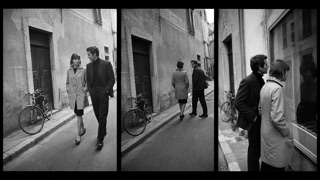
The magazine Provoke called itself provocative materials for thought. Working through are-bure-boke, coarse grain and blur and lost focus, it stripped photography of tidy meaning and gave seeing back its rawness.

Rough grain (are) / Blur and defocus affirmed / High-contrast black / Fragmentary framing

design.mdimage prompt

ChatGPTClaudeGoogle AI

344

Typology Photography

タイポロジー写真 / 1959– / Style / Photography Movements

The Bechers' method of shooting one kind of structure under identical conditions and hanging the results in a grid. Repetition under overcast light, dead-on and without people, turns individuals into types, and by way of the Düsseldorf school it became a grammar of contemporary photography.

Grid presentation / Even overcast light / Strict frontality / Typification through repetition

design.mdimage prompt

ChatGPTClaudeGoogle AI

345

New Color Photography — AI-generated interpretation
AI interpretation, not a reference

New Color Photography

ニューカラー / 1976– / Style / Photography Movements

The art photography of the everyday in color, legitimized by Eggleston's MoMA show. Dye-transfer density gave banal scenes gravity and overturned the rule that color was vulgar.

Nameless everyday scenes / Dye-transfer saturation / Casual oblique composition / The intensity of red

design.mdimage prompt

ChatGPTClaudeGoogle AI

346

The Decisive Moment

決定的瞬間 / 1932- / Technique / Photographic Techniques

A way of shooting that waits for the event and the shape of the frame to coincide, then releases once. Cartier-Bresson set it out in his 1952 book and made using the whole uncropped frame part of the method.

The frame used to its edges, uncropped / A black border left by the full negative / Figure and background aligning for one instant / A street sharp into the distance

design.mdimage prompt

ChatGPTClaudeGoogle AI

347

Group f/64

グループf/64 / 1932–1935 / Style / Photography Movements

A manifesto for straight photography from Weston, Adams and their circle, who took as their banner the edge-to-edge sharpness of an aperture stopped to f/64. Rejecting the haze of Pictorialism, they held that large-format precision and full tonal range were themselves the beauty of a photograph.

All-over deep focus / Large-format precision / A rich grayscale / Directness refusing manipulation

design.mdimage prompt

ChatGPTClaudeGoogle AI

348

Photo Essay

フォトエッセイ / 1936–1972 / Layout / Publishing and Editing

The page form LIFE perfected: photographs edited into narrative arcs. Spread-scale contrasts, opening and closing images and the voice of captions gave photography a story grammar.

Sequenced narrative arcs / Size contrast across spreads / The full-page key image / Captions that narrate

design.mdimage prompt

ChatGPTClaudeGoogle AI

349

FSA Documentary

FSAドキュメンタリー / 1935–1944 / Style / Photography Movements

The documentary program of Depression-era America's Farm Security Administration. Lange's Migrant Mother and 270,000 archived negatives defined the public role of documentary.

Portraits preserving dignity / Living conditions described / The archive as state project / Field information in captions

design.mdimage prompt

ChatGPTClaudeGoogle AI

350

Japanese Realism Photography

リアリズム写真運動 / 1950–1958 / Style / Photography Movements

The postwar Japanese movement Domon Ken led under 'absolutely unstaged, absolute snapshots.' Hiroshima and Children of Chikuho faced society directly, drawing amateur monthly contests into the reconnection of photography and life.

The unstaged principle / Social subjects faced directly / Close wide-angle work / Coarse-grained prints

design.mdimage prompt

ChatGPTClaudeGoogle AI

351

Lomography

ロモグラフィー / 1992– / Style / Photographic Genres

A movement that wrote the accidents of the Soviet LC-A toy camera into a charter. Vignetting, color casts and cross-processed saturation were all affirmed under ten rules and the instruction not to think but to shoot, which made it the forerunner of post-digital love for analog.

Heavy vignetting / Cross-process color shifts / Multiple-exposure chance / Shooting from the hip

design.mdimage prompt

ChatGPTClaudeGoogle AI

352

Daguerreotype

ダゲレオタイプ / 1839–1860s / Technique / Photographic Techniques

The first practical photography, fixing an image directly onto a silvered plate. A one-of-a-kind picture reversed as in a mirror and housed in velvet like jewelry is where the experience of owning an image begins.

The mirrored silver plate / A unique reversed image / Jewel-like cased presentation / Painfully fine detail

design.mdimage prompt

ChatGPTClaudeGoogle AI

353

Instant Photography

インスタント写真 / 1948– / Technique / Photographic Techniques

Polaroid made the picture appear on the spot. The white-bordered square, the soft color of chemical development and the fact that only one copy exists became a language of intimacy that outlived digital and carries on in Instax.

The white-bordered square / Tender drifting color / The wait for development / One-of-a-kind materiality

design.mdimage prompt

ChatGPTClaudeGoogle AI

354

Stereograph

ステレオ写真 / 1850s-1930s / Technique / Photographic Techniques

Two views of one scene taken from slightly separated positions, mounted side by side and sent to each eye through a viewer so the scene reads as depth. Placing an object large in the foreground to force that depth was the standard move.

Two nearly identical views side by side / A curved card mount / An object set large in the foreground / Description printed on the back

design.mdimage prompt

ChatGPTClaudeGoogle AI

355

Carte de Visite

名刺判写真 / 1854–1900s / Style / Publishing and Editing

Disdéri patented a card-sized portrait made in quantity. Printing eight poses on a single glass plate made portraiture cheap enough to democratize it, and the collecting of celebrity cards and the album culture around them are where the shared face begins.

Card-sized mounts / Full-length studio poses / The studio's logo on the back / Album collecting

design.mdimage prompt

ChatGPTClaudeGoogle AI

356

Spirit Photography

心霊写真 / 1862–1930s / Style / Photographic Genres

The 19th-century trade in ghosts produced by double exposure. From Mumler's portrait of Lincoln's widow to the séance boom, it fed on the very belief that a photograph proves something, a style built from media deception and desire.

Translucent superimposed figures / Composites with mourning portraits / The séance-record format / Staged evidentiality

design.mdimage prompt

ChatGPTClaudeGoogle AI

357

Snapshot Aesthetic

スナップショット美学 / 1888– / 1960s art adoption / Style / Photographic Genres

An aesthetic that takes the failures of amateur photography since Kodak, the tilted horizon, the head cut off at the edge, the flatness of the flash, and claims them on purpose. The intimacy of the family album became a grammar for art photography from Winogrand to Goldin.

Tilted framing / Subjects cut by the frame / Direct flash / Album intimacy

design.mdimage prompt

ChatGPTClaudeGoogle AI

358

Photomicrography

顕微鏡写真 / 1840s– / Technique / Photographic Genres

Scientific photography that records, through a microscope, structures the eye cannot reach. Bentley's snowflakes proved the scientific image could be beautiful, and that claim runs on through polarized color and fluorescence to the Nikon Small World of today.

Structures beyond sight / Specimens on black / Polarized and fluorescent color / The wonder of symmetry

design.mdimage prompt

ChatGPTClaudeGoogle AI

359

Purikura

プリクラ / 1995– / Style / Photographic Genres

Japan's photo-sticker culture: doodles, mori enhancement and big-eye retouching plus tiny shareable stickers completed the grammar of edit-then-share selfies before social media existed.

Mori and big-eye retouching / Doodles and stamps / Tiny stickers to share / Staged booth lighting

design.mdimage prompt

ChatGPTClaudeGoogle AI

360

Karesansui

枯山水 / Muromachi period– / Style / Garden Styles

A Japanese garden that uses no water at all, representing waterscape and cosmos through raked sand and set stones. The fifteen rocks of Ryōan-ji compose by subtraction, and minimalists worldwide still cite them as the archetype for designing emptiness.

Water implied in raked gravel / Asymmetric stone groupings / A fixed viewpoint from the veranda / Radical subtraction

design.mdimage prompt

ChatGPTClaudeGoogle AI

361

Kaiyū Strolling Garden

回遊式庭園 / Edo period– / Style / Garden Styles

The daimyo strolling garden edits its scenery so that a new view opens with every step along the path. Bridges, artificial hills and teahouses are set around a central pond until movement itself is the thing designed, spatial design that carries a time axis.

Views that change as you walk / Pond-centered composition / Hide-and-reveal staging / Famous scenery in miniature

design.mdimage prompt

ChatGPTClaudeGoogle AI

362

Roji (Tea Garden)

露地 / 16th century– / Style / Garden Styles

Here the garden is the path to the tea room and nothing else. Stepping stones, the crouching basin and the middle gate set the walker's pace and state of mind, building a mountain retreat inside the city and designing the time it takes to arrive.

Stepping-stone pacing / The tsukubai basin / Outer and inner roji transition / A hermitage within the city

design.mdimage prompt

ChatGPTClaudeGoogle AI

363

Moss Garden

苔庭 / 14th century– / Style / Garden Styles

A garden that time and humidity grow, as at Saihō-ji, where more than a hundred species of moss cover the ground. Its surfaces are composed from nothing but shades of green, a demonstration of the Japanese balance between tending a place and leaving it alone.

Gradations of moss / Designed dappled light / Time as the main material / The presence of humidity

design.mdimage prompt

ChatGPTClaudeGoogle AI

364

Shakkei (Borrowed Scenery)

借景 / 17th century– / Technique / Garden Styles

A technique that pulls the mountain or forest beyond the garden into the composition, framing it with hedges and trees until it belongs there. It is the boldest idea of cropping there is, designing with a landscape no one can own.

Distant views captured / Framing by hedge / The middle ground erased / Composition including the outside

design.mdimage prompt

ChatGPTClaudeGoogle AI

365

English Landscape Garden

イングリッシュ・ランドスケープ・ガーデン / 1720s–1800s / Style / Garden Styles

An 18th-century English revolution that threw out geometry and built nature-seeming scenery by artifice. Rolling lawns, serpentine lakes and temples scattered across the view shaped the land itself into a picture, and the result became the prototype of the public park.

Rolling lawn and lake / Temples and follies / The concealed ha-ha fence / A sequence of pictorial views

design.mdimage prompt

ChatGPTClaudeGoogle AI

366

French Formal Garden

フランス式整形庭園 / 17th century– / Style / Garden Styles

The garden of axis, symmetry and perspective that Le Nôtre perfected at Versailles. Shears and sheets of water discipline nature into geometry, and power becomes visible as spatial order.

Axes running to the vanishing point / Strict symmetry / Clipped geometry / Water mirrors and the grand canal

design.mdimage prompt

ChatGPTClaudeGoogle AI

367

Italian Renaissance Garden

イタリア式庭園 / 15th–17th century / Style / Garden Styles

The Renaissance garden of terraced slopes, stairs, channels and fountains. The hundred fountains of the Villa d'Este are the engineering art of water, with gravity as the design material.

Terraced slopes / Water stairs and fountains / Axes and statuary / Designed prospects

design.mdimage prompt

ChatGPTClaudeGoogle AI

368

Persian Garden

ペルシャ庭園 / 6th century BC– / Style / Garden Styles

The origin of the chahar bagh, quartered by crossing water channels: a walled paradise of water and shade built against the desert. It gave the word paradise its meaning and the garden its archetype from Islam to the Mughals.

Fourfold division by water / Axial basins and channels / The walled paradise / Shaded avenues

design.mdimage prompt

ChatGPTClaudeGoogle AI

369

Mughal Garden

ムガル庭園 / 16th–18th century / Style / Garden Styles

The chahar bagh scaled to empire: stepped water channels and white marble pavilions achieving, at Shalimar and the Taj, the full integration of building and garden.

Stepped water channels / White marble against water / Symmetrical avenues / Tomb and garden unified

design.mdimage prompt

ChatGPTClaudeGoogle AI

370

Chinese Scholar Garden

中国文人庭園 / Song dynasty– / Style / Garden Styles

The literati garden crystallized in Suzhou: landscape painting built in three dimensions. Taihu stone peaks, lattice windows as picture frames and turning corridors fold infinite scenery into small plots.

Taihu stones as peaks / Lattice windows and moon gates as frames / Turning corridors / Layered miniature scenery

design.mdimage prompt

ChatGPTClaudeGoogle AI

371

Korean Garden

韓国庭園 / Joseon dynasty– / Style / Garden Styles

The Joseon garden moves as little earth as possible, and Changdeokgung's rear garden is its model. Pavilions are simply set into valleys and ponds that were already there, a design that leaves the land alone and offers East Asia's other garden ideal.

Terrain left as found / Square ponds with round islands / Scattered pavilions / Artifice restrained

design.mdimage prompt

ChatGPTClaudeGoogle AI

372

Cottage Garden

コテージガーデン / 19th century– / Style / Garden Styles

The English garden of overflowing mixed planting, stylized from the working kitchen plot. Jekyll's color schemes and Sissinghurst's White Garden raised planned artlessness to an art.

Overflowing mixed planting / Paths and weathered materials / Designed color bands / Planned artlessness

design.mdimage prompt

ChatGPTClaudeGoogle AI

373

Topiary

トピアリー / Roman era– / 17th century peak / Technique / Garden Styles

Plant sculpture made by clipping evergreens into geometry and animals. Because decades of growth belong to the design, no sculptural technique is slower.

Clipped geometry / Beasts and emblems / Evergreen density / Decades as working time

design.mdimage prompt

ChatGPTClaudeGoogle AI

374

Hedge Maze

迷路園 / 16th century– / Layout / Garden Styles

A quarter of a garden where hedge walls are woven into passages and getting lost is itself the designed amusement. The whole figure shows only from above, while anyone standing inside sees walls and forks.

Hedges above head height on both sides, cutting the line of sight at the next turn / Paths and walls readable as a single figure once seen from above / A dead end planted at each fork, with the path width never changing / A clearing or small structure set at the centre as the goal

design.mdimage prompt

ChatGPTClaudeGoogle AI

375

Naturalistic Planting

自然主義プランティング / 1990s– / Style / Garden Styles

Planting design modeled on perennial meadow ecologies, led by Piet Oudolf: beauty extended to the dead seed heads of winter, a year-round idea rewriting urban public space from the High Line outward.

Perennial and grass communities / The beauty of dieback / Drifts of planting / Ecology as the model

design.mdimage prompt

ChatGPTClaudeGoogle AI

376

Bonsai

盆栽 / Heian period– / Style / Garden Styles

Japanese living sculpture that condenses the scenery of an ancient tree into a pot. A stylistic vocabulary of trunk line, branch pads and root spread, together with care handed down over generations, makes time itself the work.

Miniature scenery in a pot / Trunk line and branch pads / Root spread and patina / Care across generations

design.mdimage prompt

ChatGPTClaudeGoogle AI

377

Ikebana

生け花 / 15th century– / Style / Garden Styles

Japan's art of the flower: space composed from plant line and emptiness. From Ikenobō's rikka to free styles, the craft of letting flowers live remains a textbook of asymmetry and negative space.

Composition by line / Asymmetric balance / Designed emptiness / Season and decay accepted

design.mdimage prompt

ChatGPTClaudeGoogle AI

378

Parterre

パルテール(刺繍花壇) / 17th century– / Layout / Garden Styles

A flat bed in which clipped box embroiders arabesques into the ground. It was designed to be looked down on from the floors above, turning the ground into ornament and gardening into graphic design.

Box arabesques / Gravel and turf as ground colors / Made for the view from above / Symmetrical development

design.mdimage prompt

ChatGPTClaudeGoogle AI

379

Burle Marx Landscape

ブルレ・マルクスの景観 / 1930s–1994 / Style / Garden Styles

The inventor of modernist landscape, massing Brazilian tropical plants in color fields like abstract painting. As the Copacabana wave pavement shows, he designed the ground as one graphic.

Planting as color fields / Organic curves in plan / The tropical palette / Paving as graphic

design.mdimage prompt

ChatGPTClaudeGoogle AI

380

Neume Notation

ネウマ譜 / 9th century– / Style / Notation Systems

The West's oldest musical writing: melodic inflection recorded in curves like the motion of a hand. The gesture of melody before pitch was fixed to lines, still alive in the manuscripts of Gregorian chant.

Curves as melodic gesture / Four-line staves and square notes / Manuscript red and black / Signs floating above the words

design.mdimage prompt

ChatGPTClaudeGoogle AI

381

Staff Notation

五線譜 / 11th century– / Style / Notation Systems

Notation that fixes pitch to a coordinate, running from Guido's invention of the line to the five-line staff. Time reads left to right and pitch up and down, a flat design still in use after a thousand years and the longest-lived format in information design.

The five-line coordinate system / Time running left to right / Clefs and key signatures / Bars dividing time

design.mdimage prompt

ChatGPTClaudeGoogle AI

382

Graphic Notation

図形楽譜 / 1950s– / Style / Notation Systems

The scores Cage and Cardew drew when they abandoned the staff: shapes, lines, map-like pages. Opening performance to interpretation rather than instruction, the score itself became visual art.

The staff abandoned / Instruction by shape and line / Pages open to interpretation / The score as artwork

design.mdimage prompt

ChatGPTClaudeGoogle AI

383

Tablature

タブラチュア / 15th century– / Style / Notation Systems

Notation from the player's point of view: not what pitch, but where the fingers go. From lute letter-tablature to guitar TAB, the lineage of practical writing that encodes bodily action directly.

The string-and-fret grid / Letters and numbers for finger positions / Instrument-specific formats / Action encoded directly

design.mdimage prompt

ChatGPTClaudeGoogle AI

384

Shape Note

シェイプノート / 1801– / Style / Notation Systems

The American hymnody notation that reshaped note heads into triangles, squares and diamonds for fast sight-reading. The Sacred Harp tunebooks and singings made notation design a community tool.

Differently shaped note heads / Fa-sol-la solmization / Four-part tunebook typesetting / Singing in a hollow square

design.mdimage prompt

ChatGPTClaudeGoogle AI

Editorial policy

IndexStyle is not a list of every term used around design. An independent entry must describe a visual language that can be recognised, reproduced and distinguished from its neighbours. Editorial standard

Back to top