Eco-Beige
エコ・ベージュ / late 1980s–mid-1990s / Style / Furniture and Interiors
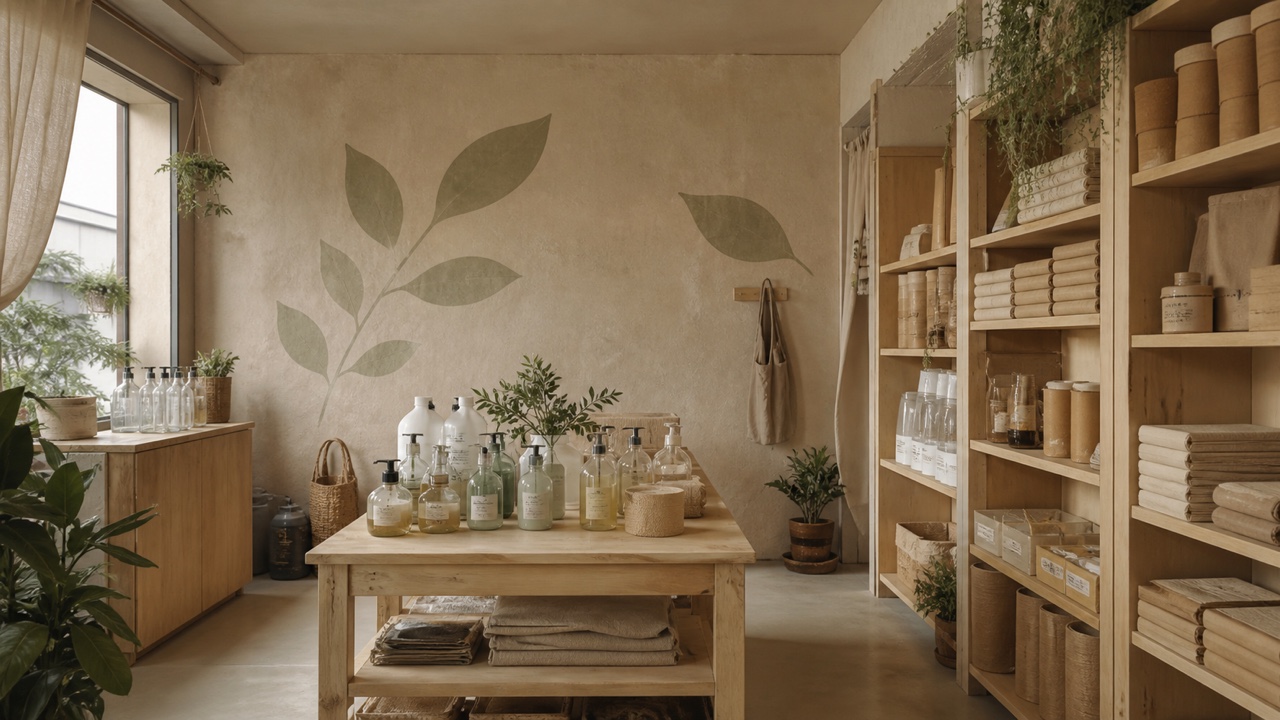
An early-1990s consumer aesthetic that turns away from 1980s gloss through unbleached cloth, branches, pale wood, earth walls, and natural color. It is less raw nature than a staged appearance of restraint and environmental virtue.
At a glance
Visual cues
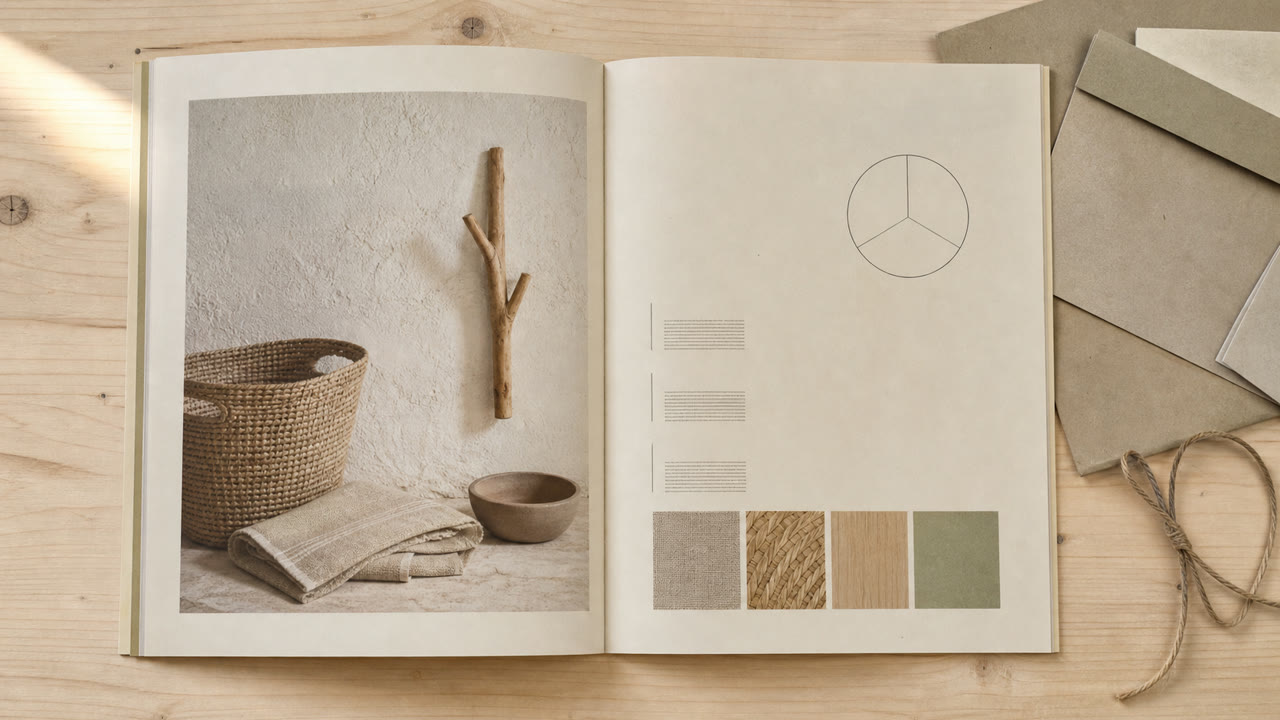
- Low-saturation ecru, sand, and pale gray-green
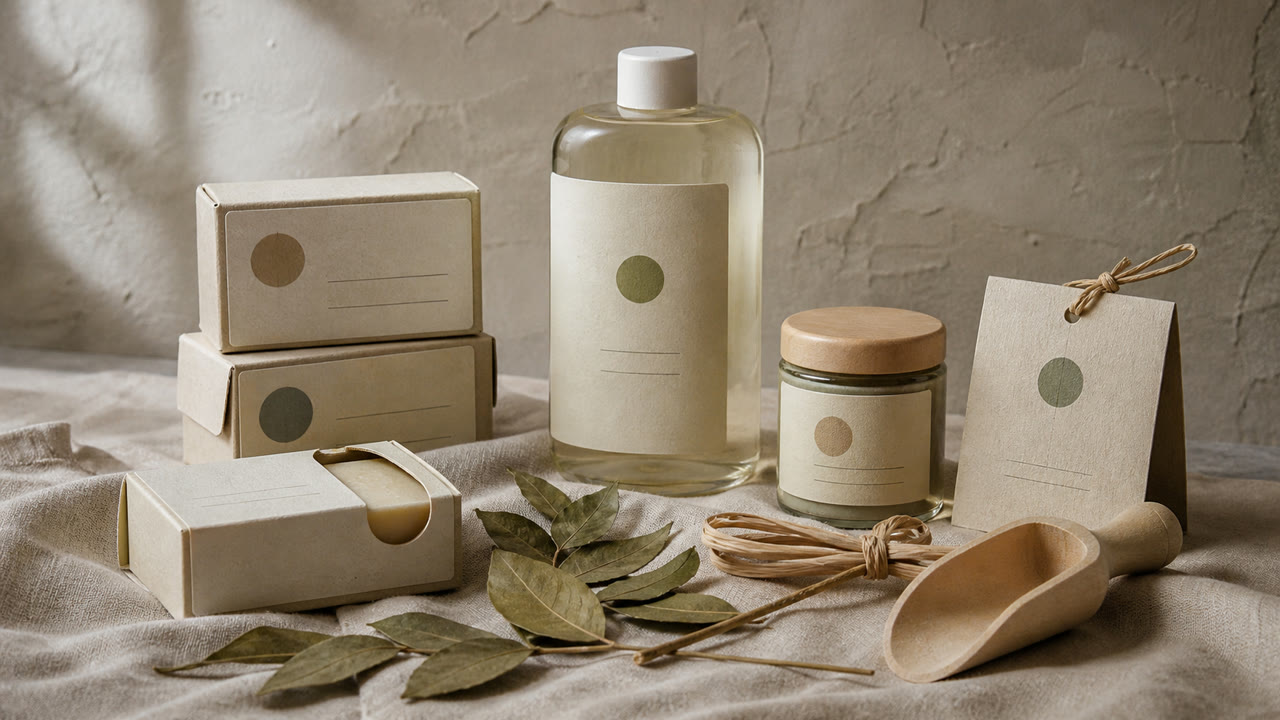
- Linen, raffia, branches, pale wood, and rough plaster
- Small serif type and widely spaced labels
- Quiet product photography arranging plants and craft materials
Best used for
- Food, cosmetics, and household goods needing the historical feel of early environmental branding
- Reconstructed early-1990s retail and residential advertising
Use this style
Take the compact brief into a project or hand the structured version to an AI tool.
Detailed guidance and sourcesProduction rules, reference works, comparisons, research and citation formats
Dictionary entry
- Type
- Use a small oldstyle serif or humanist sans with wide tracking and short lines.
- Composition
- Leave the center open, line up a few material samples low in the frame, and move explanation into the margins.
- Material
- Use unbleached cloth, raffia, pale timber, rough paper, and earth-colored plaster without gloss.
- Caution
- Beige alone becomes contemporary minimalist packaging. Include period-specific natural materials, craft signals, and staged product photography.
- Further study
- early-1990s environmental branding / natural materials as corporate signifiers / the retreat from 1980s excess
Related entries
- Gen X Soft Club (ジェネレーションX ソフトクラブ)Editorially linked for a useful contrast.Compare Eco-Beige and Gen X Soft Club
- Minimalism (ミニマリズム)Shared effects: Calm / Trust.Compare Eco-Beige and Minimalism
More from Furniture and Interiors
Continue through styles in the same Furniture and Interiors family, prioritised by shared effects.
- Shaker Design (シェーカー・デザイン)Shared effects: Calm / Trust / Intimacy.
- Biedermeier (ビーダーマイヤー)Shared effects: Calm / Trust / Intimacy.
- Craftsman Style (クラフツマン様式)Shared effects: Trust / Calm.
Browse all Furniture and Interiors entries
Cite this entry
The dictionary is meant to be linked to. Take whichever form fits where you are writing.
- Link
- https://indexstyle.org/styles/eco-beige
- Markdown
- [Eco-Beige — IndexStyle](https://indexstyle.org/styles/eco-beige)
- HTML
- <a href="https://indexstyle.org/styles/eco-beige">Eco-Beige — IndexStyle</a>