IndexStyle

A dictionary of design styles, written from the works themselves.

It is plain HTML. It opens on any browser and any device, with no app and no account, and machines read the same page.

Terms776

Dictionary

Search by style name or describe what you are making. Name matches come first; purpose, desired effect and medium add relevant alternatives.

TryBauhausa premium recruiting websitea trustworthy finance app

24/776 shown

601

HarmonyOS Design — AI-generated interpretation
AI interpretation, not a reference

HarmonyOS Design

HarmonyOSデザイン / 2019– / Style / Platform Screen Languages

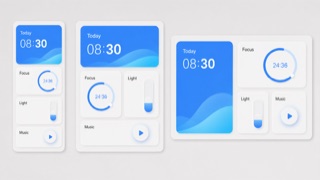
Huawei's visual language reorganizes cards, spacing, arcs, variable type and translucent light materials across different screen sizes and connected devices, favoring continuity of information and action over one fixed screen.

Large rounded cards grouping information by function / Wide space on light fields with a few saturated accents / Arcs, concentric circles and gentle scaling for operation states / Cards and variable type recomposed to suit device size

design.mdimage prompt

602

Kinetic Typography — Flash Gordon opening crawl, 1940 — Wikimedia Commons / Public domain

Kinetic Typography

キネティック・タイポグラフィ / 1950s– / Technique / Typography

Kinetic typography uses changes in position, speed, scale, form and timing to build tone of voice, emotion and attention along a timeline. Type is not a caption layer; its movement carries meaning.

Speed and size changing with vocal emphasis / Entrances and exits offset by word or character / Travel, rotation or deformation matching a word's meaning / Temporal hierarchy built from holds and reading order

design.mdimage prompt

603

Lenticular Printing — Lenticular flip card, Arbeiter Samariter Bund / Bunt — preview of a photographed physical print; animated original at source — Raimond Spekking — Wikimedia Commons / CC BY-SA 4.0

Lenticular Printing

レンチキュラー印刷 / 1940s– / Technique / Print Expression

Lenticular printing interlaces multiple images into thin alternating strips and aligns them with parallel lenses so one print flips, animates or gains depth as the viewing angle changes.

Two or more images switching with viewing angle / Source frames interlaced into narrow vertical strips / A surface of parallel cylindrical lenses / Depth or motion built from binocular offsets or sequential frames

design.mdimage prompt

604

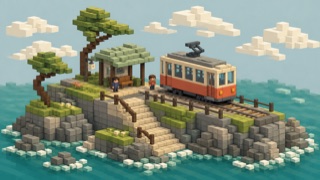
Voxel Art — AI-generated interpretation
AI interpretation, not a reference

Voxel Art

ボクセルアート / 1990s– / Style / Digital Image Techniques

Voxel art divides three-dimensional space into equal volume elements and leaves those units visible as the smallest pieces of form and color, carrying pixel art's productive limits into volume.

Contours and surfaces exposing equal cubes / Curves translated into stepped volume / A small restricted palette applied face by face / Box-like scenes read in orthographic or weak perspective

design.mdimage prompt

605

Rockabilly Style — Rockabilly dress at Field Day, London, 2017 — photo: John Lubbock — Wikimedia Commons / CC BY-SA 2.0

Rockabilly Style

ロカビリー・スタイル / early 1950s– / Style / Subculture Style

The music culture where country and rhythm and blues met in the American South appeared in pompadours, high-waisted wide trousers, loose jackets, dyed boots, skirts and denim, establishing rock and roll's cycle of audiences copying performers.

High pompadour or rolled front hair / Pleated high-waisted wide trousers / Short jacket, open-neck shirt, narrow collar or scarf / Cuffed denim, leather shoes and strongly colored boots

design.mdimage prompt

606

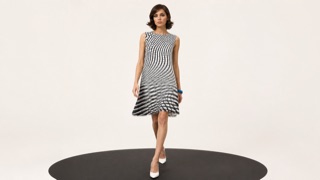
Op Art Fashion — AI-generated interpretation
AI interpretation, not a reference

Op Art Fashion

オプ・アート・ファッション / 1964–late 1960s / Style / Fashion History

1960s Op Art fashion moved repeated lines, sharp black-and-white contrast and perceptual vibration into straight mini-dresses, knits and paper clothing, letting the pattern swell, flicker and turn as the body moves.

High-contrast black-and-white lines, grids, waves and concentric forms / Geometry repeated finely enough to unsettle the eye / Simple shift silhouettes that leave patterns unbroken / All-over prints whose distortion changes with walking and body curvature

design.mdimage prompt

607

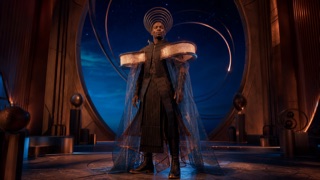
Afrofuturist Fashion — AI-generated interpretation
AI interpretation, not a reference

Afrofuturist Fashion

アフロフューチャリスト・ファッション / 1950s– / Style / Fashion History

Afrofuturist fashion reimagines Black history, agency and liberation through space, technology, myth, music and stage dress, answering who gets to inhabit the future with a visible body and persona.

Futurist silhouettes built from spacewear, metal, light and geometry / Historically specific references to African diasporic symbols / Head, shoulder or full-body forms expanded beyond everyday scale / Color and adornment integrating music, screen story and persona

design.mdimage prompt

608

Cybergoth — Cybergoth dress at Fuckparade, Berlin, 2010 — photo: Robert Agthe — Wikimedia Commons / CC BY 2.0

Cybergoth

サイバーゴス / late 1990s–2000s / Style / Subculture Style

Cybergoth starts with the black of goth and industrial dress, then adds rave neon, reflective surfaces, synthetic plastics, goggles and tubular hair pieces, completing its silhouette under ultraviolet and strobe light.

One neon color driven hard against black clothing / Long Cyberlox built from synthetic hair, foam and tubing / Goggles or respirator-like pieces at the head / Industrial surfaces in reflective tape, PVC, mesh and platform boots

design.mdimage prompt

609

Ancient Egyptian Art — An official and his wife, ca. 1300–1080 BCE — Ny Carlsberg Glyptotek; photo: Jakub Hałun — Wikimedia Commons / CC BY-SA 4.0

Ancient Egyptian Art

古代エジプト美術 / c. 3000–30 BCE / Style / Historical Styles

Ancient Egyptian art rendered kingship, divinity and the afterlife as a lasting order through hierarchical scale, composite-view figures, horizontal registers and highly repeatable poses.

Head and legs in profile with frontal eye and shoulders / Hierarchical scale indicating rank or sanctity / Scenes divided into horizontal registers / Outlined mineral color and strongly frontal statuary

design.mdimage prompt

610

Classical Greek Art — Parthenon, Athens, west view — photo: User:Mountain — Wikimedia Commons / Public domain

Classical Greek Art

古典期ギリシャ美術 / c. 480–323 BCE / Style / Historical Styles

Classical Greek art ordered observed bodies into ideal proportion and balance, using contrapposto, calm expression and controlled movement to present citizens, gods and heroes as harmonious norms.

Contrapposto with weight on one leg and opposed shoulder and hip / Balanced anatomy combining observation and idealization / Restrained expression and clear contour even in action / Drapery revealing bodily structure and movement

design.mdimage prompt

611

Roman Art — アウグストゥス・プリマ・ポルタ像 — Wikimedia Commons / CC BY-SA 4.0 · © Justin Benttinen

Roman Art

古代ローマ美術 / c. 509 BCE–476 CE / Style / Historical Styles

Roman art absorbed Greek, Etruscan and provincial forms while joining individualized portraiture, continuous historical relief, architecture and wall painting to ancestry, civic life and imperial power.

Veristic portrait heads recording age and individual difference / Historical relief unfolding events in continuous scenes / Public architecture repeating arches, vaults and domes / Wall painting and mosaic opening rooms into fictive architecture and gardens

design.mdimage prompt

612

Byzantine Art — サン・ヴィターレ聖堂 ユスティニアヌス帝モザイク — Wikimedia Commons / Public domain

Byzantine Art

ビザンティン美術 / c. 330–1453 / Style / Historical Styles

Byzantine art separated sacred presence from everyday space through frontality, hierarchical scale, gold grounds, non-naturalistic light and repeatable icon types across churches, mosaics and panels.

Still sacred figures facing the viewer / Gold grounds suppressing depth and behaving as light / Central placement and scale indicating status and sanctity / Wall mosaics whose angled tesserae make light tremble

design.mdimage prompt

613

Romanesque — Saint-Sernin, Toulouse — nave vault and round arches; architectural detail — PierreSelim — Wikimedia Commons / CC BY 3.0

Romanesque

ロマネスク / c. 1000–1150 / Style / Historical Styles

Romanesque art joined pilgrimage and monastic culture to thick walls, round arches, barrel vaults and lucid masses, integrating elongated apocalyptic figures into church portals and capitals.

Thick masonry, small openings and round arches / Barrel or groin vaults carried by heavy piers / Relief filling the semicircular tympanum above a portal / Figures and animals stretched to fit architectural frames

design.mdimage prompt

614

Mannerism — パルミジャニーノ『長い首の聖母』— Wikimedia Commons / Public domain

Mannerism

マニエリスム / c. 1520–1600 / Style / Historical Styles

Mannerism mastered High Renaissance proportion, perspective and balance, then deliberately unsettled them through elongated bodies, complex twists, compressed depth and cool unnatural color.

Elegantly lengthened necks, limbs and torsos / Serpentine poses twisting in several directions / Crowded foregrounds with displaced spatial cues / Acidic peach, blue and green arranged outside natural color

design.mdimage prompt

615

Romanticism — カスパー・ダーヴィト・フリードリヒ『雲海の上の旅人』— Wikimedia Commons / Public domain

Romanticism

ロマン主義 / c. 1790–1850 / Style / Figurative Painting

Romanticism pushed beyond reason and rule toward emotion, the sublime, overwhelming nature, revolution and exceptional events through dramatic light, diagonal force, turbulent brushwork and extreme scale.

Storm, sea, mountain or fire making nature sublime / High-contrast light and diagonally driven composition / Gesture and loose brushwork carrying crisis or passion / Tiny figures against vast landscape or a dramatically compressed crowd

design.mdimage prompt

616

Realism — ギュスターヴ・クールベ『石割り人夫』— Wikimedia Commons / Public domain

Realism

写実主義 / c. 1840s–1880s / Style / Figurative Painting

Nineteenth-century Realism replaced myth, idealization and heroic drama with contemporary workers, peasants, urban life and familiar places, changing which subjects could occupy serious large-scale art.

Contemporary labor, rural life and urban daily subjects / Bodies, clothes and tools shown without idealization / Large formats traditionally reserved for history given to ordinary people / Restrained color and substantial surfaces for earth, fabric, stone and skin

design.mdimage prompt

617

Naturalism — Jules Bastien-Lepage, Hay Making (Les Foins), 1877 — Musée d’Orsay — Wikimedia Commons / Public domain

Naturalism

自然主義美術 / c. 1870s–1900 / Style / Figurative Painting

Naturalism extended Realism's contemporaneity through close observation of how environment, heredity and working conditions shape bodies and behavior, often using outdoor light and causally legible detail.

Rural, labor and domestic subjects embedded in concrete conditions / Restrained outdoor light and observed weather / Tools, ground and clothing explaining living circumstances / Action caught in progress rather than a theatrical climax

design.mdimage prompt

618

Academic Art — William-Adolphe Bouguereau, Homer and His Guide, 1874 — Milwaukee Art Museum, Layton Art Collection — Wikimedia Commons / Public domain

Academic Art

アカデミック美術 / 17th–late 19th century / Style / Figurative Painting

Academic art joined institutional training in drawing, anatomy and the antique to a hierarchy of subjects, controlled contours, ideal bodies, legible historical narratives and polished surfaces that conceal the brush.

Smooth surfaces and clear contours hiding the stroke / Anatomy and pose idealized from classical sculpture / History, scripture and myth placed atop a hierarchy of genres / Multi-figure scenes organized like a stage and highly finished

design.mdimage prompt

619

Social Realism — Dorothea Lange, Migrant Mother, 1936 — Library of Congress — Wikimedia Commons / Public domain

Social Realism

ソーシャル・リアリズム / 1920s–1940s / Style / Printmaking and Social Movements

Social Realism used legible figures, public art, print and photography to expose contemporary labor, poverty, racism, migration and urban conditions. It is distinct from state-prescribed Socialist Realism.

Workers, unemployed people, migrants and urban crowds centered / Factories, housing and streets making conditions legible / Direct figuration spanning prints, murals and photographs / Individual hardship connected to institutions or collective problems

design.mdimage prompt

620

Orientalism — Jean-Léon Gérôme, Prayer in the Mosque, 1871 — Metropolitan Museum of Art — Wikimedia Commons / Public domain

Orientalism

オリエンタリズム / 19th century / Style / Cross-cultural Reception

Nineteenth-century Orientalism grouped North Africa, the Middle East and the eastern Mediterranean into a Western imagined East, combining travel, collected objects, fantasy interiors, sensuality, violence and antiquity within colonial power relations.

Markets, palaces, baths and deserts composed for Western audiences / Carpets, tiles, metalwork and dress densely accumulated / Low interior light, jewel color and meticulous surfaces / Observed travel detail mixed with imagined harems or violence

design.mdimage prompt

621

Pinscreen Animation — BabyScreen pinscreen at the Cinémathèque québécoise — animation equipment rather than a film frame — Lëa-Kim Châteauneuf — Wikimedia Commons / CC BY-SA 4.0

Pinscreen Animation

ピンスクリーン・アニメーション / 1930s– / Technique / Animation Techniques

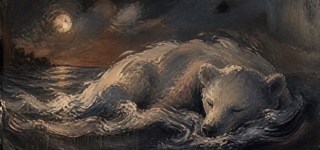
Pinscreen animation pushes and pulls a field of movable pins, photographing each state under side light. Pin height becomes a continuous range from white to deep black, so print-like grain and sculptural light transform over time.

Gray tone built from tiny points and short shadows / Soft monochrome contours dissolving into grain / Countless shadows aligned to one side light / Continuous transformations sculpted after smoothing the previous state

design.mdimage prompt

622

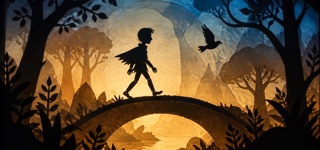
Silhouette Animation — AI-generated interpretation
AI interpretation, not a reference

Silhouette Animation

シルエット・アニメーション / 1910s– / Technique / Animation Techniques

Silhouette animation moves jointed black card figures one frame at a time on an underlit glass table. The films of Lotte Reiniger joined shadow play, cut paper and cinema into a language that tells through contour and gesture.

Sharp outer contours enclosing fully black figures and plants / Limbs segmented by wire or lead joints / Black foregrounds against pale or layered translucent backgrounds / Profile gestures exaggerating fingers, chins and garment edges

design.mdimage prompt

623

Paint-on-Glass Animation — AI-generated interpretation
AI interpretation, not a reference

Paint-on-Glass Animation

ペイント・オン・グラス・アニメーション / 1940s– / Technique / Animation Techniques

Paint-on-glass animation adds and removes slow-drying paint on one pane beneath a camera. It does not replace one finished drawing with another: brush marks, wiped traces and mixed color accumulate as a continuous history on the same surface.

Contours pushed by brush and finger into the next form / The previous image lingering as stains and streaks / Opaque masses beside translucent wiped passages / The whole field transforming fluidly instead of cutting

design.mdimage prompt

624

Sand Animation — Santa, original sand-animation drawing by Die SandArtisten, 2016 — Wikimedia Commons / CC BY-SA 4.0

Sand Animation

砂アニメーション / 1960s– / Technique / Animation Techniques

Sand animation moves grains across a light table frame by frame. Thickness controls transmitted light from amber to black, and every contour continually breaks apart as its particles become the next image.

Transmitted tone ranging from amber to black by sand thickness / Finger-drawn grooves and pushed granular edges / The next image emerging from traces swept out of the last / Uneven particles scattering around contours

design.mdimage prompt

Editorial policy

IndexStyle is not a list of every term used around design. An independent entry must describe a visual language that can be recognised, reproduced and distinguished from its neighbours. Editorial standard

Back to top