Academic Art
アカデミック美術 / 17th–late 19th century / Style / Figurative Painting
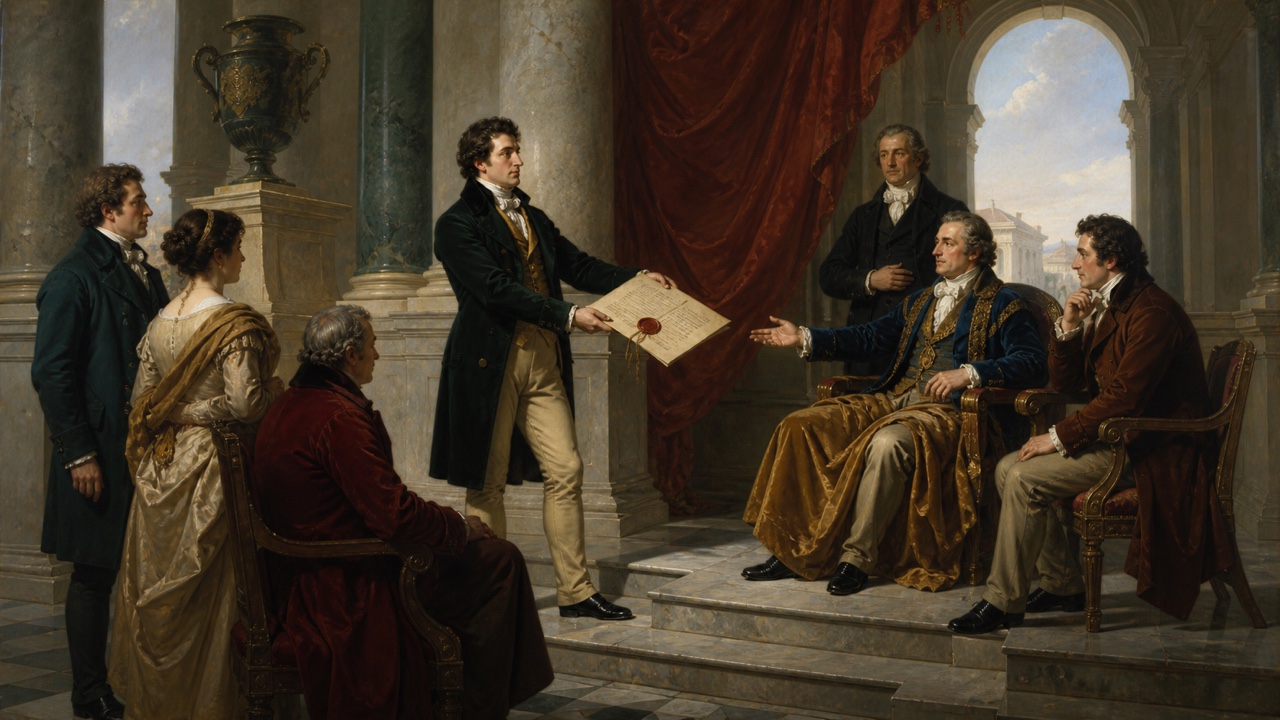
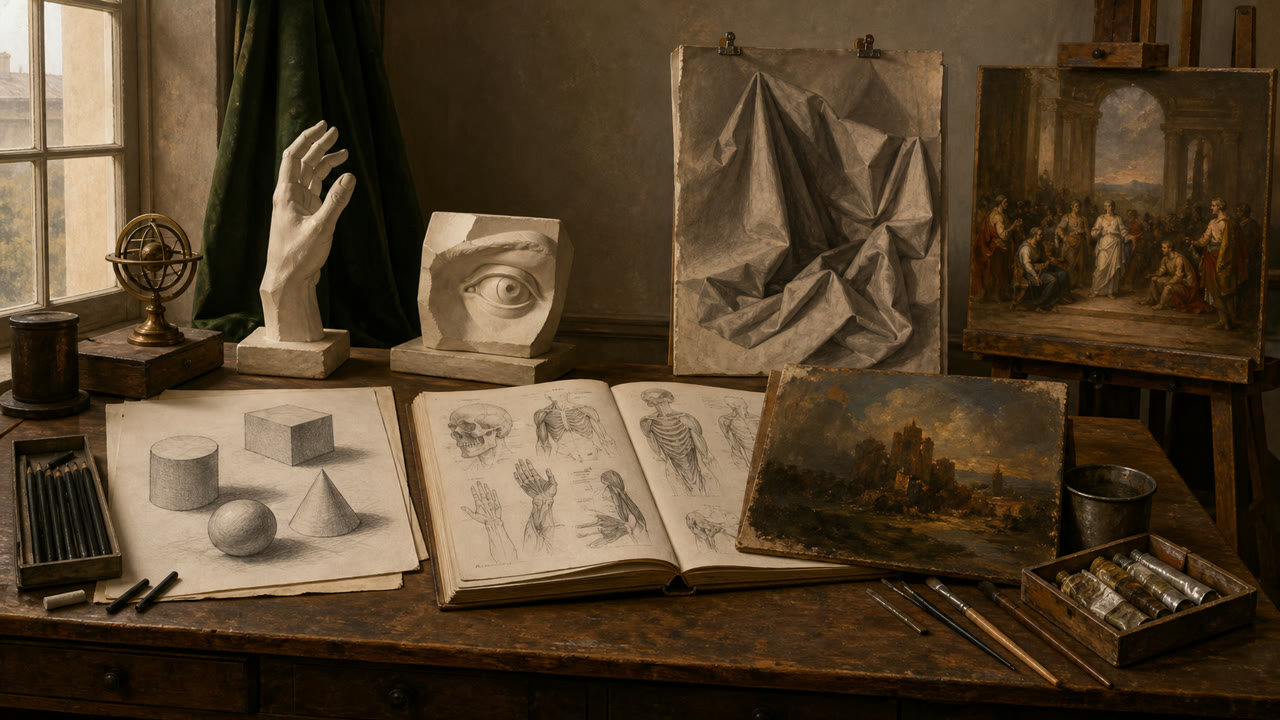
Academic art joined institutional training in drawing, anatomy and the antique to a hierarchy of subjects, controlled contours, ideal bodies, legible historical narratives and polished surfaces that conceal the brush.
%20-%20Homer%20and%20his%20Guide%20(1874).jpg)
At a glance
Visual cues
- Smooth surfaces and clear contours hiding the stroke
- Anatomy and pose idealized from classical sculpture
- History, scripture and myth placed atop a hierarchy of genres
- Multi-figure scenes organized like a stage and highly finished
Best used for
- Giving a figure institutional authority, finish and historical scale
- Controlling ideal bodies and legible narrative through drawing rather than visible brushwork
Use this style
Take the compact brief into a project or hand the structured version to an AI tool.
Detailed guidance and sourcesProduction rules, reference works, comparisons, research and citation formats
Dictionary entry
- Type
- Use a classical serif and centered hierarchy for title, artist and institution.
- Composition
- Organize groups in triangles and arcs, returning the eye to the protagonist's face and gesture through staged depth.
- Material
- Develop smooth gradation over drawing, hiding strokes while distinguishing skin, textile and metal.
- Caution
- This is not a synonym for technically accomplished realism. Academic training, genre hierarchy, classical norms and Salon finish must be joined.
- Further study
- Academic art and the nineteenth-century Salon / Hierarchy of genres and classical training / Drawing, anatomy and the polished finish
Related entries
- Naturalism (自然主義美術)Same Figurative Painting lineage.Compare Academic Art and Naturalism
- Neoclassicism (新古典主義)Shared effects: Trust / Luxury.Compare Academic Art and Neoclassicism
More from Figurative Painting
Continue through styles in the same Figurative Painting family, prioritised by shared effects.
- Romanticism (ロマン主義)Shared effects: Luxury.
- Realism (写実主義)Shared effects: Trust.
- Return to Order (秩序への回帰)Shared effects: Trust.
Browse all Figurative Painting entries
Cite this entry
The dictionary is meant to be linked to. Take whichever form fits where you are writing.
- Link
- https://indexstyle.org/styles/academic-art
- Markdown
- [Academic Art — IndexStyle](https://indexstyle.org/styles/academic-art)
- HTML
- <a href="https://indexstyle.org/styles/academic-art">Academic Art — IndexStyle</a>