Ancient Egyptian Art
古代エジプト美術 / c. 3000–30 BCE / Style / Historical Styles
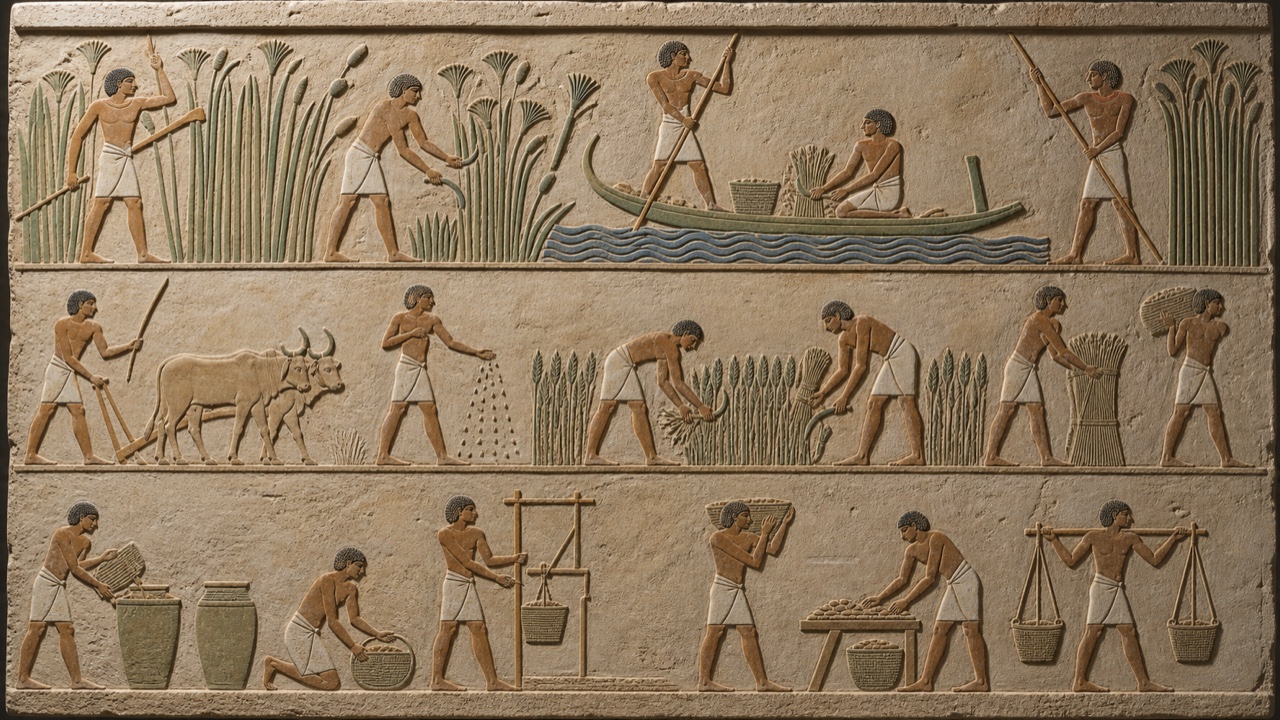
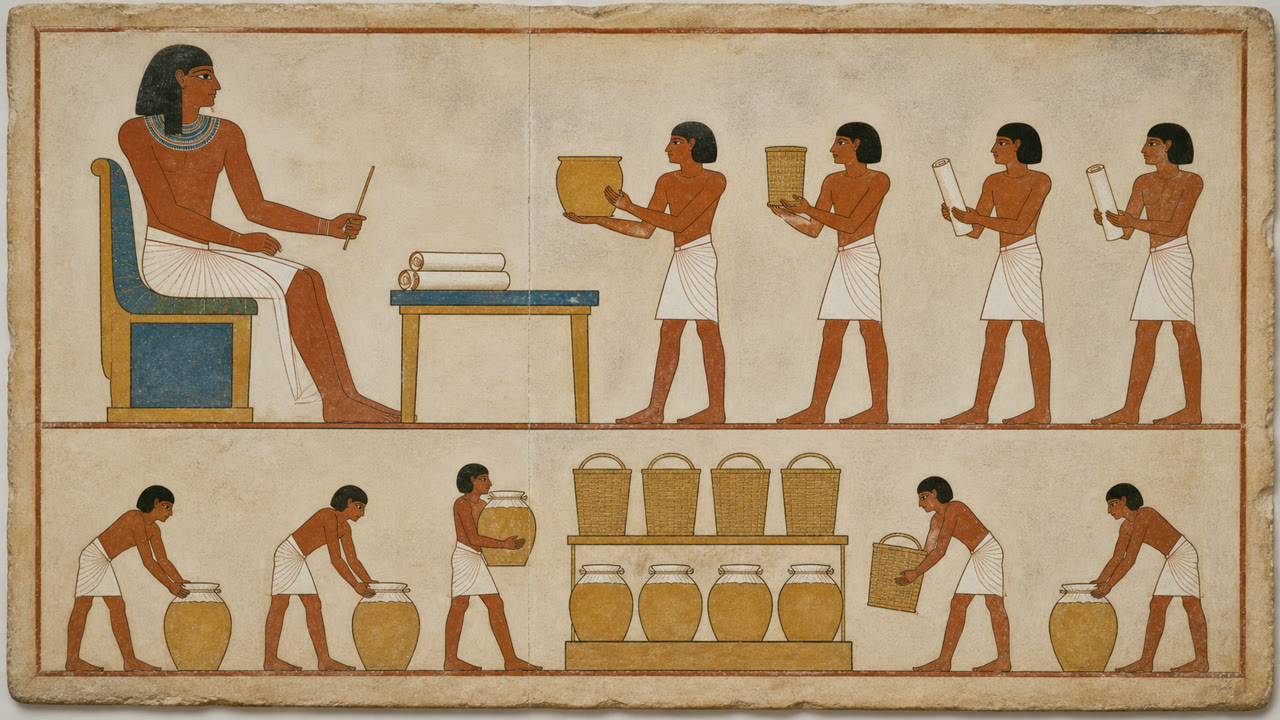
Ancient Egyptian art rendered kingship, divinity and the afterlife as a lasting order through hierarchical scale, composite-view figures, horizontal registers and highly repeatable poses.

At a glance
Visual cues
- Head and legs in profile with frontal eye and shoulders
- Hierarchical scale indicating rank or sanctity
- Scenes divided into horizontal registers
- Outlined mineral color and strongly frontal statuary
Best used for
- Communicating authority, permanence and ritual through placement and repeated signs
- Reconstructing Egyptian relief or painting without reducing it to hieroglyph-like ornament
Use this style
Take the compact brief into a project or hand the structured version to an AI tool.
Detailed guidance and sourcesProduction rules, reference works, comparisons, research and citation formats
Dictionary entry
- Type
- When using inscriptions, verify the direction and wording of real hieroglyphs instead of making a decorative pseudo-script.
- Composition
- Divide the field into registers, enlarge the central figure, and combine profile head and legs with frontal eye and shoulders.
- Material
- Use limestone or dry plaster beneath black contours and flat ochre, blue, green and red rather than modeled shadow.
- Caution
- Pyramids, scarabs and gold do not make the style. Identify the period and purpose, and do not turn sacred writing or funerary culture into empty luxury decoration.
- Further study
- Old Kingdom Egyptian art / Composite view and hierarchical scale / Registers, tomb relief and statuary
Related entries
- Classical Greek Art (古典期ギリシャ美術)Same Historical Styles lineage.Compare Ancient Egyptian Art and Classical Greek Art
- Roman Art (古代ローマ美術)Same Historical Styles lineage.Compare Ancient Egyptian Art and Roman Art
More from Historical Styles
Continue through styles in the same Historical Styles family, prioritised by shared effects.
- Palladianism (パッラーディオ主義)Shared effects: Trust / Luxury / Calm.
- Renaissance (ルネサンス)Shared effects: Trust / Luxury / Calm.
- Neoclassicism (新古典主義)Shared effects: Trust / Luxury / Calm.
Browse all Historical Styles entries
Cite this entry
The dictionary is meant to be linked to. Take whichever form fits where you are writing.
- Link
- https://indexstyle.org/styles/ancient-egyptian-art
- Markdown
- [Ancient Egyptian Art — IndexStyle](https://indexstyle.org/styles/ancient-egyptian-art)
- HTML
- <a href="https://indexstyle.org/styles/ancient-egyptian-art">Ancient Egyptian Art — IndexStyle</a>