Romanesque
ロマネスク / c. 1000–1150 / Style / Historical Styles
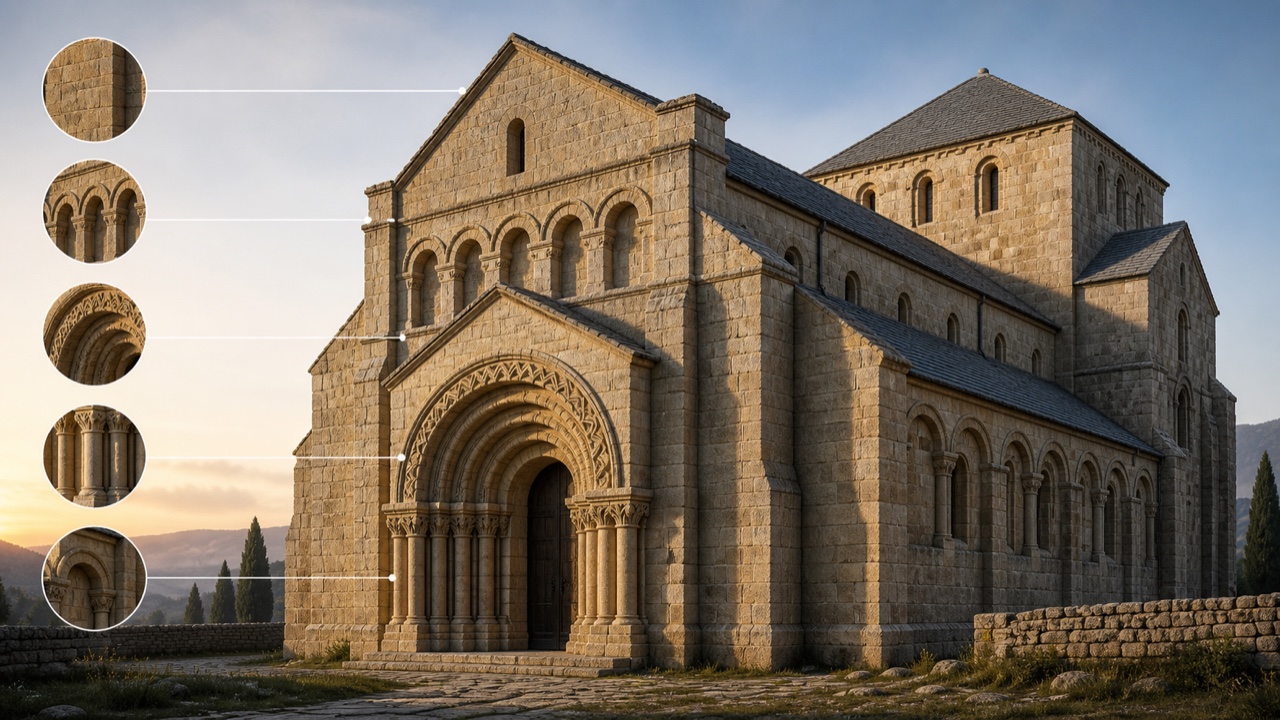
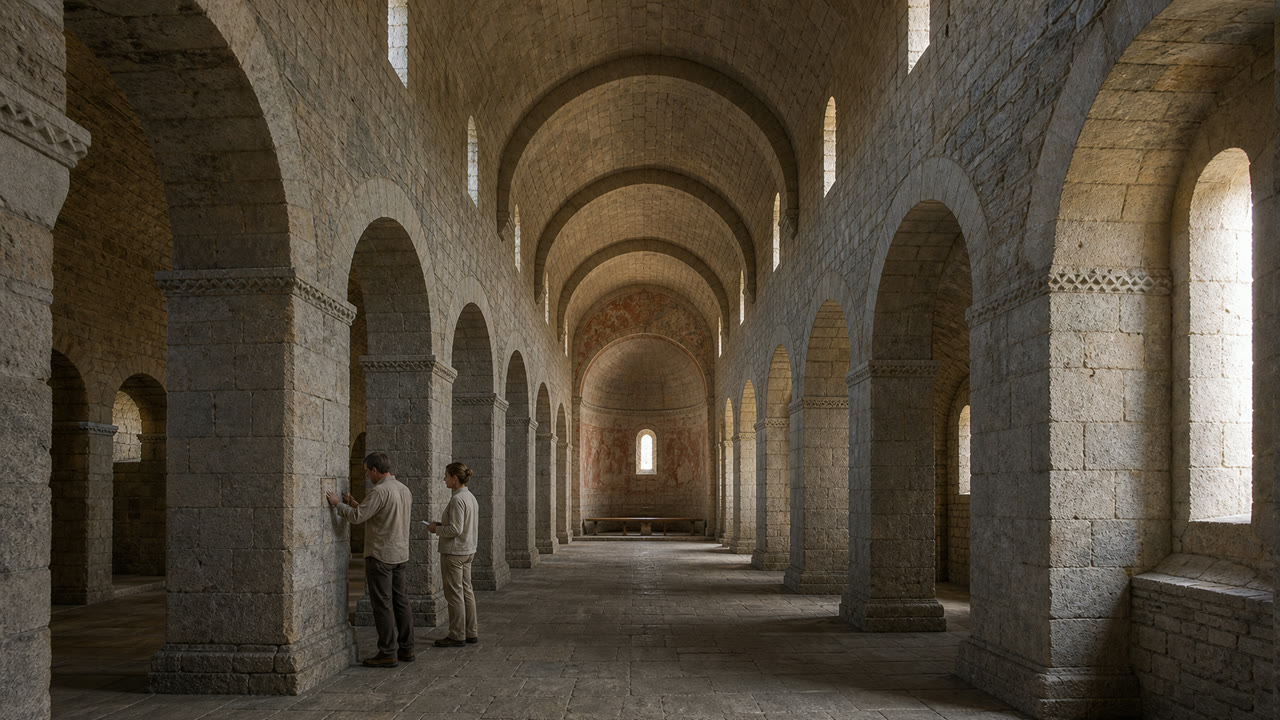
Romanesque art joined pilgrimage and monastic culture to thick walls, round arches, barrel vaults and lucid masses, integrating elongated apocalyptic figures into church portals and capitals.

At a glance
Visual cues
- Thick masonry, small openings and round arches
- Barrel or groin vaults carried by heavy piers
- Relief filling the semicircular tympanum above a portal
- Figures and animals stretched to fit architectural frames
Best used for
- Expressing shelter, weight and pilgrimage through massive forms and repeated arches
- Separating a medieval reference from Gothic verticality by designing architecture and narrative sculpture together
Use this style
Take the compact brief into a project or hand the structured version to an AI tool.
Detailed guidance and sourcesProduction rules, reference works, comparisons, research and citation formats
Dictionary entry
- Type
- Refer to carved capitals and manuscript initials for short inscriptions and headings only.
- Composition
- Repeat round arches across low stable masses and deform figures to fill portals and capitals.
- Material
- Use rough-cut stone, dark joints and restricted mural color, leaving the weight and hand-cut marks visible.
- Caution
- Pointed arches, huge windows and skeletal vertical rise move into Gothic. Preserve the round arch, thick wall and low weight.
- Further study
- Romanesque art / Round arches, barrel vaults and pilgrimage churches / Tympanum sculpture and historiated capitals
Related entries
- Byzantine Art (ビザンティン美術)Same Historical Styles lineage.Compare Romanesque and Byzantine Art
- Gothic (ゴシック)Same Historical Styles lineage.Compare Romanesque and Gothic
More from Historical Styles
Continue through styles in the same Historical Styles family, prioritised by shared effects.
- Palladianism (パッラーディオ主義)Shared effects: Trust / Luxury / Calm.
- Renaissance (ルネサンス)Shared effects: Trust / Luxury / Calm.
- Neoclassicism (新古典主義)Shared effects: Trust / Luxury / Calm.
Browse all Historical Styles entries
Cite this entry
The dictionary is meant to be linked to. Take whichever form fits where you are writing.
- Link
- https://indexstyle.org/styles/romanesque
- Markdown
- [Romanesque — IndexStyle](https://indexstyle.org/styles/romanesque)
- HTML
- <a href="https://indexstyle.org/styles/romanesque">Romanesque — IndexStyle</a>