Classical Greek Art
古典期ギリシャ美術 / c. 480–323 BCE / Style / Historical Styles
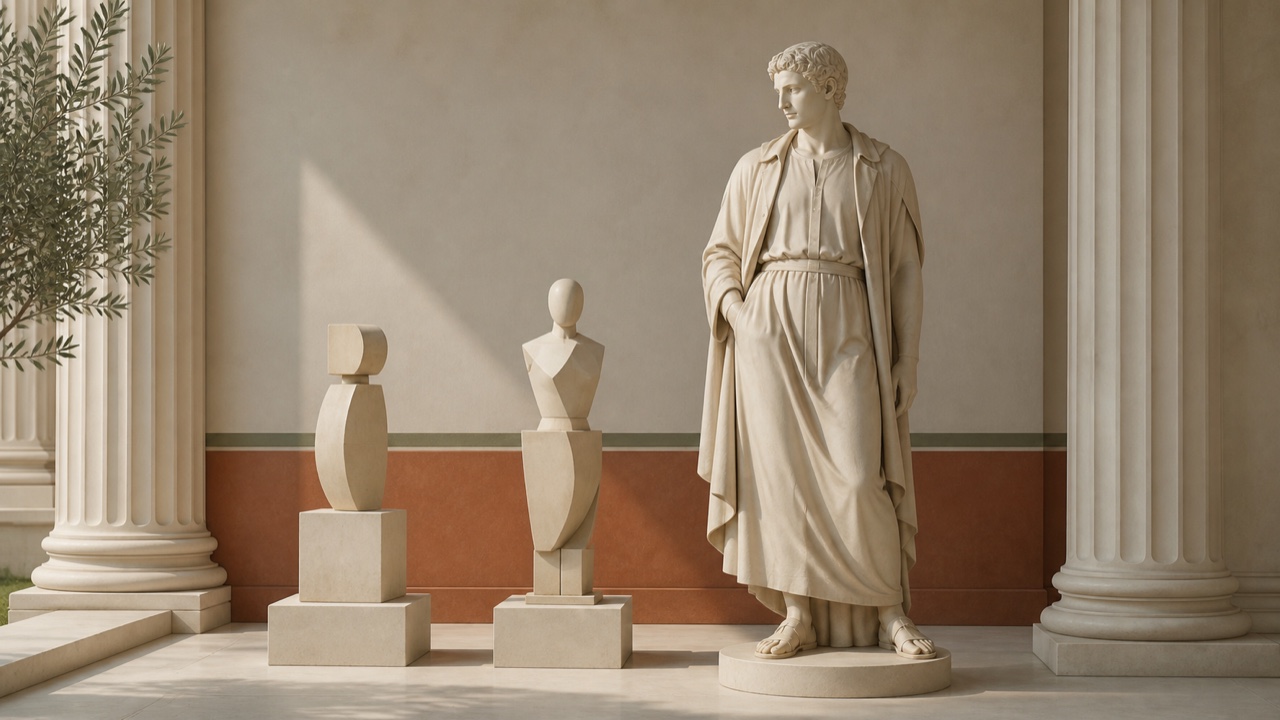
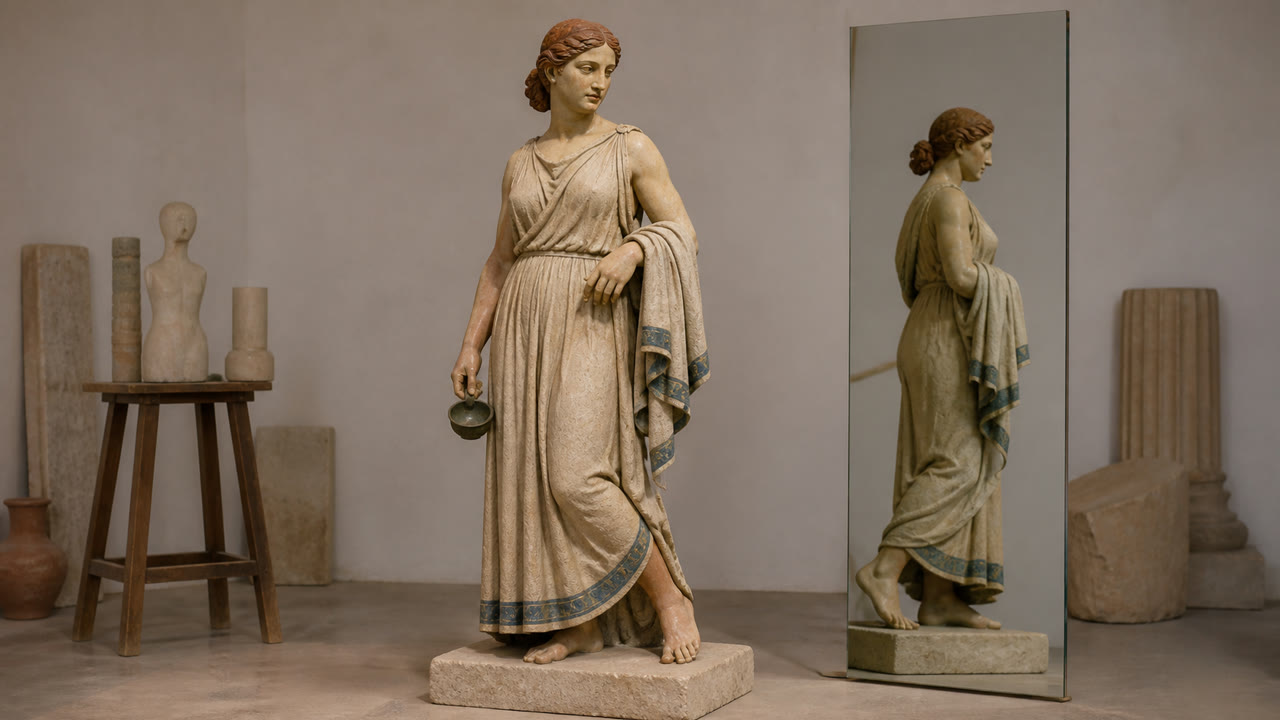
Classical Greek art ordered observed bodies into ideal proportion and balance, using contrapposto, calm expression and controlled movement to present citizens, gods and heroes as harmonious norms.

At a glance
Visual cues
- Contrapposto with weight on one leg and opposed shoulder and hip
- Balanced anatomy combining observation and idealization
- Restrained expression and clear contour even in action
- Drapery revealing bodily structure and movement
Best used for
- Expressing proportion, restraint and bodily ideals through pose
- Building a classical reference from proportion and weight rather than columns and laurel symbols alone
Use this style
Take the compact brief into a project or hand the structured version to an AI tool.
Detailed guidance and sourcesProduction rules, reference works, comparisons, research and citation formats
Dictionary entry
- Type
- Keep inscriptional capitals secondary, using balanced widths and open spacing for a quiet order.
- Composition
- Place weight on one leg, oppose shoulder and hip inclinations, and return the asymmetrical pose to overall balance.
- Material
- Do not mistake today's white marble for an originally colorless world; distinguish stone, bronze and traces of polychromy.
- Caution
- White busts and colonnades alone drift into later Neoclassicism. Center Classical-period proportion, weight and restrained movement.
- Further study
- Classical Greek art / Contrapposto and ideal proportion / Polykleitos, Parthenon sculpture and Attic vase painting
Related entries
- Ancient Egyptian Art (古代エジプト美術)Same Historical Styles lineage.Compare Classical Greek Art and Ancient Egyptian Art
- Roman Art (古代ローマ美術)Same Historical Styles lineage.Compare Classical Greek Art and Roman Art
More from Historical Styles
Continue through styles in the same Historical Styles family, prioritised by shared effects.
- Palladianism (パッラーディオ主義)Shared effects: Trust / Luxury / Calm.
- Renaissance (ルネサンス)Shared effects: Trust / Luxury / Calm.
- Neoclassicism (新古典主義)Shared effects: Trust / Luxury / Calm.
Browse all Historical Styles entries
Cite this entry
The dictionary is meant to be linked to. Take whichever form fits where you are writing.
- Link
- https://indexstyle.org/styles/classical-greek-art
- Markdown
- [Classical Greek Art — IndexStyle](https://indexstyle.org/styles/classical-greek-art)
- HTML
- <a href="https://indexstyle.org/styles/classical-greek-art">Classical Greek Art — IndexStyle</a>