Japanese Realism Photography
リアリズム写真運動 / 1950–1958 / Style / Photography Movements
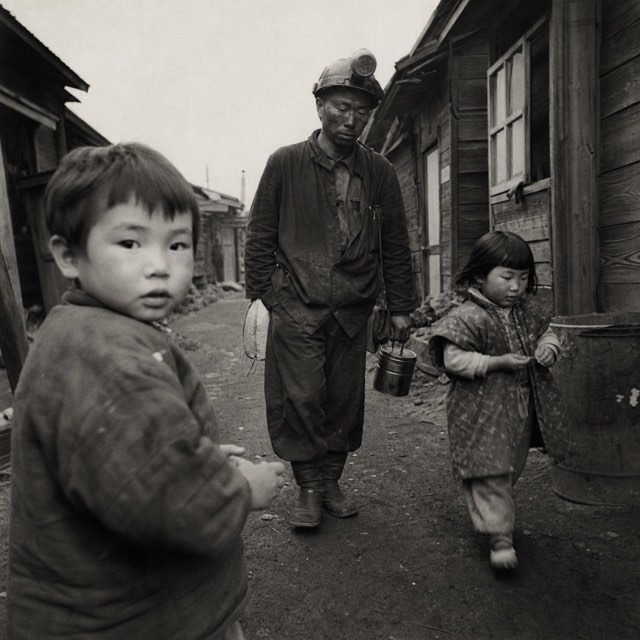
The postwar Japanese movement Domon Ken led under 'absolutely unstaged, absolute snapshots.' Hiroshima and Children of Chikuho faced society directly, drawing amateur monthly contests into the reconnection of photography and life.


At a glance
Visual cues
- The unstaged principle
- Social subjects faced directly
- Close wide-angle work
- Coarse-grained prints
Best used for
- Reporting on social issues that requires staying close to the people involved
- Setting a shooting standard for open calls and staff-made photography
Use this style
Take the compact brief into a project or hand the structured version to an AI tool.
Detailed guidance and sourcesProduction rules, reference works, comparisons, research and citation formats
Dictionary entry
- Type
- Headlines name the subject plainly, with no metaphor
- Composition
- Move in wide and keep hands and feet inside the frame
- Material
- Push the film, keep the grain, print on the hard side
- Caution
- The unstaged principle is proclaimed while the subject is pressed to stay as they are, and the relation between photographer and photographed goes unexamined.
- Further study
- Domon Ken's Hiroshima / the Camera magazine monthlies / the contrast with Kimura Ihei
Related entries
- Provoke (プロヴォーク)Same Photography Movements lineage.Compare Japanese Realism Photography and Provoke
- Snapshot Aesthetic (スナップショット美学)Shared effects: Intimacy / Rebellion.Compare Japanese Realism Photography and Snapshot Aesthetic
Often confused with
More from Photography Movements
Continue through styles in the same Photography Movements family, prioritised by shared effects.
- New Topographics (ニュー・トポグラフィックス)Shared effects: Rebellion / Trust.
- New Color Photography (ニューカラー)Shared effects: Intimacy / Rebellion.
- FSA Documentary (FSAドキュメンタリー)Shared effects: Trust / Intimacy.
Browse all Photography Movements entries
Cite this entry
The dictionary is meant to be linked to. Take whichever form fits where you are writing.
- Link
- https://indexstyle.org/styles/japanese-realism-photography
- Markdown
- [Japanese Realism Photography — IndexStyle](https://indexstyle.org/styles/japanese-realism-photography)
- HTML
- <a href="https://indexstyle.org/styles/japanese-realism-photography">Japanese Realism Photography — IndexStyle</a>