Egyptian Revival
エジプシャン・リヴァイヴァル / late 18th–19th century / Style / Historical Styles
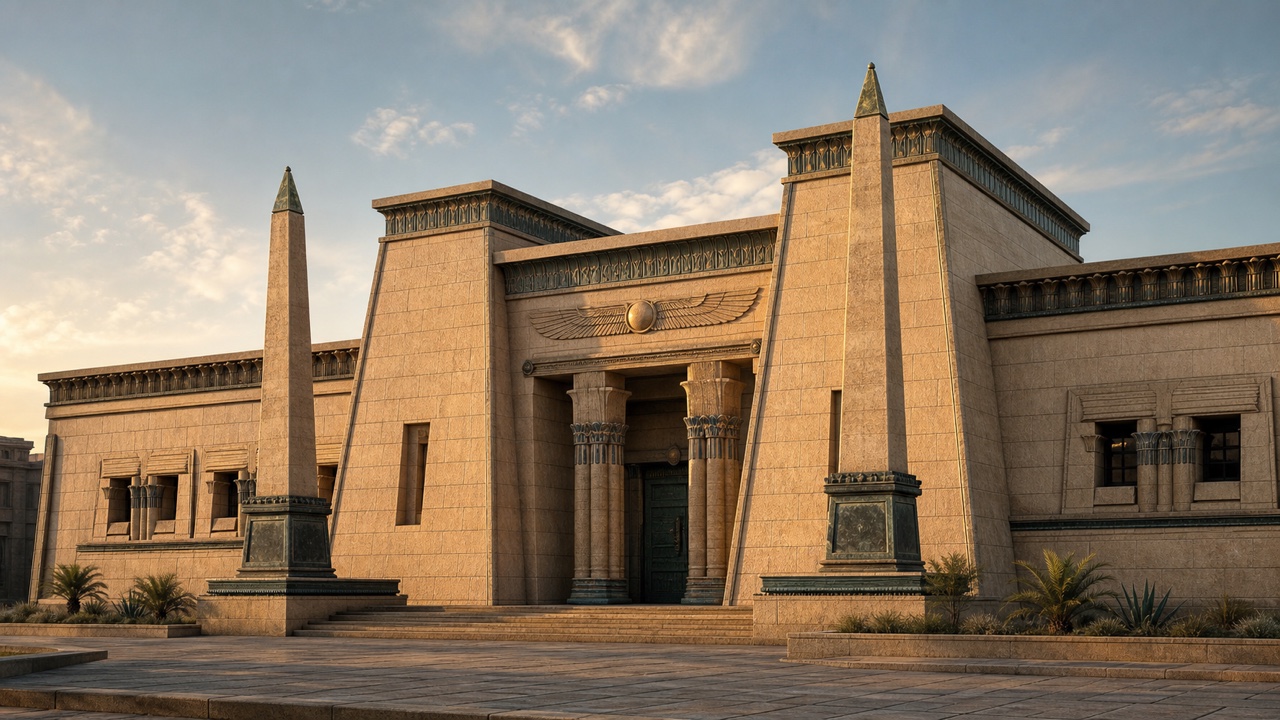
A revival style in late-eighteenth- and nineteenth-century Europe and the United States that transferred ancient Egyptian architecture and ornament to modern monuments, cemeteries, theatres and furniture. Obelisks, pylon-shaped entrances, papyrus and lotus capitals, and winged sun disks were organized into massive symmetrical compositions to project permanence, exoticism and the authority of discovery.

At a glance
Visual cues
- Tapering obelisks and pylon-shaped entrances with battered walls
- Bundled columns with abstracted papyrus or lotus capitals
- Bands of winged sun disks, sphinxes, cobras or hieroglyphs
- Heavy walls with small openings and a symmetrical monumental front
Best used for
- Concentrating ideas of excavation, memory and permanence into an architectural front for an exhibition or cultural venue
- Using Egyptian references in packaging or displays as a structure of columns, gates and bands rather than a layer of gold ornament
Use this style
Take the compact brief into a project or hand the structured version to an AI tool.
Detailed guidance and sourcesProduction rules, reference works, comparisons, research and citation formats
Dictionary entry
- Type
- Set a short title in broad capitals. If hieroglyphs are used, verify the actual text and direction with specialist references.
- Composition
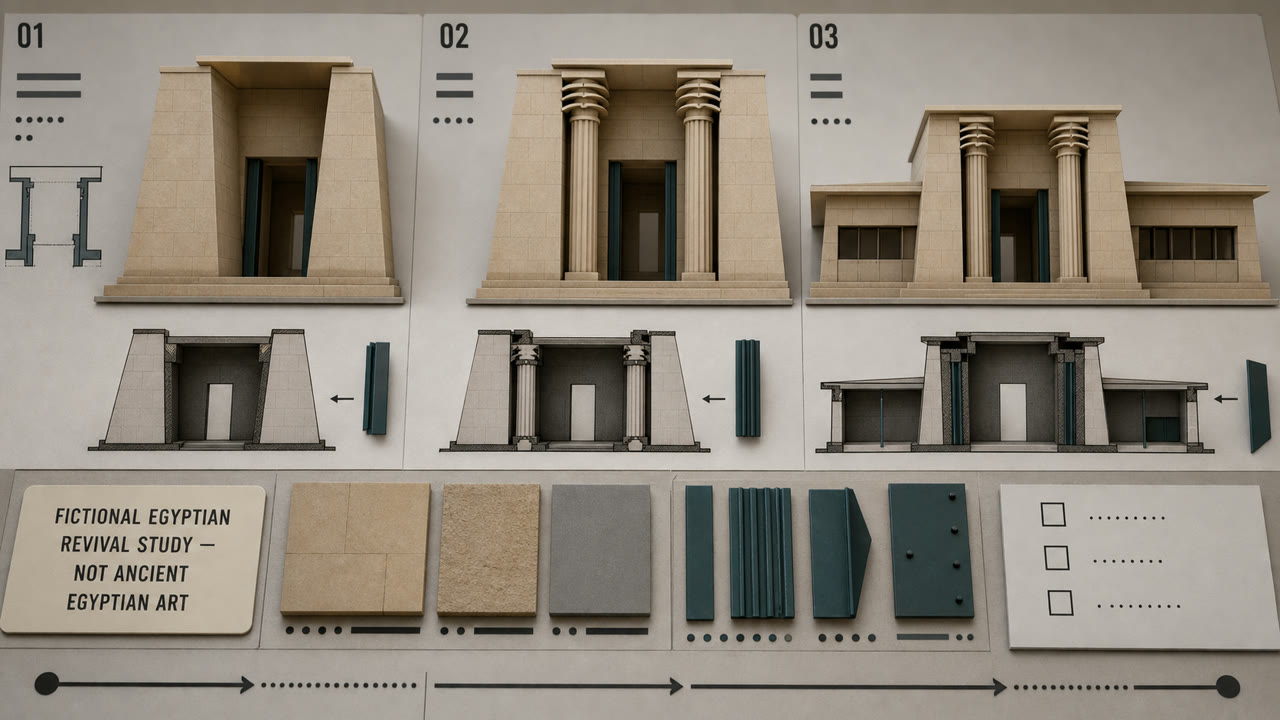
- Center a pylon gate within low, heavy symmetry and use only one pair of obelisks or bundled columns.
- Material
- Build from rough sandstone color, dark blue-green and oxidized metal, limiting winged disks and lotus forms to shallow relief.
- Caution
- Do not confuse ancient Egyptian art with a modern Western revival of it. Do not collect pyramids, sphinxes and invented hieroglyphs without meaning; acknowledge the histories of archaeology, empire and collecting.
- Further study
- Getty AAT — Egyptian Revival / The Met — Egyptian Revival / Egyptomania, archaeology and colonial collecting
Related entries
- Ancient Egyptian Art (古代エジプト美術)Same Historical Styles lineage.Compare Egyptian Revival and Ancient Egyptian Art
- Art Deco (アール・デコ)Same Historical Styles lineage.Compare Egyptian Revival and Art Deco
More from Historical Styles
Continue through styles in the same Historical Styles family, prioritised by shared effects.
- Gothic Revival (ゴシック・リヴァイヴァル)Shared effects: Luxury / Trust / Nostalgia.
- Palladianism (パッラーディオ主義)Shared effects: Trust / Luxury.
- Baroque (バロック)Shared effects: Luxury / Trust.
Browse all Historical Styles entries
Cite this entry
The dictionary is meant to be linked to. Take whichever form fits where you are writing.
- Link
- https://indexstyle.org/styles/egyptian-revival
- Markdown
- [Egyptian Revival — IndexStyle](https://indexstyle.org/styles/egyptian-revival)
- HTML
- <a href="https://indexstyle.org/styles/egyptian-revival">Egyptian Revival — IndexStyle</a>