Why it is closeLuxuryWeb / UIRecruiting / peopleTrust
The golden age of corporate identity established by Rand, Chermayeff and their peers: geometric marks, gridded standards manuals and disciplined application speaking for corporations in modernism's abstract language.
Why it is closeName matchWeb / UIRecruiting / peopleTrust
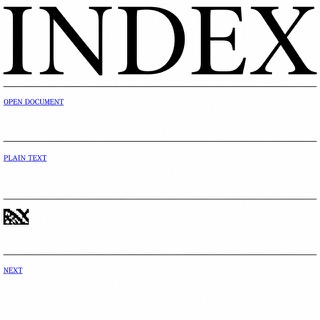
Puts the browser's default rendering straight on screen and refuses the finished look of templates. The bare structure of the HTML becomes the style itself.
Default headings and links / Blue underlined links / Extreme jumps in size / Rules and white space without ornament
Why it is closeName matchWeb / UIRecruiting / peopleTechnique
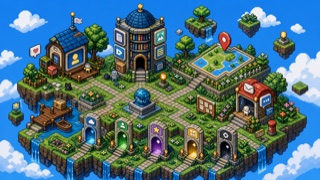
An early-2000s web style that densely draws cities, rooms, and landscapes as small isometric pixels, turning an entire site into an explorable world. Its defining feature is spatial navigation, not pixel art in isolation.
Isometric cities and rooms seen from above / Dense placement of tiny people, furniture, and signs / Tile-based floors, walls, water, and roads / Buttons and links embedded as objects in the landscape
Why it is closeWeb / UIRecruiting / peopleTrustTechnique
Unified symbol systems that name facilities and actions without language. Tokyo 1964 systematized sport and wayfinding symbols; the AIGA/DOT transportation set became the public-domain world standard.
Geometrized human figures / Uniform stroke weight / Consistency as a system / Independence from language
Why it is closeWeb / UIRecruiting / peopleTrustTechnique
Discards geographic accuracy for horizontal, vertical and 45-degree lines with evenly spaced stations. Beck's 1933 London Underground diagram established it as the common language of transit maps worldwide.
Lines limited to 45 degrees / Evenly spaced stations / Color-coded lines / Independence from geography
Why it is closeLuxuryWeb / UIRecruiting / peopleTrust
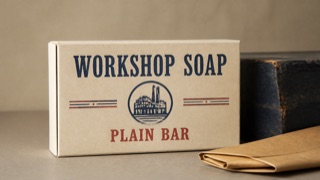
A contemporary brand style that edits 1920s–50s American packaging, sign painting, and factory labels into regionally nonspecific authenticity. Wide space and premium materials turn an imagined old shop into a current upscale product.
Heavy sign-painted type and small origin-like labels / Simplified shields, ribbons, stars, and factory seals / Ecru, navy, red, and kraft-brown limited palettes / One vintage packaging image isolated in broad space
Why it is closeLuxuryWeb / UIRecruiting / peopleTrust
The hairline-metal windows of iTunes and Safari: a skeuomorphic branch that speaks an app's purpose through material, bringing pro-gear trust to the desktop.
Why it is closeWeb / UIRecruiting / peopleTrustTechnique
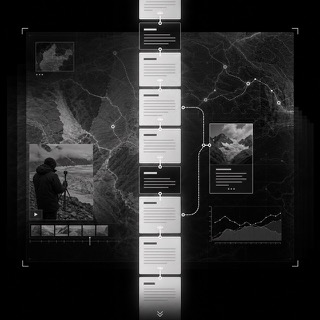
A web page form in which the reader's scroll position is the clock of the story, with graphics, maps and video changing as the page moves and reversing when the reader scrolls back. Visualization researchers treat it as the web equivalent of long form journalism and describe its structure as either linear or elastic, the elastic kind letting a reader dive deeper on demand. News outlets including the New York Times, the BBC and The Economist built the form out.
A graphic that holds still on screen while a single narrow column of text passes over it / Changes made by opacity and by moving a map, so that scrolling back undoes them in the same order / Photography, video and data visualization sharing one article / A path that is either straight through or branches into an optional deeper detour and returns
Why it is closeLuxuryWeb / UIRecruiting / peopleTrust
The banknote style in which lathe-cut guilloche curves and engraved portraits refuse forgery while making credit visible. America's 1896 Educational Series raised the banknote to allegorical masterpiece.
Continuous guilloche curves / Engraved intaglio portraits / Fine background lathework / Hierarchies of denomination
Why it is closeLuxuryWeb / UIRecruiting / peopleTrust
Academic art joined institutional training in drawing, anatomy and the antique to a hierarchy of subjects, controlled contours, ideal bodies, legible historical narratives and polished surfaces that conceal the brush.
Smooth surfaces and clear contours hiding the stroke / Anatomy and pose idealized from classical sculpture / History, scripture and myth placed atop a hierarchy of genres / Multi-figure scenes organized like a stage and highly finished
Why it is closeLuxuryWeb / UIRecruiting / peopleTrust
Roman art absorbed Greek, Etruscan and provincial forms while joining individualized portraiture, continuous historical relief, architecture and wall painting to ancestry, civic life and imperial power.
Veristic portrait heads recording age and individual difference / Historical relief unfolding events in continuous scenes / Public architecture repeating arches, vaults and domes / Wall painting and mosaic opening rooms into fictive architecture and gardens
Why it is closeLuxuryWeb / UIRecruiting / peopleTrust
A movement that rediscovered ancient proportion and the human body and fixed three dimensions on a flat surface through linear perspective. Mathematics became the common language of painting and architecture, and the norms of the next five hundred years, symmetry, the classical orders and the golden ratio, were established here.
One point linear perspective / The classical orders and symmetry / Composition based on the proportions of the body / A clear triangular composition
Why it is closeLuxuryWeb / UIRecruiting / peopleTrust
Ancient Egyptian art rendered kingship, divinity and the afterlife as a lasting order through hierarchical scale, composite-view figures, horizontal registers and highly repeatable poses.
Head and legs in profile with frontal eye and shoulders / Hierarchical scale indicating rank or sanctity / Scenes divided into horizontal registers / Outlined mineral color and strongly frontal statuary
Why it is closeLuxuryWeb / UIRecruiting / peopleTrust
Romanesque art joined pilgrimage and monastic culture to thick walls, round arches, barrel vaults and lucid masses, integrating elongated apocalyptic figures into church portals and capitals.
Thick masonry, small openings and round arches / Barrel or groin vaults carried by heavy piers / Relief filling the semicircular tympanum above a portal / Figures and animals stretched to fit architectural frames
The screen language NeXT laid down in its 1993 interface guidelines. The document states the goal outright: a color scheme based on black, white, and gray, and a simple appearance that uses shading for a three dimensional effect. The main menu stands as a vertical column at the upper left, and docked application icons run down the right edge.
A menu standing as a vertical column at the upper left, submenus attaching to its right / Square application icons docked in a vertical strip along the right edge of the screen / Thick bevels carved entirely from gray values, with no hue anywhere in them / A black title bar on the window taking keystrokes, dark gray on a window that is merely frontmost
Why it is closeLuxuryWeb / UIRecruiting / peopleTrust
Byzantine art separated sacred presence from everyday space through frontality, hierarchical scale, gold grounds, non-naturalistic light and repeatable icon types across churches, mosaics and panels.
Still sacred figures facing the viewer / Gold grounds suppressing depth and behaving as light / Central placement and scale indicating status and sanctity / Wall mosaics whose angled tesserae make light tremble
Why it is closeLuxuryWeb / UIRecruiting / peopleCalm
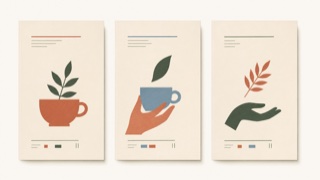
A brand style that uses soft color, literary serif type, flat cut-paper illustration, and generous space to make everyday products resemble new independent-press books. Luxury comes from edited intimacy rather than gloss.
Didone or retro serif display type / Soft cream, muted orange, green, and blue fields / Flat plant and figure illustrations resembling cut paper or printmaking / Vertical cover-like whitespace and small explanatory text
IndexStyle is not a list of every term used around design. An independent entry must describe a visual language that can be recognised, reproduced and distinguished from its neighbours. Editorial standard
Reference images are always real works: photographs and scans held by museums, libraries and archives, or official documents. We never make or retouch them.
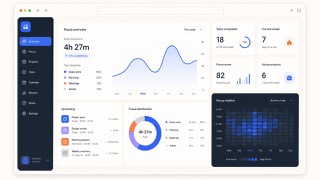
Where no lawful, legible or sufficiently representative reference image can be displayed, the entry may add one or more AI-generated interpretations. They are always labelled as such and never enter the reference gallery, share image or source evidence. Existing real-work references remain evidence. 151 of 776 entries currently show at least one.
Every entry names the source it was recorded from and links to it, and every source URL is checked when the entry is added and again in later sweeps.
Styles, techniques and internet aesthetics are classified, never conflated.
Related entries stay traceable in both directions.


%201%E2%80%935%20(1987)%2C%20Tate%20Modern%2C%20London%2C%20UK.jpg)


.png)



%20-%20Homer%20and%20his%20Guide%20(1874).jpg)