Mono-ha
もの派 / late 1960s–1970s / Style / Modern and Contemporary Art Movements
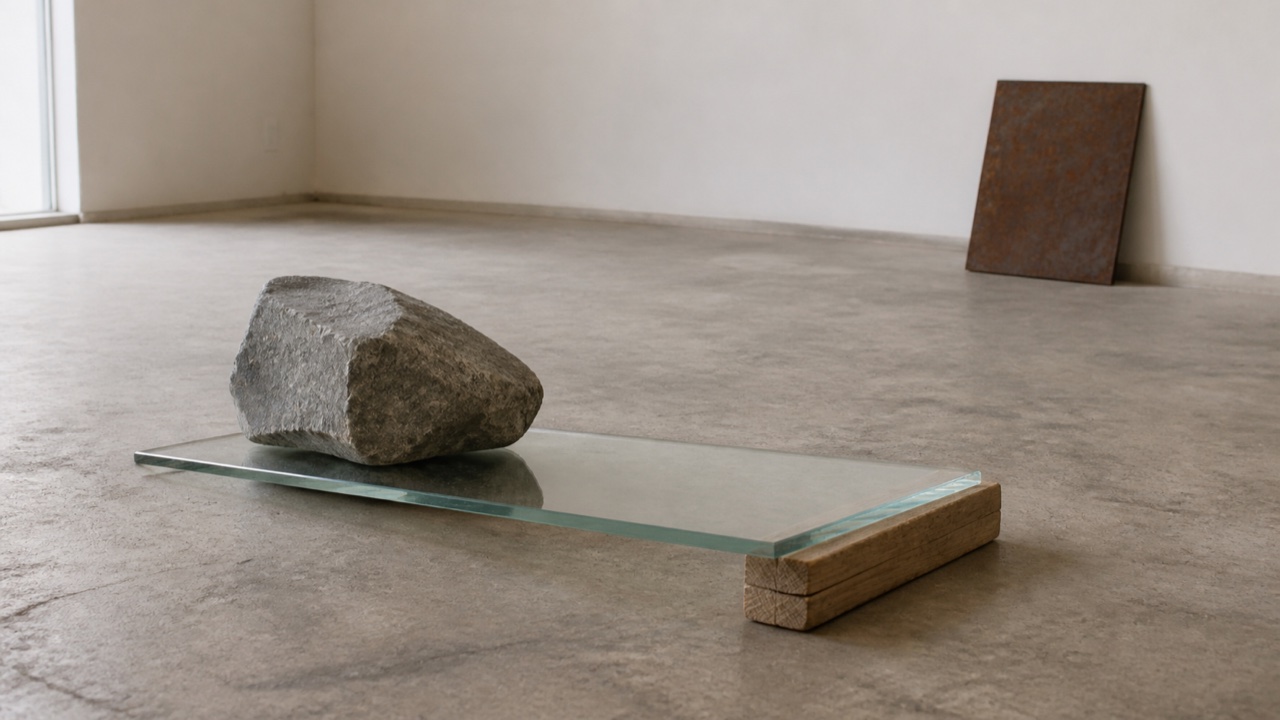
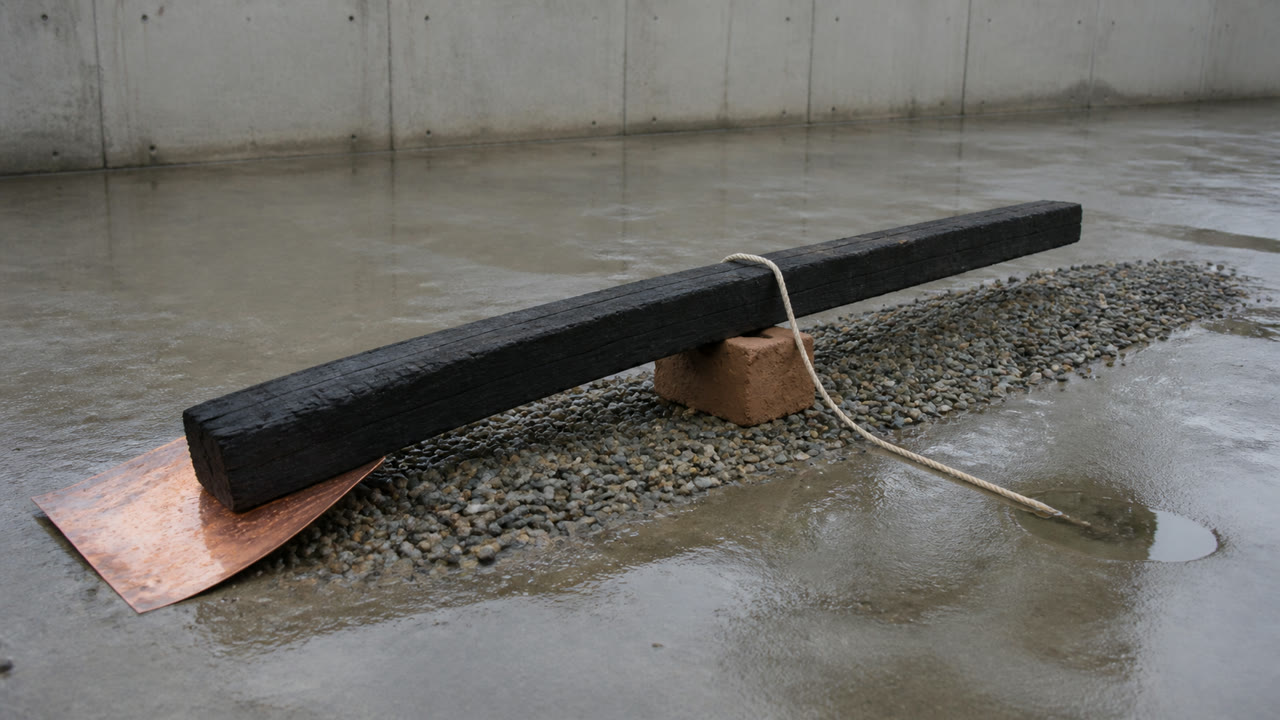
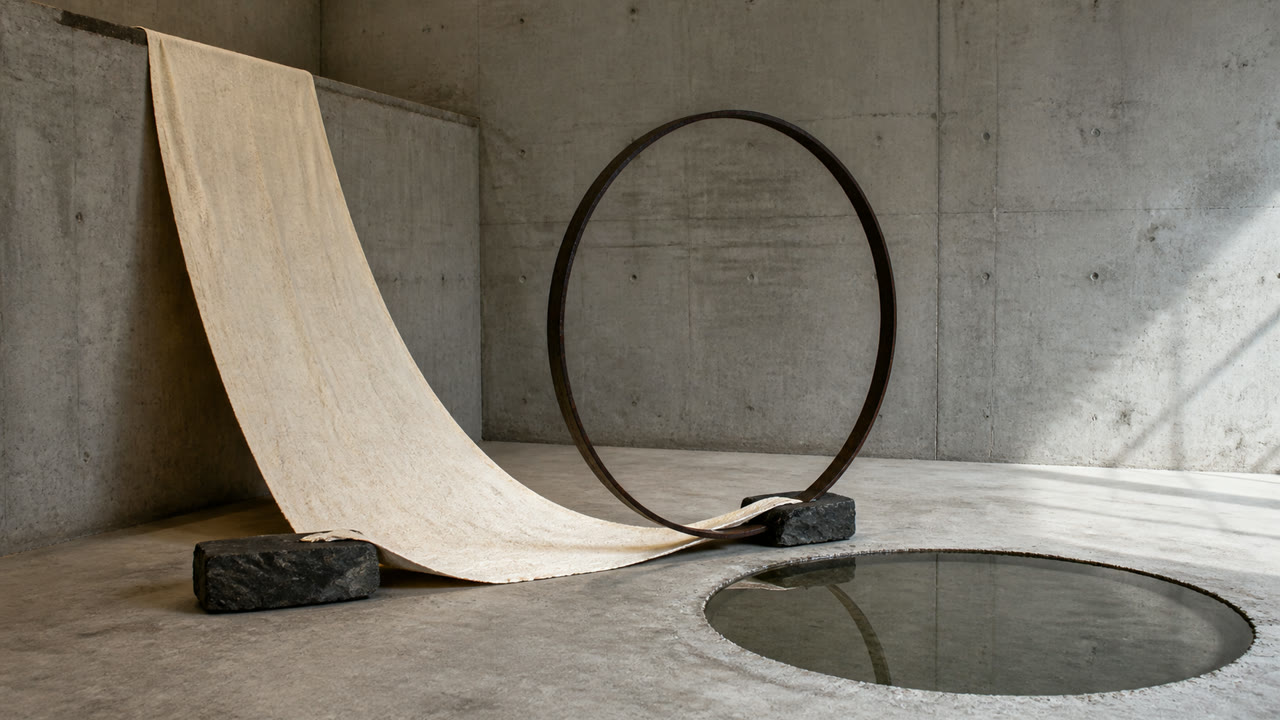
A Japanese tendency that placed stone, wood, glass, steel, and cotton with minimal transformation to expose relations among things, site, support, fracture, and gravity rather than constructing a finished shape.
At a glance
Visual cues
- Natural and industrial matter placed in pairs or small groups
- Visible cutting, support, pressure, and gravity
- Floor and wall contact replacing a strong pedestal
- Largely unprocessed stone, steel, wood, cotton, and glass
Best used for
- Making contact, support, and weight legible instead of using material as a symbol
- Letting architecture or product displays hold the boundary between natural and industrial matter
Use this style
Take the compact brief into a project or hand the structured version to an AI tool.
Detailed guidance and sourcesProduction rules, reference works, comparisons, research and citation formats
Dictionary entry
- Type
- Move explanation to the wall and name only the material relation.
- Composition
- Set distance, contact, and center of mass between two materials and keep walk-around space.
- Material
- Use stone, steel plate, wood, cotton, or glass without cosmetic finishing, concealing only the safety engineering.
- Caution
- Placing a stone is not enough. If the relation among material, placement, and site cannot be stated, it becomes display rather than Mono-ha.
- Further study
- Lee Ufan and Sekine Nobuo / Phase—Mother Earth and Relatum / encounter, place and material relation
Related entries
- Arte Povera (アルテ・ポーヴェラ)Shared effects: Rebellion / Calm.Compare Mono-ha and Arte Povera
- Earthwork / Land Art (アースワーク/ランドアート)Shared effects: Calm / Rebellion.Compare Mono-ha and Earthwork / Land Art
More from Modern and Contemporary Art Movements
Continue through styles in the same Modern and Contemporary Art Movements family, prioritised by shared effects.
- Saqqakhaneh (サッカーハーネ派)Shared effects: Rebellion / Calm.
- Khartoum School (ハルツーム派)Shared effects: Calm / Rebellion.
- Nsukka Group (ンスッカ・グループ)Shared effects: Calm / Rebellion.
Browse all Modern and Contemporary Art Movements entries
Cite this entry
The dictionary is meant to be linked to. Take whichever form fits where you are writing.
- Link
- https://indexstyle.org/styles/mono-ha
- Markdown
- [Mono-ha — IndexStyle](https://indexstyle.org/styles/mono-ha)
- HTML
- <a href="https://indexstyle.org/styles/mono-ha">Mono-ha — IndexStyle</a>