Mono-ha
もの派 / late 1960s–1970s / 양식 / 근현대 미술 운동
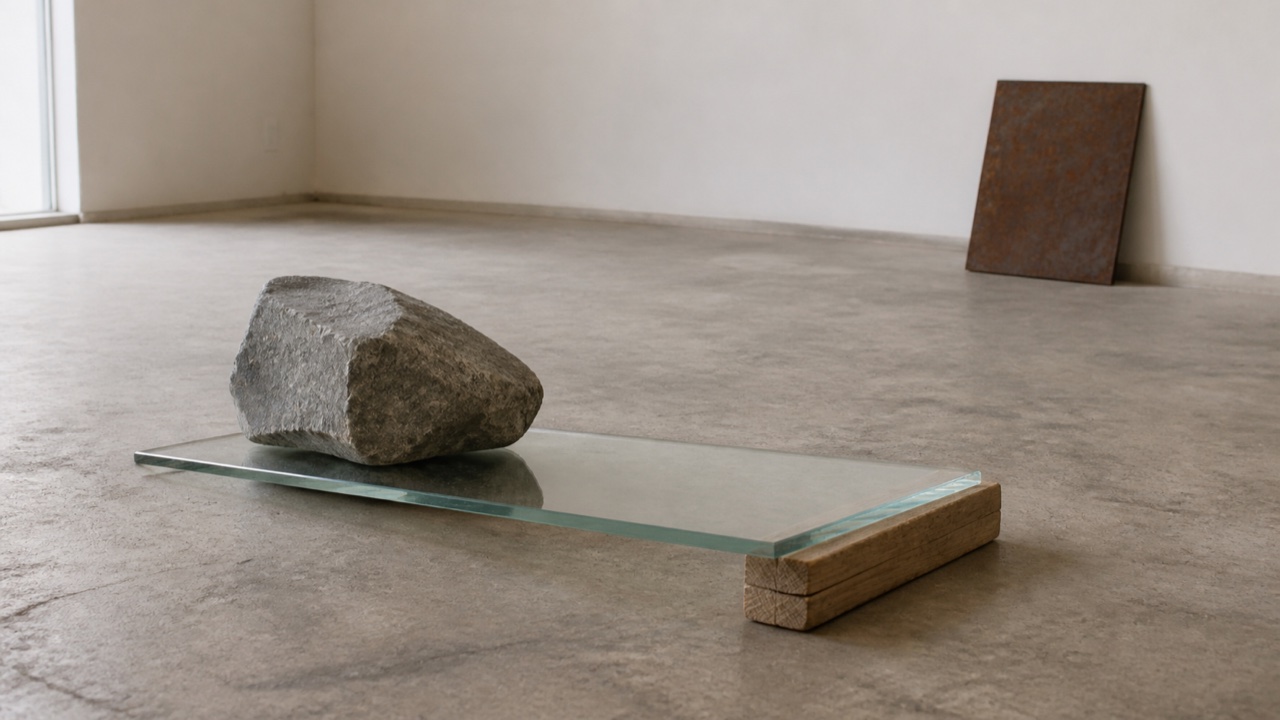
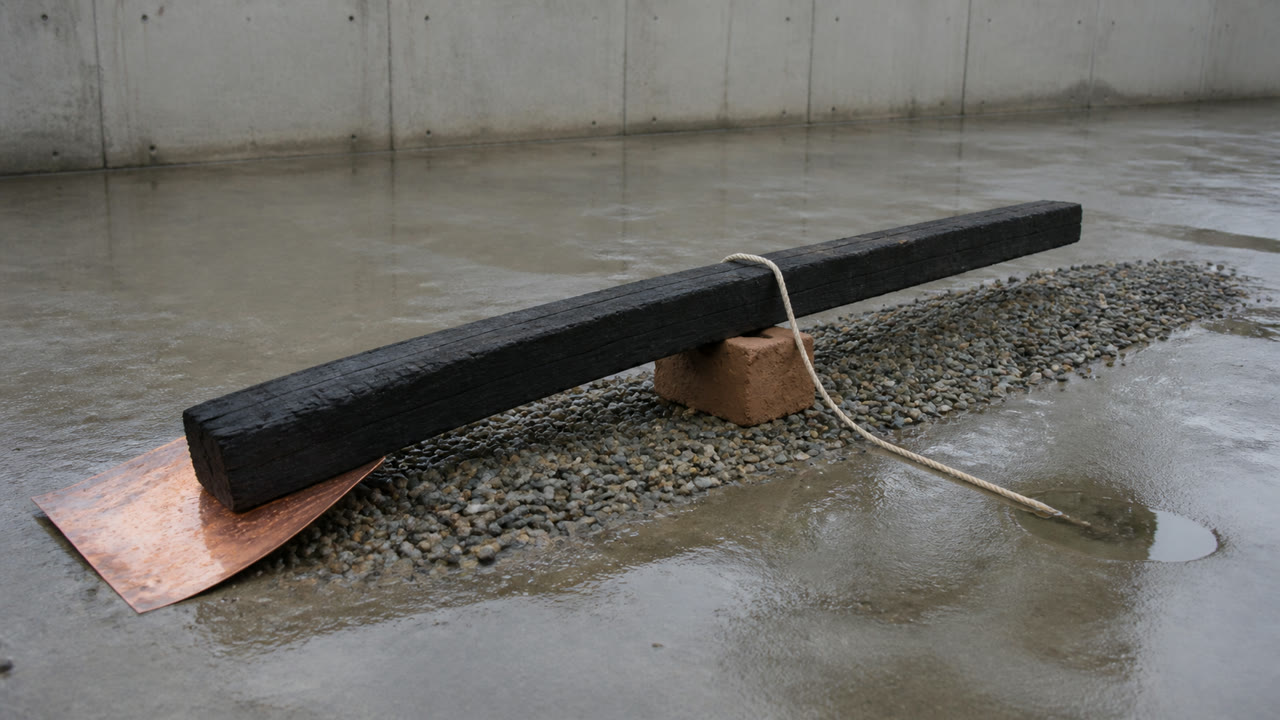
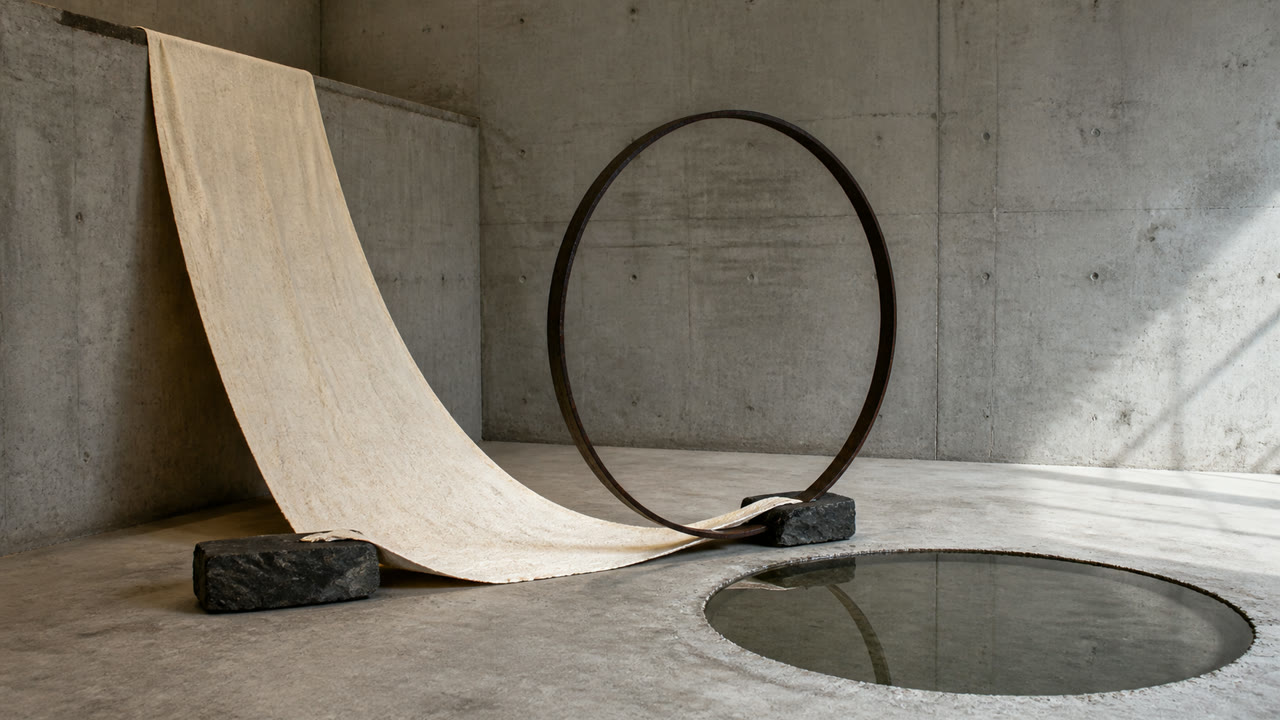
일본적인 경향으로, 돌, 나무, 유리, 강철, 그리고 면 소재를 최소한의 변화로 사용하여 사물, 장소, 지지대, 균열, 그리고 중력을 관계롭게 드러내는 스타일입니다. 완성된 형태를 만드는 대신.
한눈에 판단
시각적 특징
- 자연과 산업적인 재료를 쌍으로 또는 작은 그룹으로 배치
- 보이는 절단, 지지, 압력, 그리고 중력
- 바닥과 벽의 접촉을 통해 강력한 받침대 대체
- 거의 가공되지 않은 돌, 강철, 나무, 면, 유리
적합한 용도
- Making contact, support, and weight legible instead of using material as a symbol
- Letting architecture or product displays hold the boundary between natural and industrial matter
이 양식 사용하기
짧은 지침을 프로젝트에 적용하거나 구조화된 사양을 AI 도구에 넘길 수 있습니다.
자세한 제작법과 출처제작 규칙, 실제 사례, 비교, 연구, 인용 형식
사전 항목
- 타이포그래피
- Move explanation to the wall and name only the material relation.
- 구성
- Set distance, contact, and center of mass between two materials and keep walk-around space.
- 재료
- Use stone, steel plate, wood, cotton, or glass without cosmetic finishing, concealing only the safety engineering.
- 주의
- Placing a stone is not enough. If the relation among material, placement, and site cannot be stated, it becomes display rather than Mono-ha.
- 더 읽을거리
- Lee Ufan and Sekine Nobuo / Phase—Mother Earth and Relatum / encounter, place and material relation
관련 항목
- Arte Povera (アルテ・ポーヴェラ)공통 인상: Rebellion / Calm.Mono-ha와 Arte Povera 비교
- Earthwork / Land Art (アースワーク/ランドアート)공통 인상: Calm / Rebellion.Mono-ha와 Earthwork / Land Art 비교
근현대 미술 운동 더 보기
근현대 미술 운동에서 공통 인상이 많은 항목을 우선해 골랐습니다.
- Saqqakhaneh (サッカーハーネ派)공통 인상: Rebellion / Calm.
- Khartoum School (ハルツーム派)공통 인상: Calm / Rebellion.
- Nsukka Group (ンスッカ・グループ)공통 인상: Calm / Rebellion.
이 항목을 인용하기
사전은 링크되기 위해 있다. 글을 쓰는 자리에 맞는 형식을 그대로 가져가면 된다.
- Link
- https://indexstyle.org/ko/styles/mono-ha
- Markdown
- [Mono-ha — IndexStyle](https://indexstyle.org/ko/styles/mono-ha)
- HTML
- <a href="https://indexstyle.org/ko/styles/mono-ha">Mono-ha — IndexStyle</a>