Mono-ha
もの派 / late 1960s–1970s / Estilo / Movimientos de arte moderno y contemporáneo
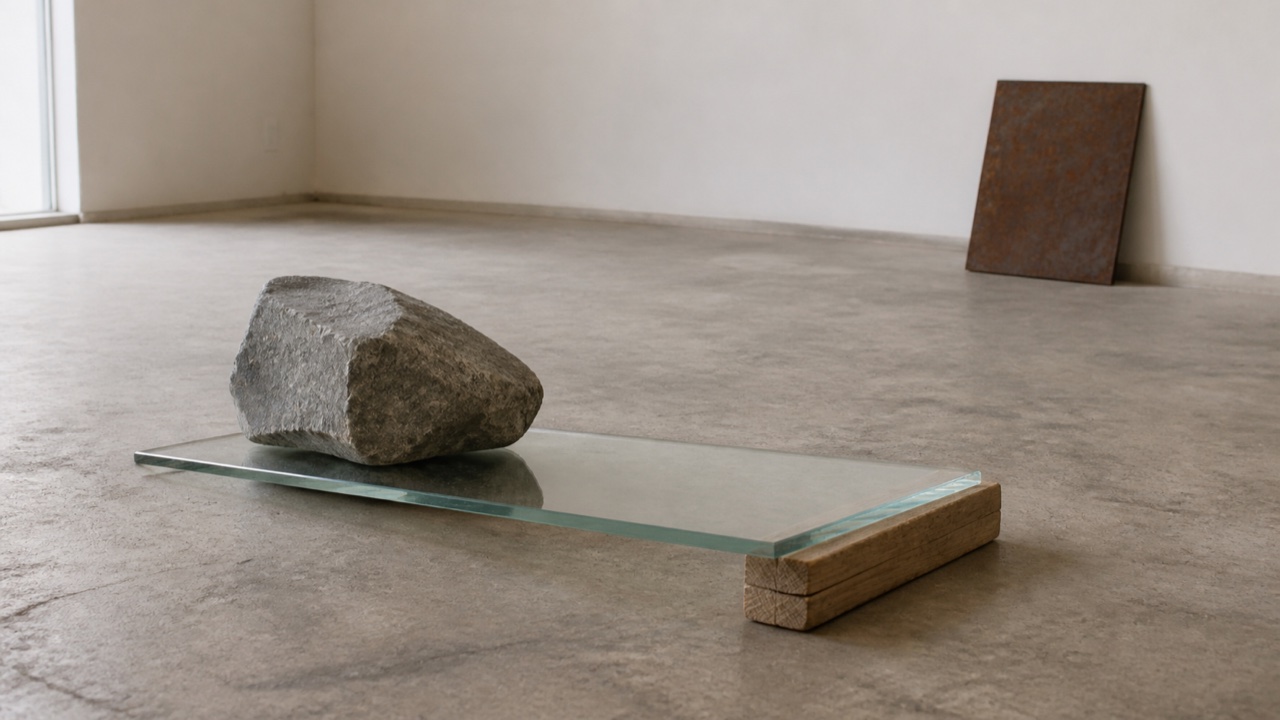
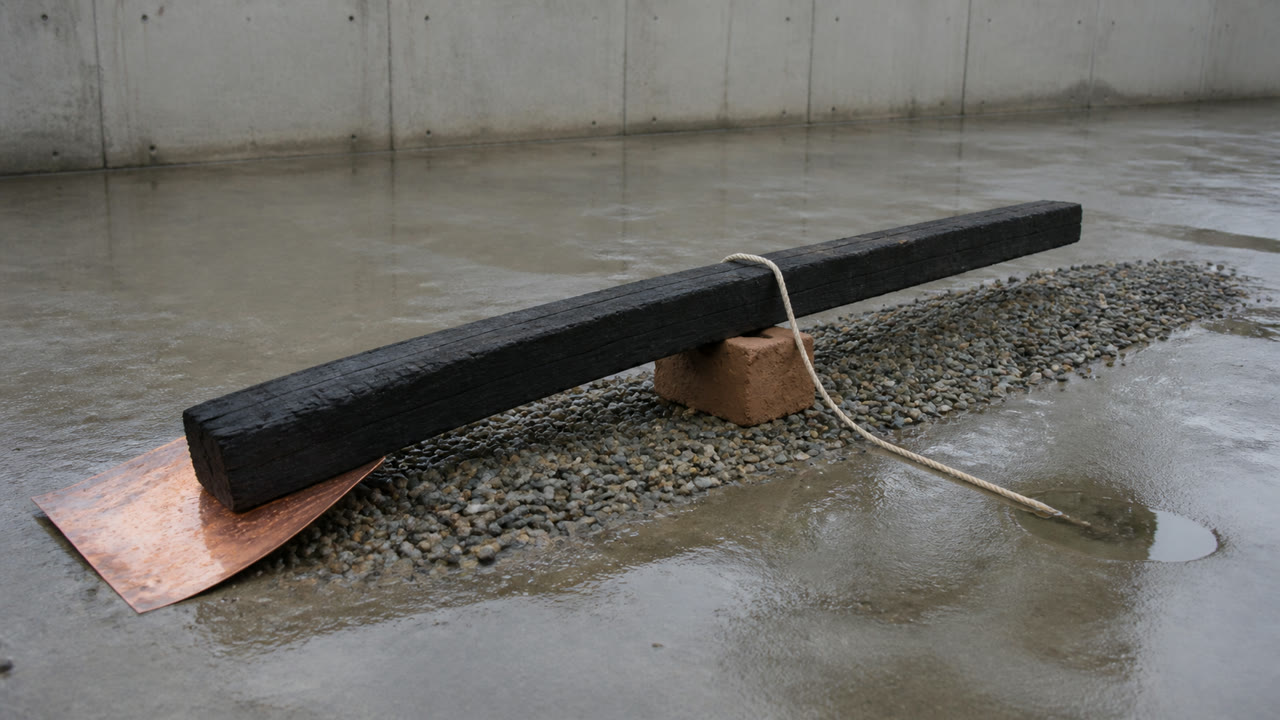
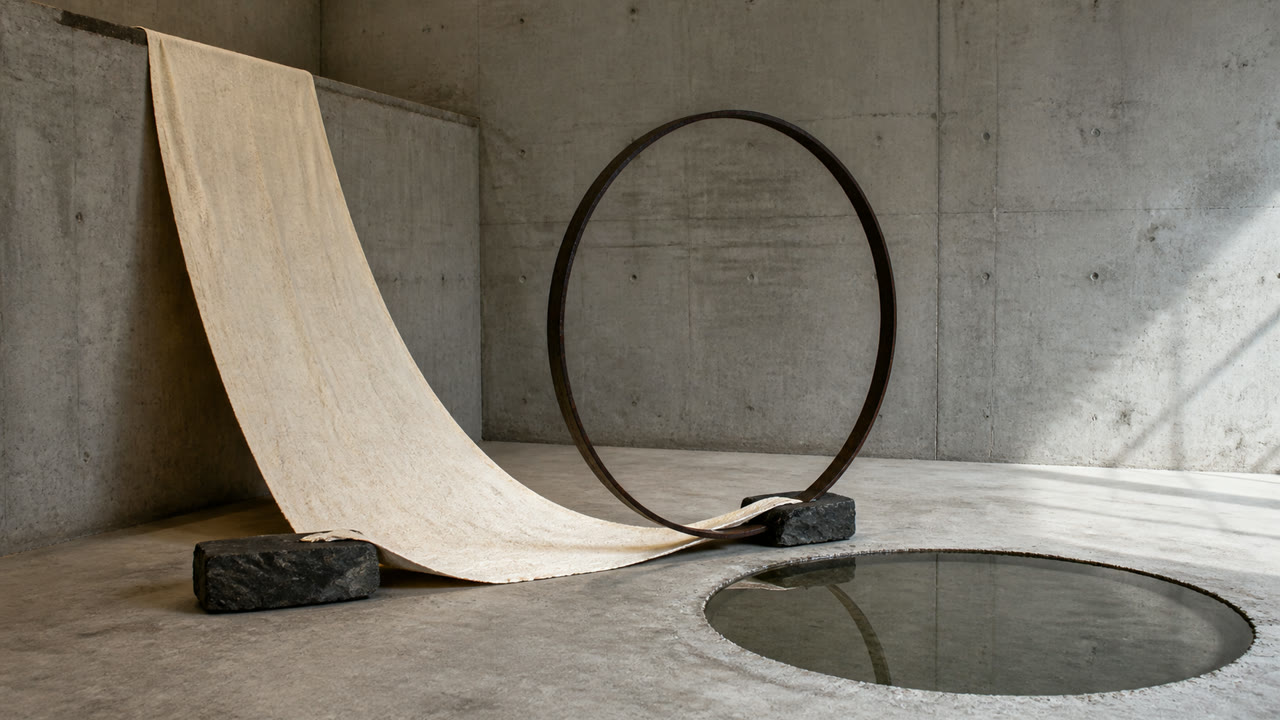
Una tendencia japonesa que colocó piedra, madera, vidrio, acero y algodón con transformación mínima para exponer relaciones entre cosas, lugar, soporte, fractura y gravedad, en vez de construir una forma acabada.
De un vistazo
Rasgos visuales
- Materia natural e industrial dispuesta en pares o pequeños grupos
- Corte, apoyo, presión y gravedad visibles
- Contacto con suelo y pared en lugar de pedestal dominante
- Piedra, acero, madera, algodón y vidrio casi sin procesar
Usos idóneos
- Making contact, support, and weight legible instead of using material as a symbol
- Letting architecture or product displays hold the boundary between natural and industrial matter
Usar este estilo
Lleva el resumen al proyecto o entrega la especificación estructurada a una herramienta de IA.
Guía detallada y fuentesReglas de producción, obras de referencia, comparaciones, investigación y citas
Entrada del diccionario
- Tipografía
- Move explanation to the wall and name only the material relation.
- Composición
- Set distance, contact, and center of mass between two materials and keep walk-around space.
- Material
- Use stone, steel plate, wood, cotton, or glass without cosmetic finishing, concealing only the safety engineering.
- Precaución
- Placing a stone is not enough. If the relation among material, placement, and site cannot be stated, it becomes display rather than Mono-ha.
- Para profundizar
- Lee Ufan and Sekine Nobuo / Phase—Mother Earth and Relatum / encounter, place and material relation
Entradas relacionadas
- Arte Povera (アルテ・ポーヴェラ)Efectos compartidos: Rebellion / Calm.Comparar Mono-ha y Arte Povera
- Earthwork / Land Art (アースワーク/ランドアート)Efectos compartidos: Calm / Rebellion.Comparar Mono-ha y Earthwork / Land Art
Más de Movimientos de arte moderno y contemporáneo
Continúa con estilos de Movimientos de arte moderno y contemporáneo, priorizados por sus efectos compartidos.
- Saqqakhaneh (サッカーハーネ派)Efectos compartidos: Rebellion / Calm.
- Khartoum School (ハルツーム派)Efectos compartidos: Calm / Rebellion.
- Nsukka Group (ンスッカ・グループ)Efectos compartidos: Calm / Rebellion.
Ver todas las entradas de Movimientos de arte moderno y contemporáneo
Citar esta entrada
El diccionario existe para que se enlace. Toma la forma que encaje donde estés escribiendo.
- Link
- https://indexstyle.org/es/styles/mono-ha
- Markdown
- [Mono-ha — IndexStyle](https://indexstyle.org/es/styles/mono-ha)
- HTML
- <a href="https://indexstyle.org/es/styles/mono-ha">Mono-ha — IndexStyle</a>