Mono-ha
もの派 / late 1960s–1970s / Style / Mouvements d’art moderne et contemporain
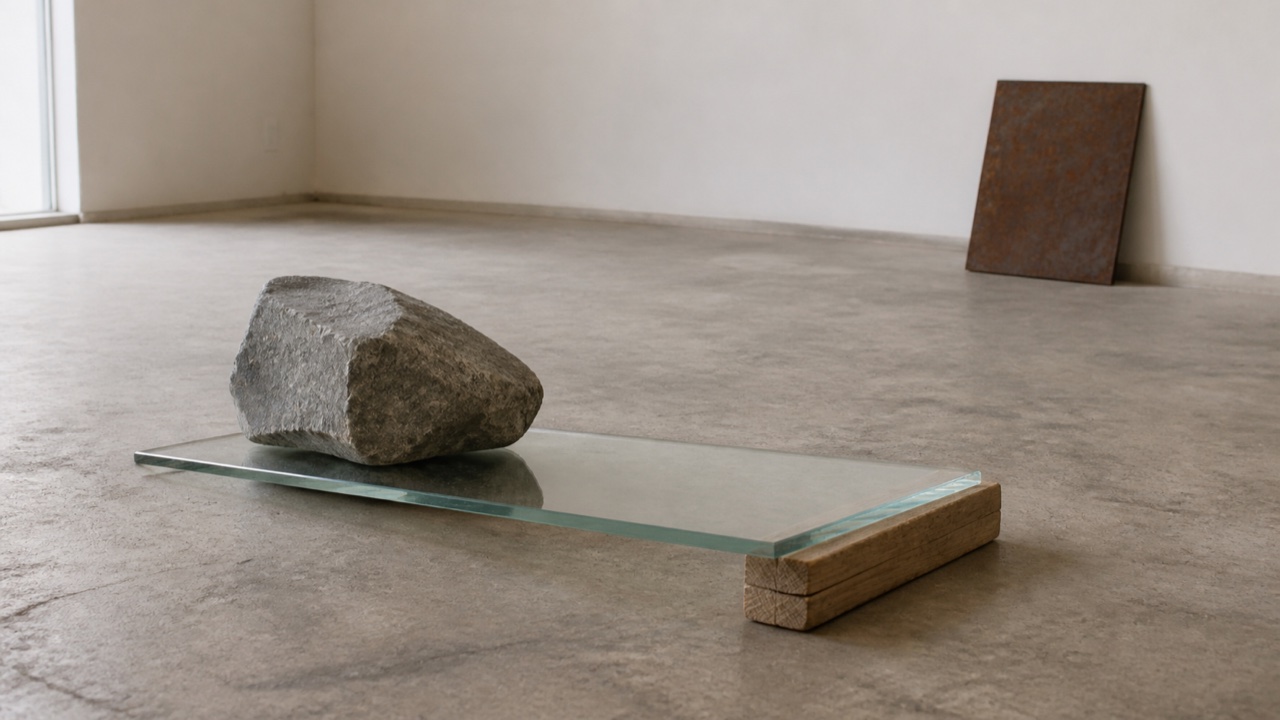
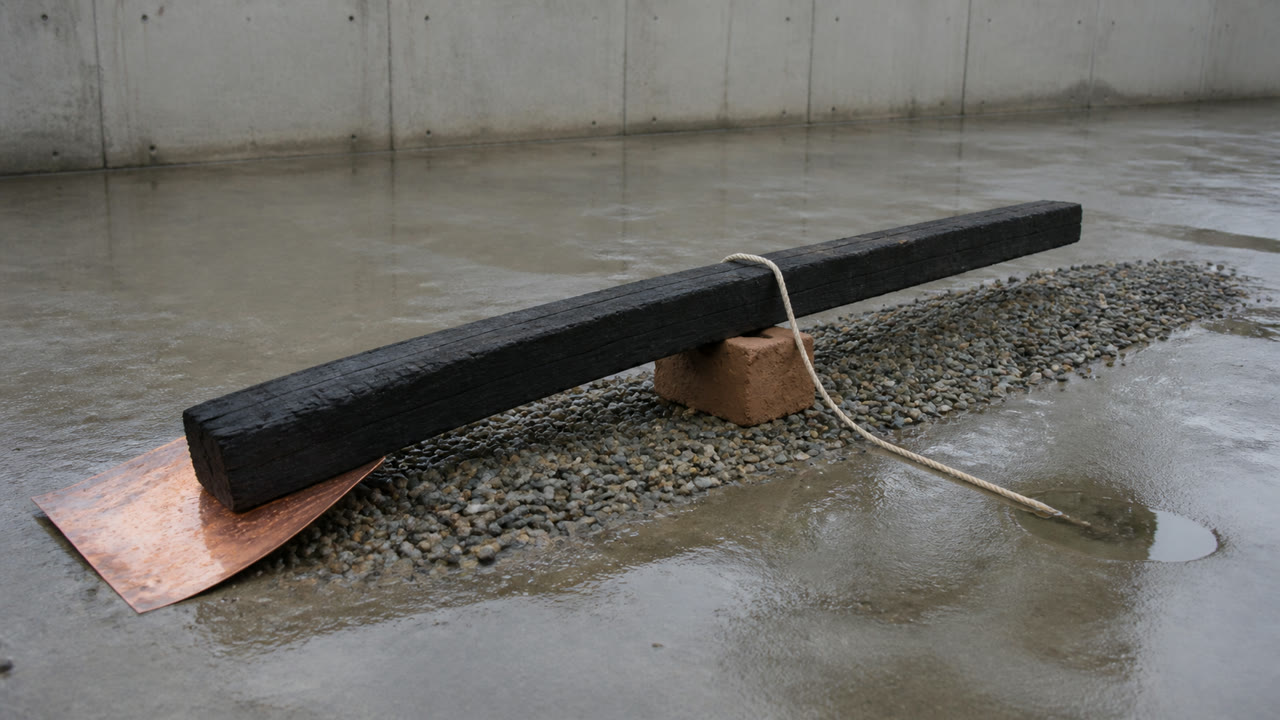
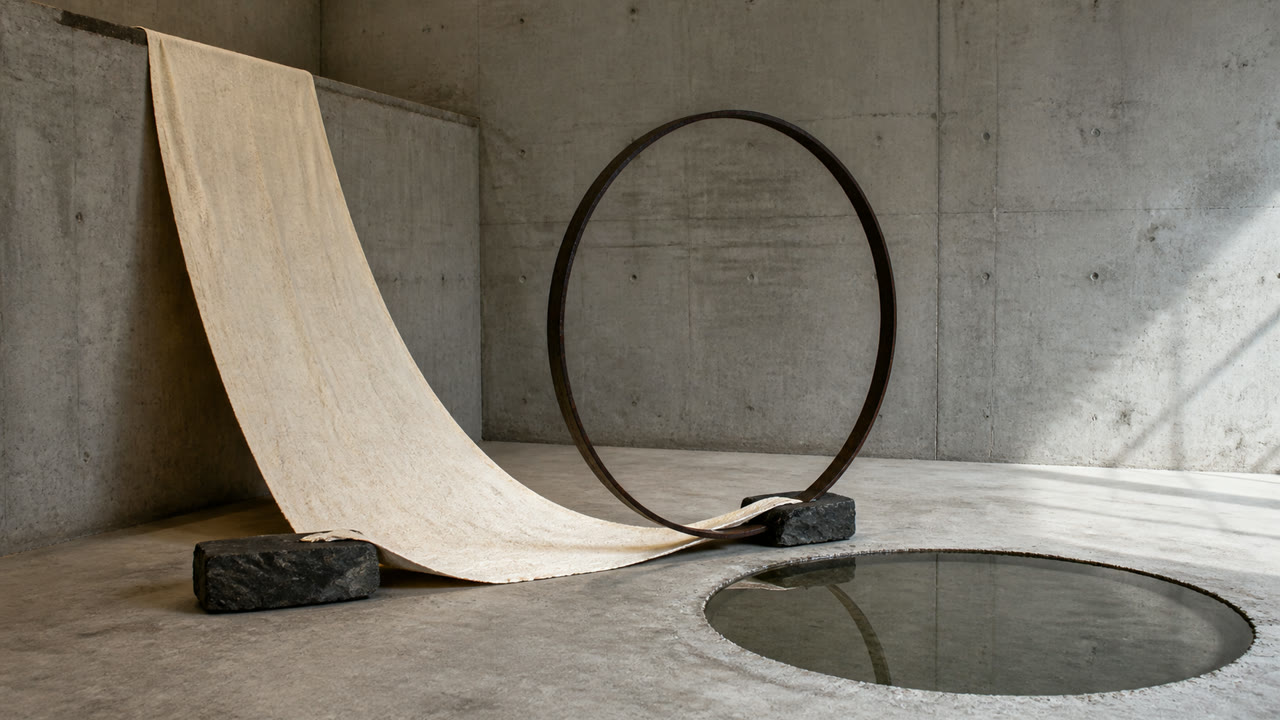
Une tendance japonaise qui place la pierre, le bois, le verre, l'acier et le coton avec une transformation minimale pour révéler les relations entre les choses, le site, le support, la fracture et la gravité plutôt que de construire une forme achevée.
En un coup d’œil
Signes visuels
- Matières naturelles et industrielles placées par paires ou en petits groupes
- Coupes, supports, pressions et gravité visibles
- Contact entre le sol et le mur remplaçant un piédestal solide
- Pierre, acier, bois, coton et verre largement non transformés
Usages idéaux
- Making contact, support, and weight legible instead of using material as a symbol
- Letting architecture or product displays hold the boundary between natural and industrial matter
Utiliser ce style
Appliquez le brief concis au projet ou transmettez la spécification structurée à un outil d’IA.
Guide détaillé et sourcesRègles de production, œuvres de référence, comparaisons, recherche et citations
Entrée du dictionnaire
- Typographie
- Move explanation to the wall and name only the material relation.
- Composition
- Set distance, contact, and center of mass between two materials and keep walk-around space.
- Matière
- Use stone, steel plate, wood, cotton, or glass without cosmetic finishing, concealing only the safety engineering.
- Précaution
- Placing a stone is not enough. If the relation among material, placement, and site cannot be stated, it becomes display rather than Mono-ha.
- Pour approfondir
- Lee Ufan and Sekine Nobuo / Phase—Mother Earth and Relatum / encounter, place and material relation
Entrées liées
- Arte Povera (アルテ・ポーヴェラ)Effets partagés : Rebellion / Calm.Comparer Mono-ha et Arte Povera
- Earthwork / Land Art (アースワーク/ランドアート)Effets partagés : Calm / Rebellion.Comparer Mono-ha et Earthwork / Land Art
Plus de Mouvements d’art moderne et contemporain
Poursuivez avec des styles de Mouvements d’art moderne et contemporain, classés par effets communs.
- Saqqakhaneh (サッカーハーネ派)Effets partagés : Rebellion / Calm.
- Khartoum School (ハルツーム派)Effets partagés : Calm / Rebellion.
- Nsukka Group (ンスッカ・グループ)Effets partagés : Calm / Rebellion.
Voir toutes les entrées Mouvements d’art moderne et contemporain
Citer cette entrée
Le dictionnaire est fait pour être lié. Prenez la forme qui convient là où vous écrivez.
- Link
- https://indexstyle.org/fr/styles/mono-ha
- Markdown
- [Mono-ha — IndexStyle](https://indexstyle.org/fr/styles/mono-ha)
- HTML
- <a href="https://indexstyle.org/fr/styles/mono-ha">Mono-ha — IndexStyle</a>