Khartoum School
ハルツーム派 / 1960s–1970s / 양식 / 근현대 미술 운동
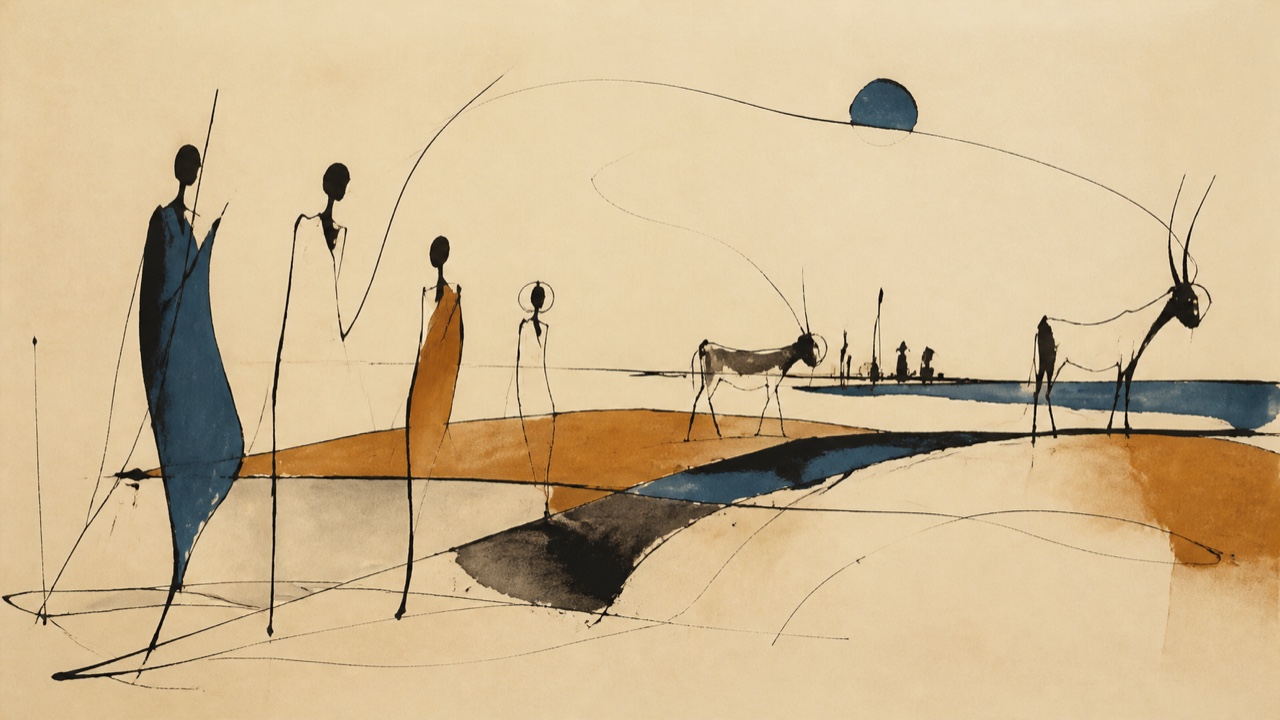
독립 이후 수단에서 흐르고 논쟁적인 카르툼 학교는 현대 미술 내에 아프리카, 이슬람, 아랍 및 서구의 요소를 재조합했습니다. 아랍 서예 리듬, 단순화된 사람과 동물, 현지 공예 및 이야기는 추상화되었습니다.
한눈에 판단
시각적 특징
- 사람, 동물 및 추상적인 윤곽으로 변환된 아랍 문자
- 길고 뻗은 몸체와 가면 같은 얼굴의 그룹
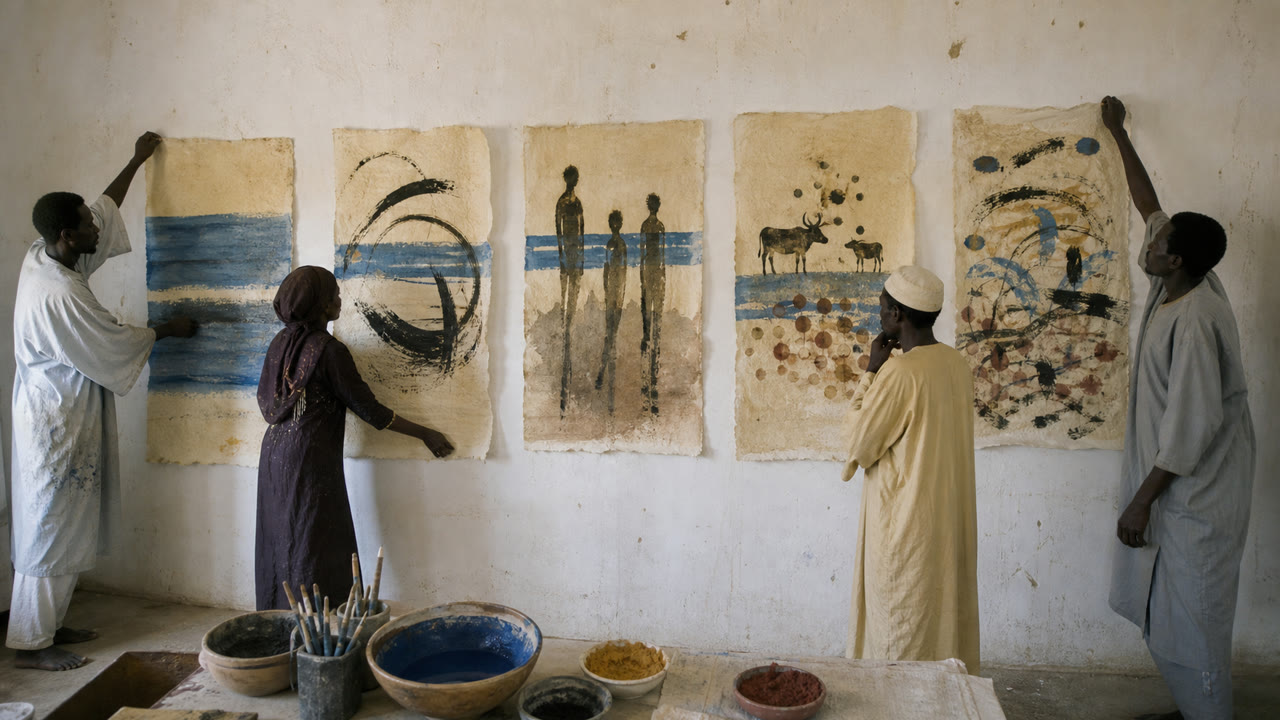
- 잉크, 흙색, 파란색 및 흰색에서 넓은 공간과 선
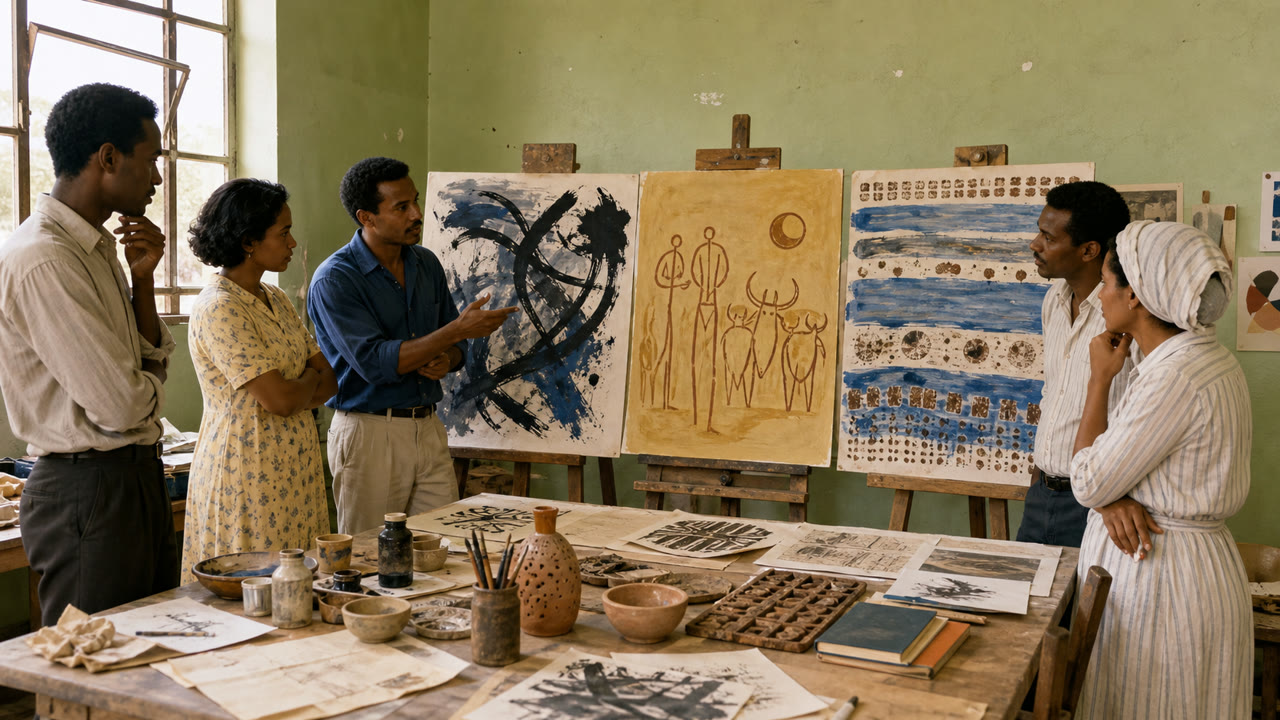
- 현대 미술과 함께 현지 공예 및 이야기를 공유
적합한 용도
- Treating several cultural belongings as transformations of line and figure rather than one fixed emblem
- Rereading writing, story, craft and modern painting in relation to post-independence society
이 양식 사용하기
짧은 지침을 프로젝트에 적용하거나 구조화된 사양을 AI 도구에 넘길 수 있습니다.
자세한 제작법과 출처제작 규칙, 실제 사례, 비교, 연구, 인용 형식
사전 항목
- 타이포그래피
- When using Arabic, verify word and writer and leave the transition from text to person or animal visible.
- 구성
- Place elongated forms in groups across broad space, keeping repeated line ambiguous among writing, body and horizon.
- 재료
- Keep the absorption of ink, earth pigment, paper and cloth and resist cleaning every edge into a uniform vector line.
- 주의
- It was neither a monolithic look nor one uncontested national identity. Preserve differences among artists and debates around the name instead of generalizing it as African calligraphy.
- 더 읽을거리
- Ibrahim El-Salahi, Ahmed Shibrain and Kamala Ishaq / Sudanese modernism after independence / Arabic calligraphic rhythm, African forms and contested identity
관련 항목
- Hurufiyya (フルーフィーヤ)같은 계열: 근현대 미술 운동.Khartoum School와 Hurufiyya 비교
- Nsukka Group (ンスッカ・グループ)같은 계열: 근현대 미술 운동.Khartoum School와 Nsukka Group 비교
근현대 미술 운동 더 보기
근현대 미술 운동에서 공통 인상이 많은 항목을 우선해 골랐습니다.
- Saqqakhaneh (サッカーハーネ派)공통 인상: Rebellion / Calm.
- Mono-ha (もの派)공통 인상: Calm / Rebellion.
- Neue Slowenische Kunst (ノイエ・スロヴェニッシェ・クンスト)공통 인상: Rebellion / Trust.
이 항목을 인용하기
사전은 링크되기 위해 있다. 글을 쓰는 자리에 맞는 형식을 그대로 가져가면 된다.
- Link
- https://indexstyle.org/ko/styles/khartoum-school
- Markdown
- [Khartoum School — IndexStyle](https://indexstyle.org/ko/styles/khartoum-school)
- HTML
- <a href="https://indexstyle.org/ko/styles/khartoum-school">Khartoum School — IndexStyle</a>