Khartoum School
ハルツーム派 / 1960s–1970s / 风格 / 近现代艺术运动
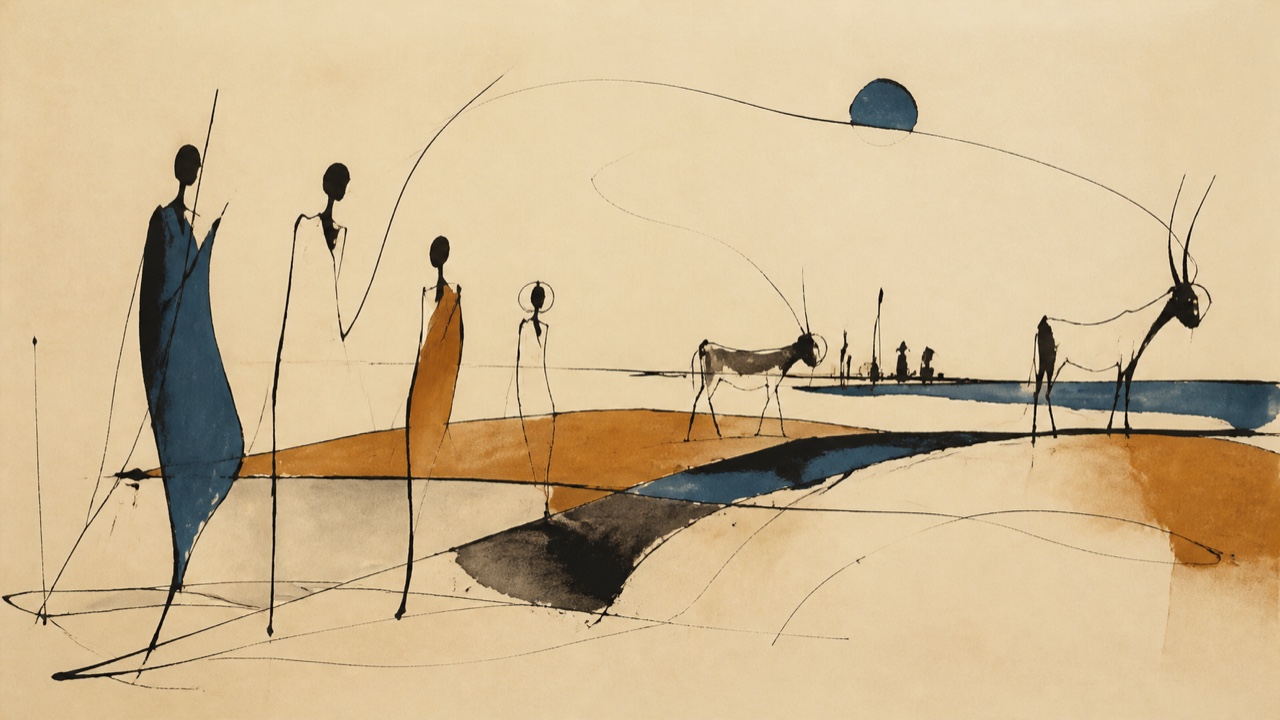
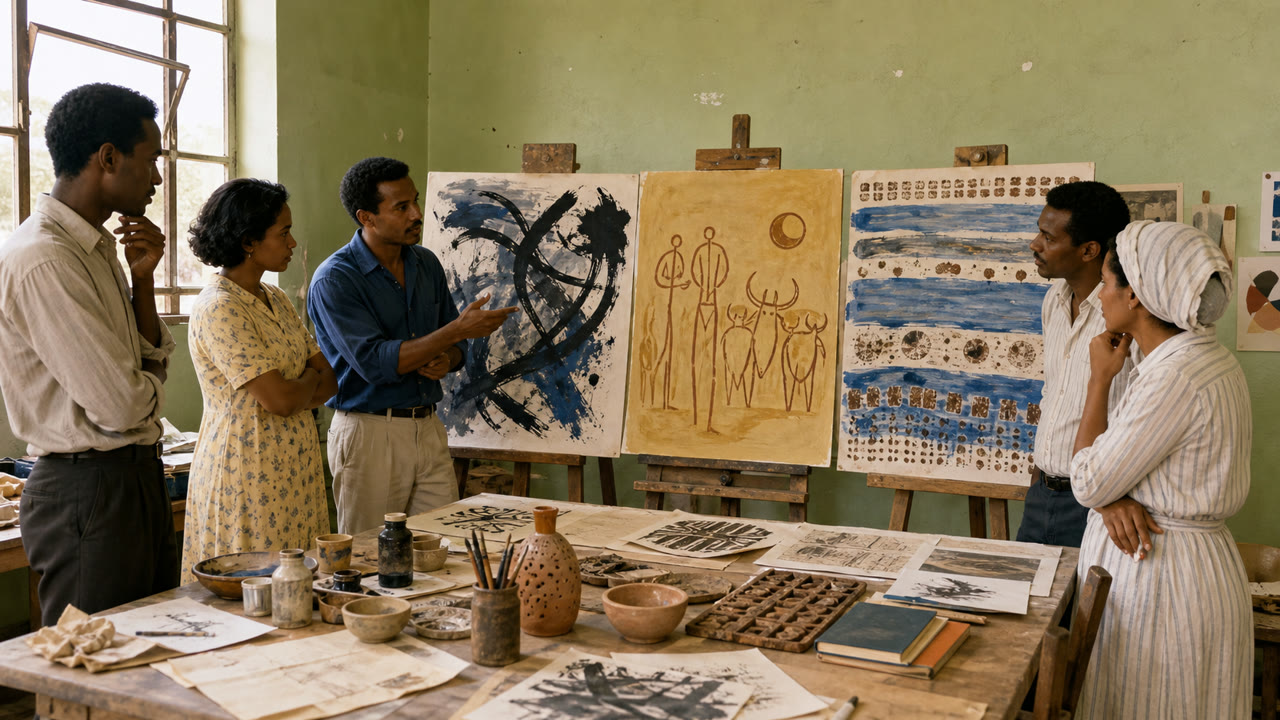
在独立后的苏丹,流动的且备受争议的卡图姆艺术学院,将非洲、伊斯兰、阿拉伯和西方元素融入现代艺术。 阿拉伯书法节奏、简化的人形和动物、当地工艺和叙事都进入了抽象。
快速判断
视觉特征
- 阿拉伯文字转化为人形、动物和抽象轮廓
- 由长条身体和面具状脸组成的群体
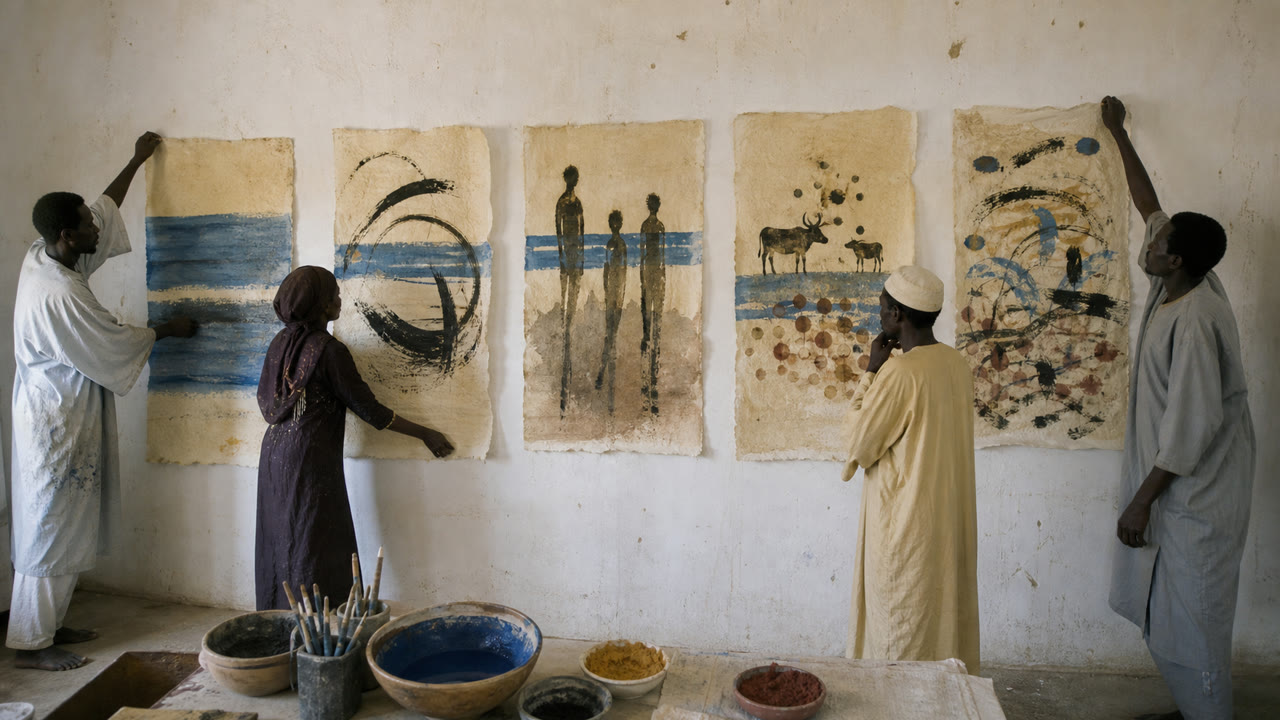
- 宽阔的空间和线条,使用墨水、大地色、蓝色和白色
- 当地工艺和故事与现代绘画共享领域
适用场景
- Treating several cultural belongings as transformations of line and figure rather than one fixed emblem
- Rereading writing, story, craft and modern painting in relation to post-independence society
使用这一风格
把简短指引带入项目,或将结构化规格交给AI工具。
详细方法与出处制作规则、真实案例、比较、研究与引用格式
辞典词条
- 字体
- When using Arabic, verify word and writer and leave the transition from text to person or animal visible.
- 版面
- Place elongated forms in groups across broad space, keeping repeated line ambiguous among writing, body and horizon.
- 材料
- Keep the absorption of ink, earth pigment, paper and cloth and resist cleaning every edge into a uniform vector line.
- 注意
- It was neither a monolithic look nor one uncontested national identity. Preserve differences among artists and debates around the name instead of generalizing it as African calligraphy.
- 延伸阅读
- Ibrahim El-Salahi, Ahmed Shibrain and Kamala Ishaq / Sudanese modernism after independence / Arabic calligraphic rhythm, African forms and contested identity
相关词条
- Hurufiyya (フルーフィーヤ)同属近现代艺术运动。比较Khartoum School与Hurufiyya
- Nsukka Group (ンスッカ・グループ)同属近现代艺术运动。比较Khartoum School与Nsukka Group
继续浏览近现代艺术运动
从近现代艺术运动中按共同感受优先推荐以下词条。
- Saqqakhaneh (サッカーハーネ派)共同感受:Rebellion / Calm。
- Mono-ha (もの派)共同感受:Calm / Rebellion。
- Neue Slowenische Kunst (ノイエ・スロヴェニッシェ・クンスト)共同感受:Rebellion / Trust。
引用此条目
这部辞典就是用来被链接的。请取用适合你写作场合的那一种形式。
- Link
- https://indexstyle.org/zh/styles/khartoum-school
- Markdown
- [Khartoum School — IndexStyle](https://indexstyle.org/zh/styles/khartoum-school)
- HTML
- <a href="https://indexstyle.org/zh/styles/khartoum-school">Khartoum School — IndexStyle</a>