ZERO
ZERO / 1957–1966 / Style / Postwar Abstract Painting
An international postwar network that restarted from a 'zero point,' replacing gestural painting with monochrome repetition, light, fire, air, and movement so physical phenomena and the viewer's motion become the work.
At a glance
Visual cues
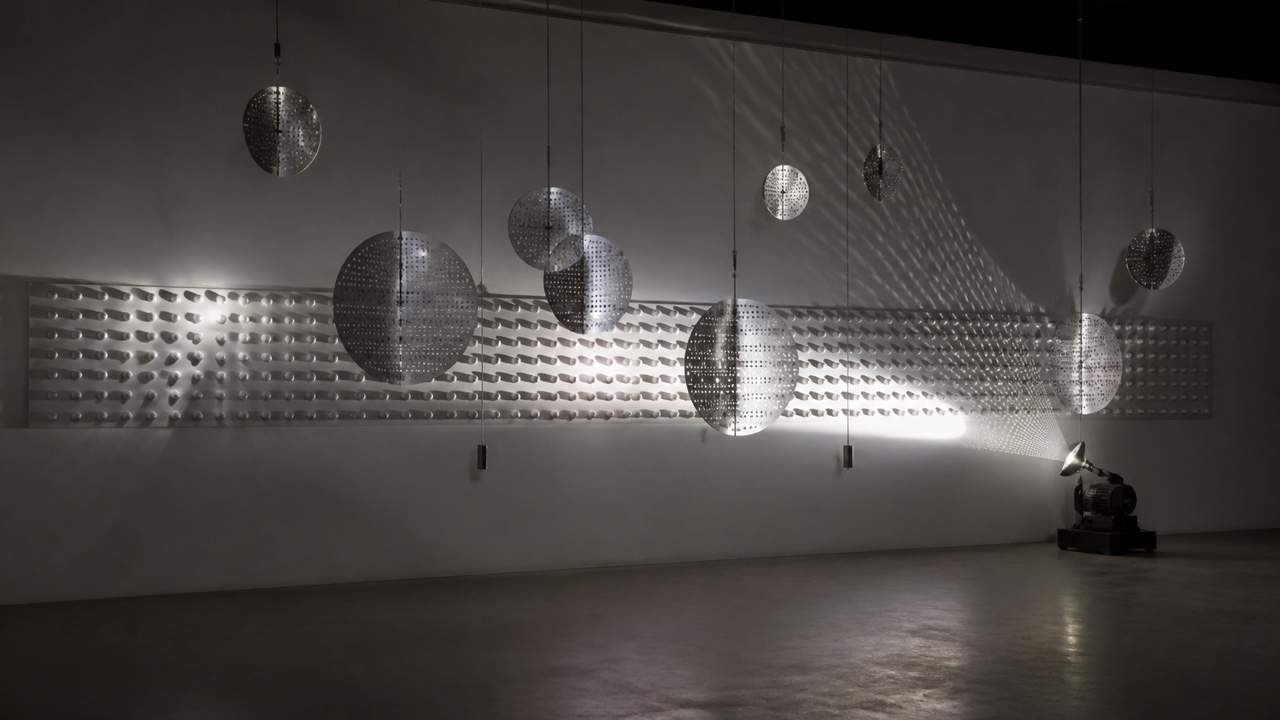
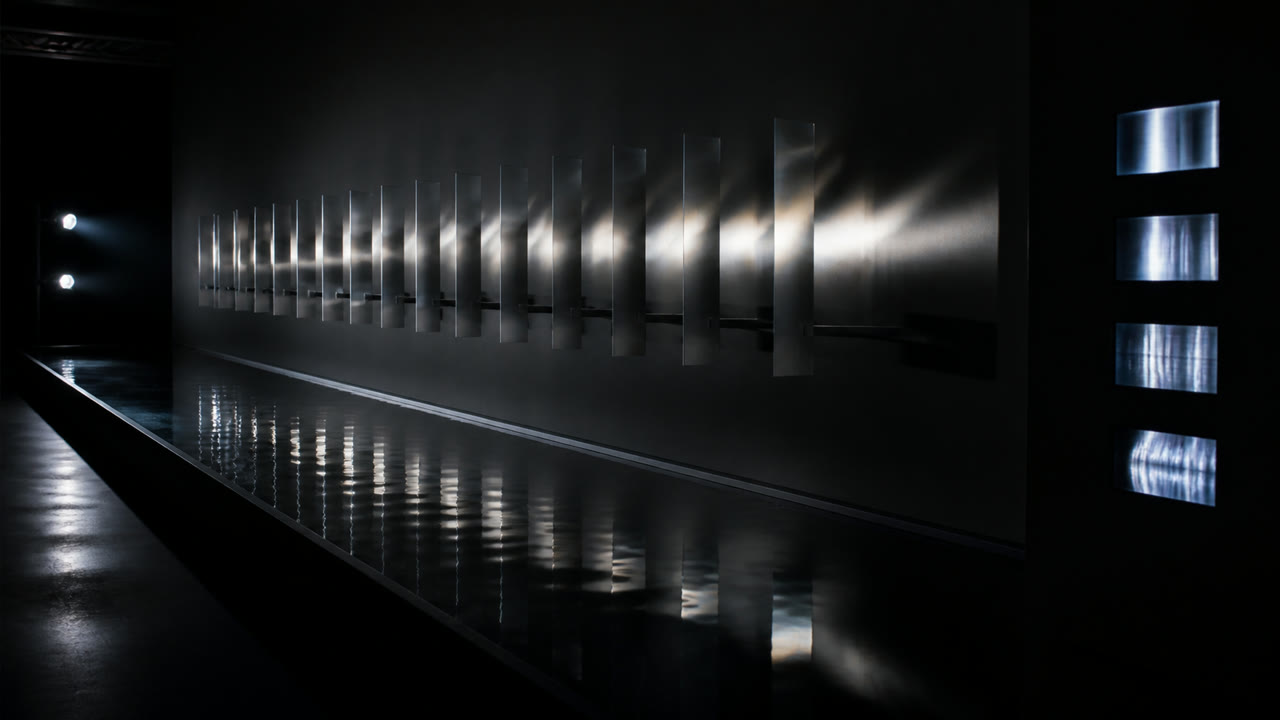
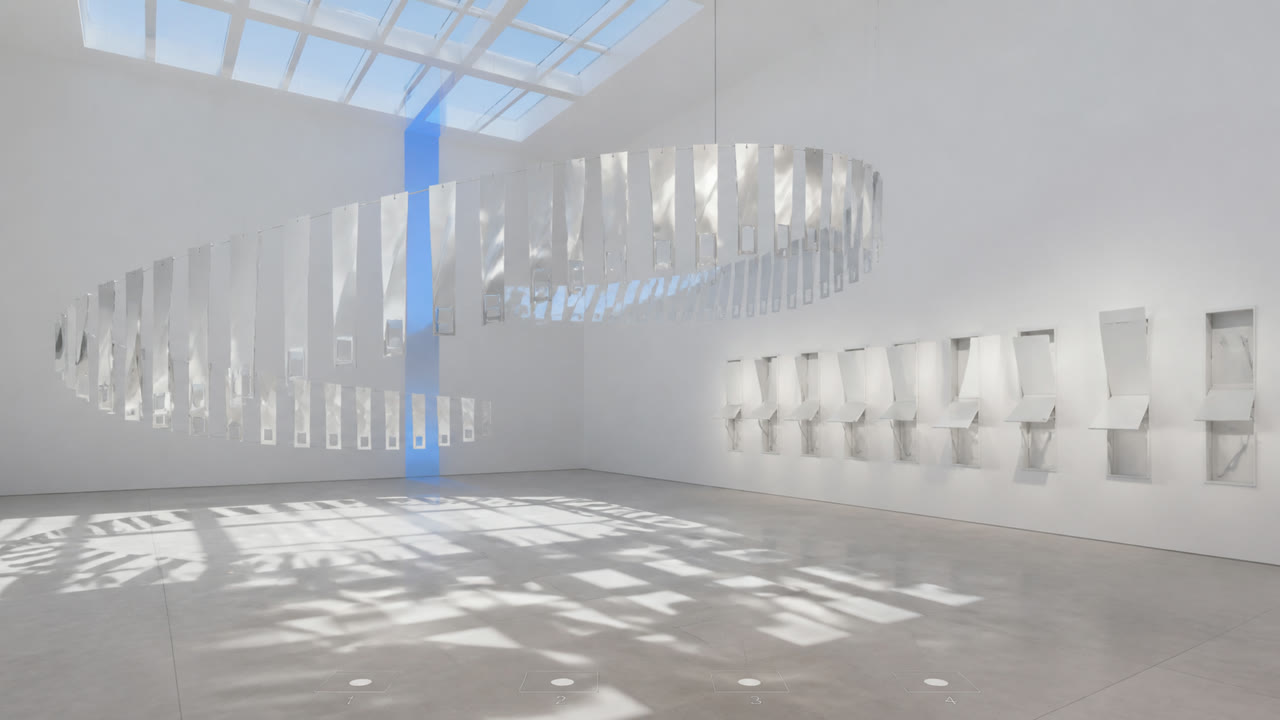
- Repeated surfaces in white, silver, or black
- Metal, mirrors, and relief changing under light
- Real-time change through motors, air, or flame
- Uniform repetitions of points, holes, discs, or grids
Best used for
- Designing exhibitions that change as light and the viewer move
- Making repeated components and physical phenomena primary instead of the artist's brushmark
Use this style
Take the compact brief into a project or hand the structured version to an AI tool.
Detailed guidance and sourcesProduction rules, reference works, comparisons, research and citation formats
Dictionary entry
- Type
- Use small widely spaced geometric sans-serif away from moving surfaces.
- Composition
- Repeat one component regularly and leave enough oblique circulation for reflected light to change.
- Material
- Combine white relief, polished metal, mirrors, point light, and slow motors with heat and wiring safely isolated.
- Caution
- Do not collapse ZERO into white Minimalism; light, motion, phenomena, and its international network are central.
- Further study
- Heinz Mack, Otto Piene and Günther Uecker / ZERO magazine and international networks / light, fire, movement and postwar renewal
Related entries
- Kinetic Art (キネティック・アート)Shared effects: Technique.Compare ZERO and Kinetic Art
- Spatialism (スパツィアリズモ)Shared effects: Calm.Compare ZERO and Spatialism
More from Postwar Abstract Painting
Continue through styles in the same Postwar Abstract Painting family, prioritised by shared effects.
- Dansaekhwa (単色画(ダンセクファ))Shared effects: Calm / Technique.
- Color Field Painting (カラーフィールド・ペインティング)Shared effects: Calm.
- Art Informel (アンフォルメル)Shared effects: Technique.
Browse all Postwar Abstract Painting entries
Cite this entry
The dictionary is meant to be linked to. Take whichever form fits where you are writing.
- Link
- https://indexstyle.org/styles/zero-group
- Markdown
- [ZERO — IndexStyle](https://indexstyle.org/styles/zero-group)
- HTML
- <a href="https://indexstyle.org/styles/zero-group">ZERO — IndexStyle</a>