Dansaekhwa
単色画(ダンセクファ) / 1970s– / Style / Postwar Abstract Painting
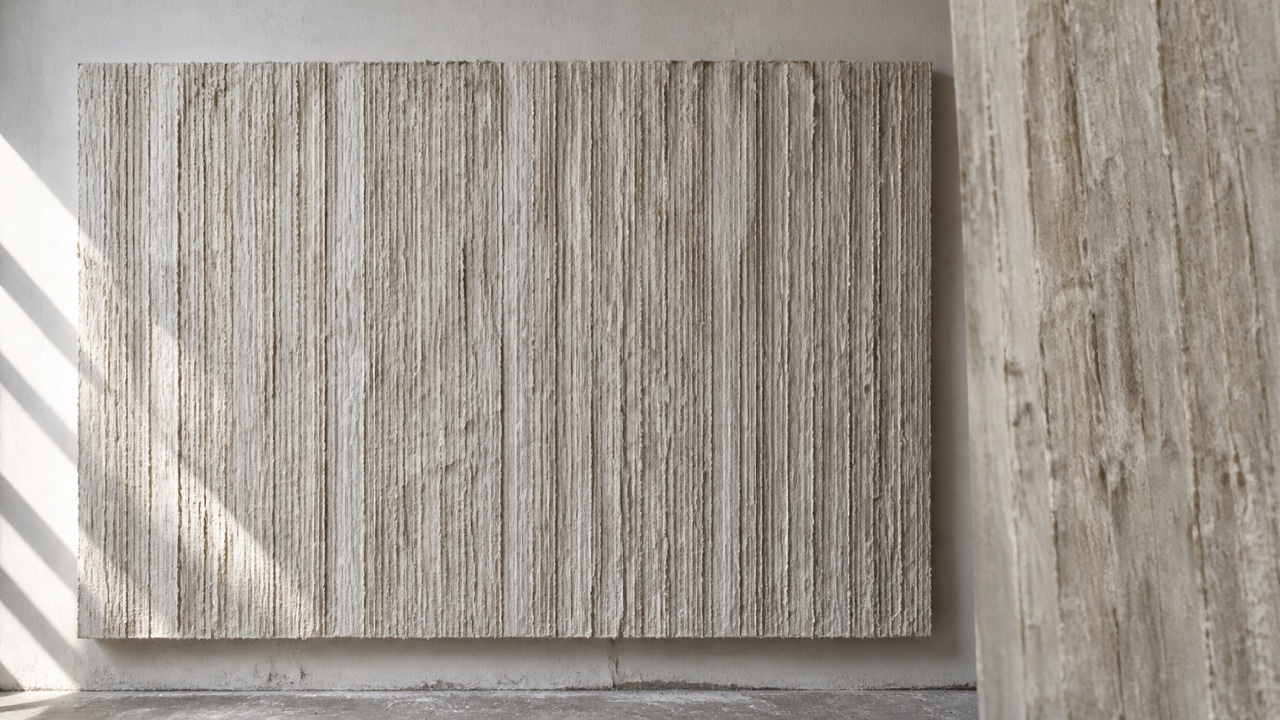
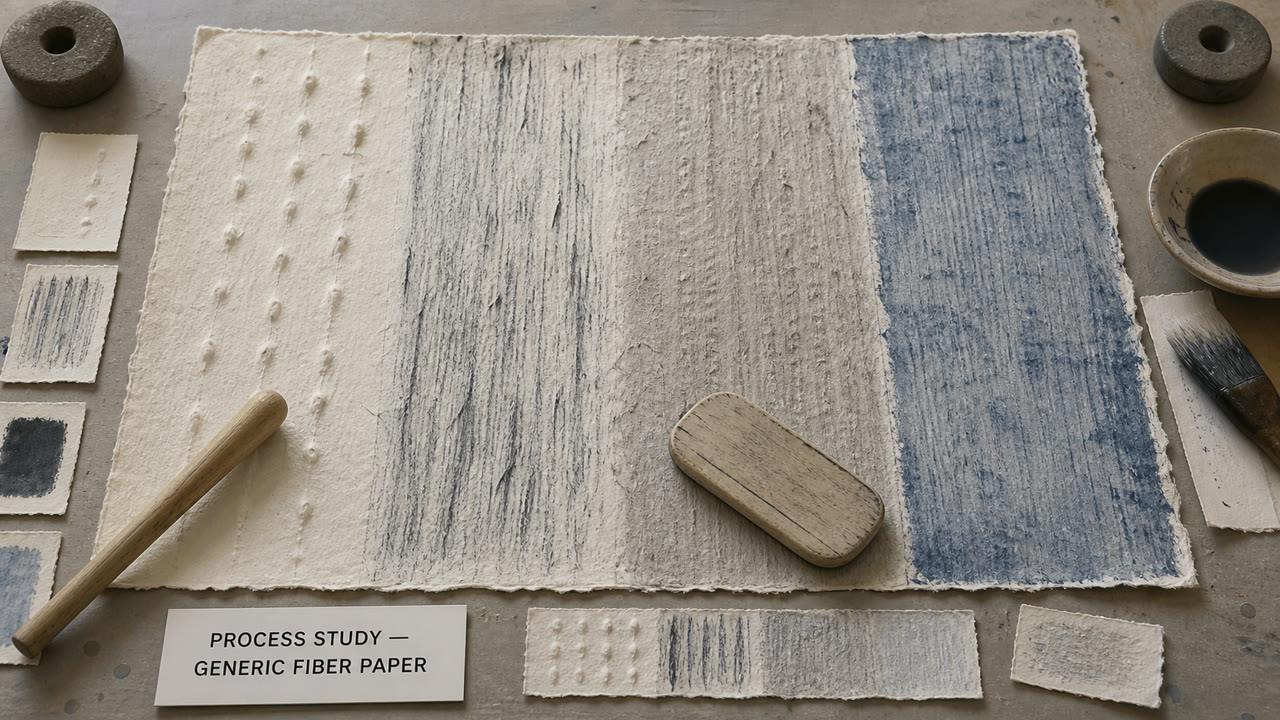
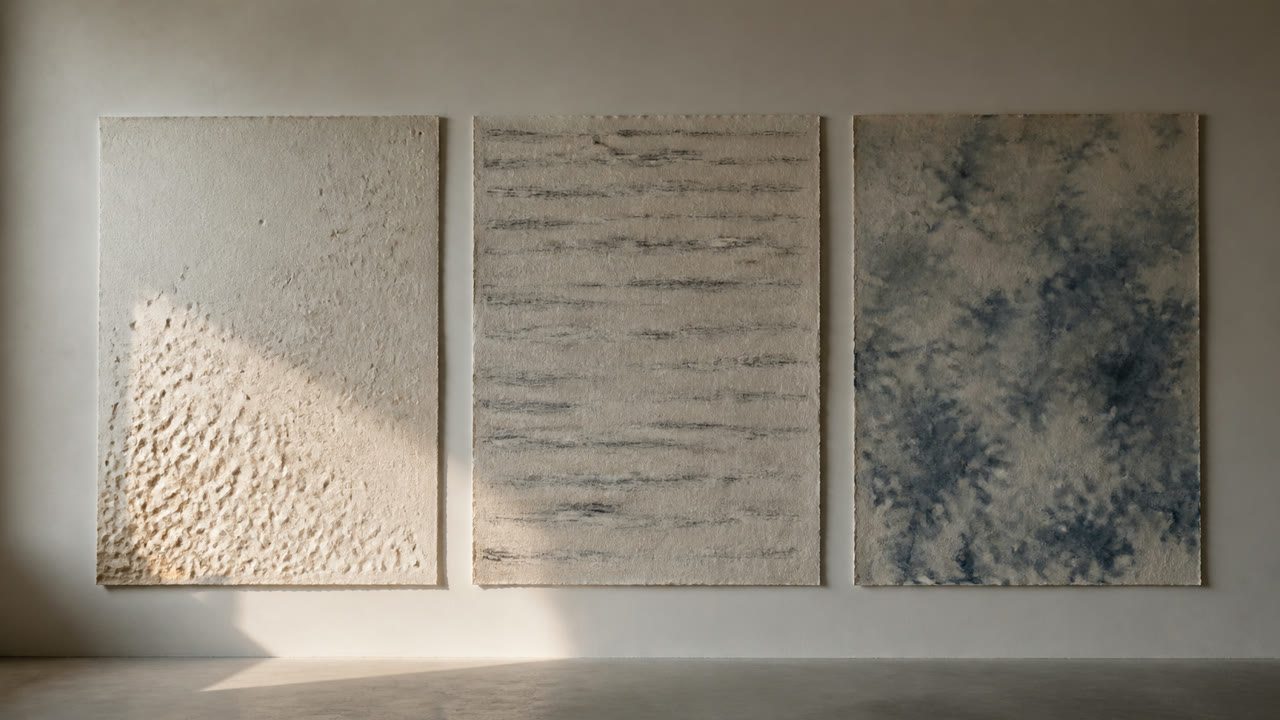
Korean painting in which narrow fields of white, earth, and grey are joined to repeated acts of pressing, pulling, soaking, tearing, and marking; duration and resistance of the support create density beyond the monochrome look.
At a glance
Visual cues
- Restricted white, raw, grey, and earth palette
- Lines, points, folds, or pressure repeated across the field
- Hemp, hanji, and paint showing absorption and relief
- Quiet at distance and densely tactile up close
Best used for
- Holding the time of handwork and material resistance inside a quiet monochrome field
- Balancing distant calm and close tactility in space, packaging, or print
Use this style
Take the compact brief into a project or hand the structured version to an AI tool.
Detailed guidance and sourcesProduction rules, reference works, comparisons, research and citation formats
Dictionary entry
- Type
- Keep type sparse and outside the repeated field.
- Composition
- Repeat one unit across the surface while preserving small differences in pressure, interval, and absorption.
- Material
- Press, pull, or soak white-earth pigment through hanji or another visibly fibrous support.
- Caution
- Do not explain it only as white Minimalism. Name its Korean postwar history, artist-specific processes, and actions upon the support.
- Further study
- Park Seo-bo, Lee Ufan and Ha Chong-hyun / Écriture, Conjunction and methodical repetition / Korean materiality and the limits of the monochrome label
Related entries
- Minimalism (ミニマリズム)Shared effects: Calm / Trust.Compare Dansaekhwa and Minimalism
- Art Informel (アンフォルメル)Same Postwar Abstract Painting lineage.Compare Dansaekhwa and Art Informel
More from Postwar Abstract Painting
Continue through styles in the same Postwar Abstract Painting family, prioritised by shared effects.
- ZERO (ZERO)Shared effects: Technique / Calm.
- Color Field Painting (カラーフィールド・ペインティング)Shared effects: Calm.
- Nouveau Réalisme (ヌーヴォー・レアリスム)Shared effects: Technique.
Browse all Postwar Abstract Painting entries
Cite this entry
The dictionary is meant to be linked to. Take whichever form fits where you are writing.
- Link
- https://indexstyle.org/styles/dansaekhwa
- Markdown
- [Dansaekhwa — IndexStyle](https://indexstyle.org/styles/dansaekhwa)
- HTML
- <a href="https://indexstyle.org/styles/dansaekhwa">Dansaekhwa — IndexStyle</a>