Transavantgarde
トランスアヴァングァルディア / late 1970s–1980s / Style / Modern and Contemporary Art Movements
A late-1970s Italian return to painting that crossed myth, classicism, personal signs, and forceful brushwork after Conceptual art, treating history as a subjective field that can be entered from several eras at once.
At a glance
Visual cues
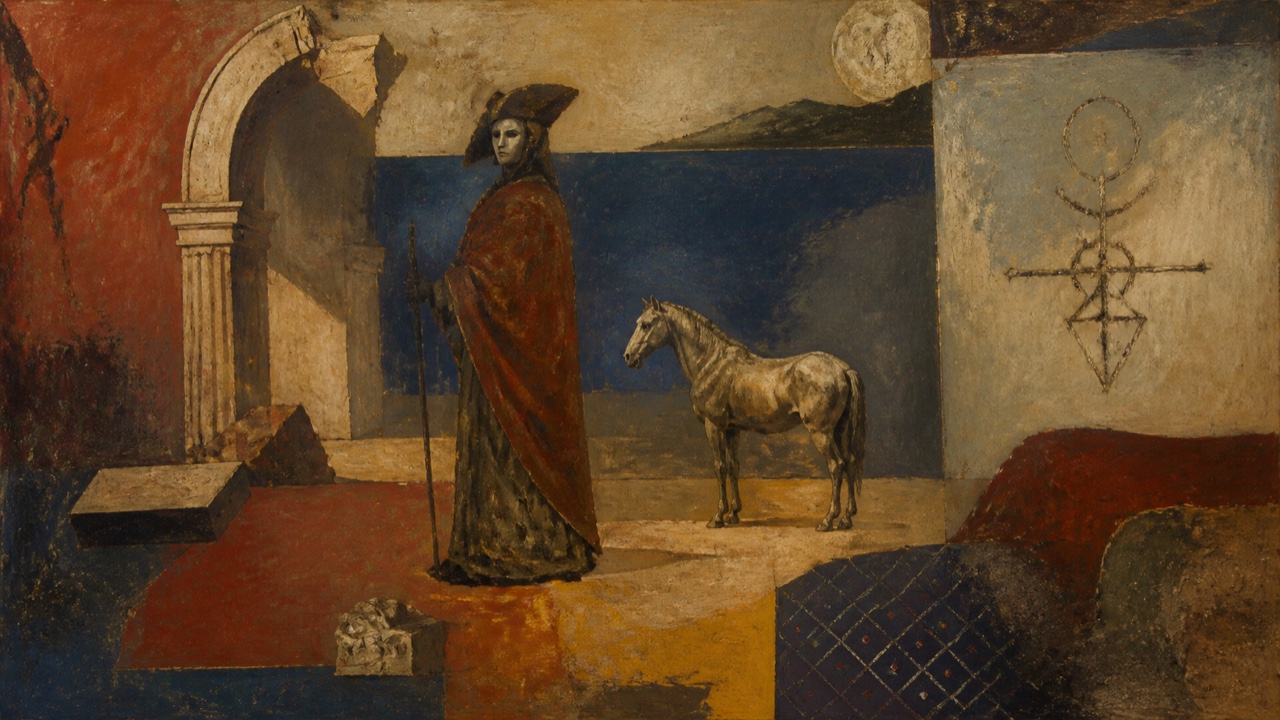
- Large simplified mythic figures, animals, and masks
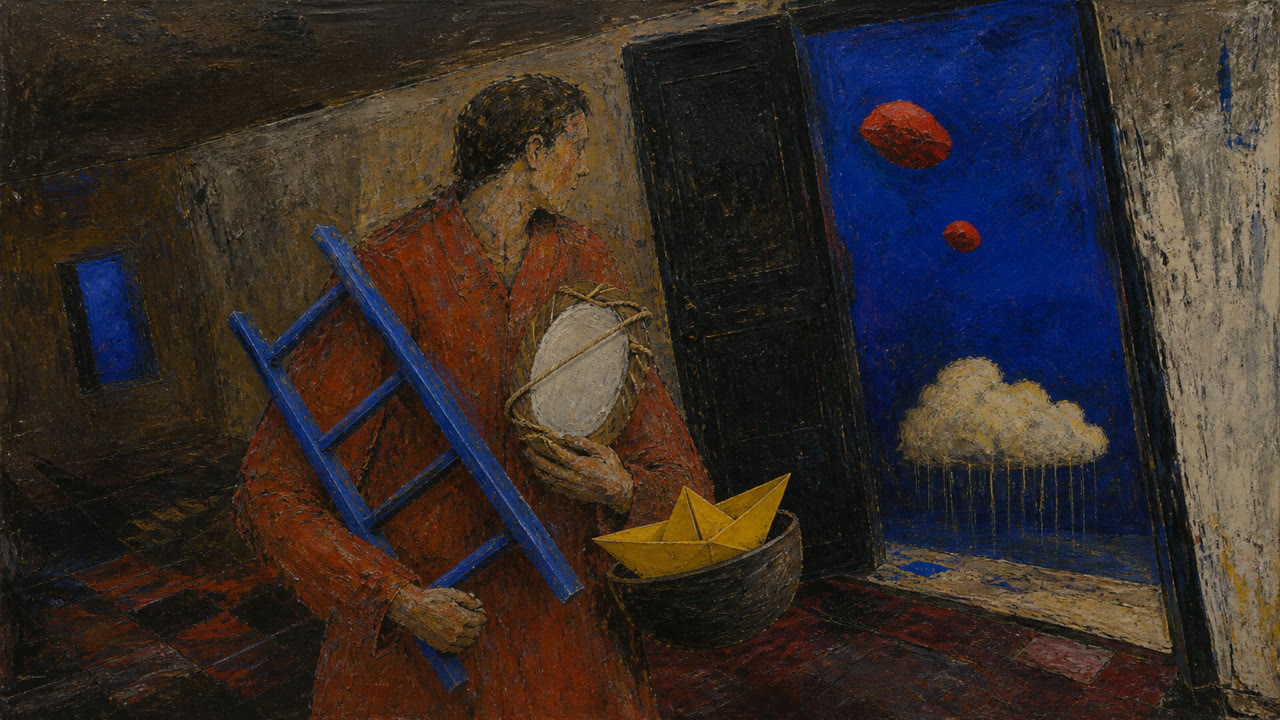
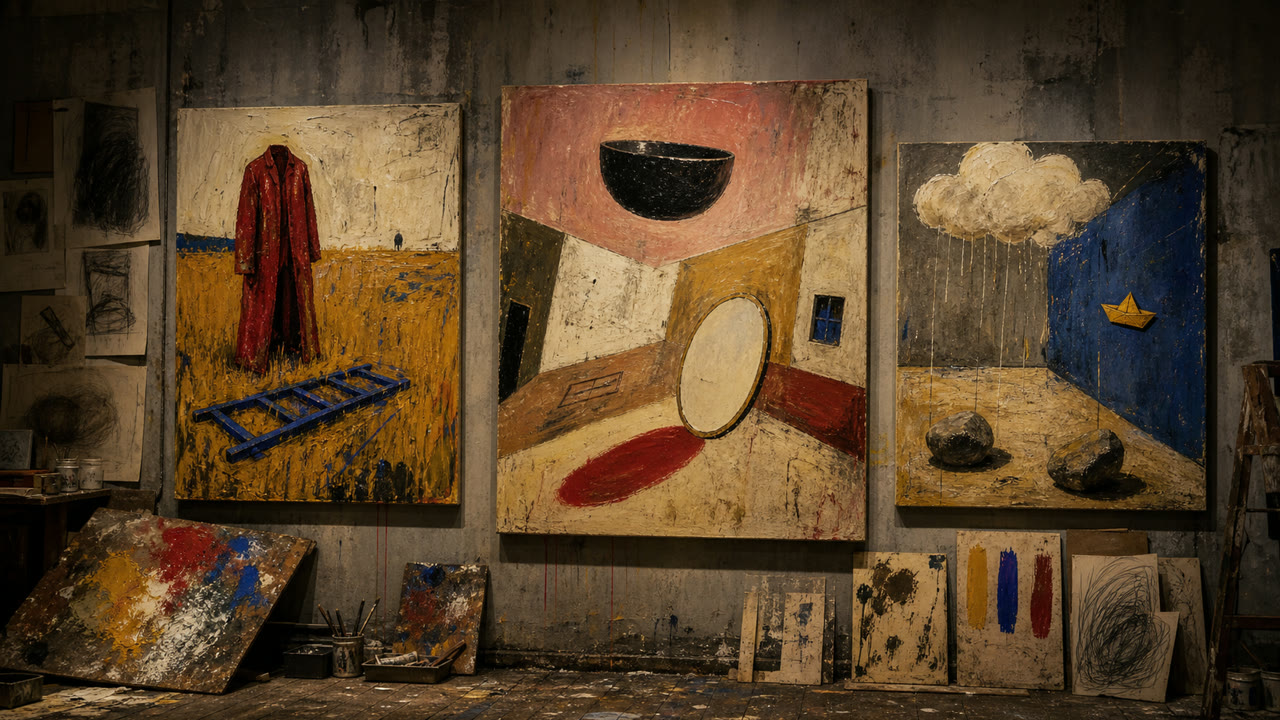
- Thick marks colliding earth color with primaries
- Classical, folk, and private symbols together
- Isolated figures in shallow or destabilized space
Best used for
- Repositioning classical and mythic images as private signs rather than revival
- Comparing Italy's return to painting with German and American Neo-Expressionism
Use this style
Take the compact brief into a project or hand the structured version to an AI tool.
Detailed guidance and sourcesProduction rules, reference works, comparisons, research and citation formats
Dictionary entry
- Type
- Use one classical serif and one handwritten phrase, citing every quotation.
- Composition
- Offset an isolated figure or animal and scatter signs from different eras across a shallow ground.
- Material
- Layer thick earth, red, and blue on rough canvas and preserve redrawn contours.
- Caution
- Expressionist brushwork alone does not identify it. Keep the Italian context, historical quotation, and turn away from Conceptual art.
- Further study
- Achille Bonito Oliva and the term Transavanguardia / Sandro Chia, Francesco Clemente and Enzo Cucchi / the return to painting in late-1970s Italy
Related entries
- Neo-Expressionism (新表現主義)Shared effects: Exhilaration / Nostalgia / Rebellion.Compare Transavantgarde and Neo-Expressionism
- Return to Order (秩序への回帰)Shared effects: Nostalgia.Compare Transavantgarde and Return to Order
More from Modern and Contemporary Art Movements
Continue through styles in the same Modern and Contemporary Art Movements family, prioritised by shared effects.
- Casablanca Art School (カサブランカ美術学校)Shared effects: Rebellion / Exhilaration.
- Progressive Artists' Group (プログレッシヴ・アーティスツ・グループ)Shared effects: Rebellion / Exhilaration.
- Viennese Actionism (ウィーン・アクショニズム)Shared effects: Rebellion / Exhilaration.
Browse all Modern and Contemporary Art Movements entries
Cite this entry
The dictionary is meant to be linked to. Take whichever form fits where you are writing.
- Link
- https://indexstyle.org/styles/transavantgarde
- Markdown
- [Transavantgarde — IndexStyle](https://indexstyle.org/styles/transavantgarde)
- HTML
- <a href="https://indexstyle.org/styles/transavantgarde">Transavantgarde — IndexStyle</a>