Return to Order vs Transavantgarde
秩序への回帰 / トランスアヴァングァルディア
Return to Order comes from Figurative Painting and Transavantgarde from Modern and Contemporary Art Movements. They are reached for with some of the same intent, which is where they get confused.
Return to Order

An international post-World War I tendency that stepped back from avant-garde fragmentation and speed toward classical contour, stable figures, still life, and legible space. It retained modern simplification while recovering weight and order rather than reconstructing the past literally.
Transavantgarde
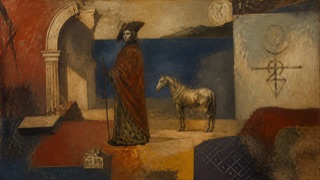
A late-1970s Italian return to painting that crossed myth, classicism, personal signs, and forceful brushwork after Conceptual art, treating history as a subjective field that can be entered from several eras at once.
| Return to Order | Transavantgarde | |
|---|---|---|
| Era | 1918–1930s | late 1970s–1980s |
| Family | Figurative Painting | Modern and Contemporary Art Movements |
| Kind | Style | Style |
| Cues | Large stable figures and still lifes with clear contour / Triangles, horizontals, and frontal balance / Restrained earth, blue, and lime-gray fields / Avant-garde simplification retained while fragments return to bodies and objects | Large simplified mythic figures, animals, and masks / Thick marks colliding earth color with primaries / Classical, folk, and private symbols together / Isolated figures in shallow or destabilized space |
| Best used for | Expressing post-crisis reconstruction through lucid figures and composition rather than historical décor · Comparing classical weight with simplification after Cubism | Repositioning classical and mythic images as private signs rather than revival · Comparing Italy's return to painting with German and American Neo-Expressionism |
| Type | Use a restrained classical serif, avoiding exaggerated monumental spacing. | Use one classical serif and one handwritten phrase, citing every quotation. |
| Composition | Fix figures, vessels, and architecture to triangles and horizontals with broad margins and shallow legible depth. | Offset an isolated figure or animal and scatter signs from different eras across a shallow ground. |
| Material | Layer lime, earth, and muted blue smoothly, quieting the brush while retaining contour. | Layer thick earth, red, and blue on rough canvas and preserve redrawn contours. |
| Caution | Do not treat order as a neutral virtue; examine its links to postwar society, states, and conservatism. Antique bodies and columns alone miss the post-avant-garde reconstruction. | Expressionist brushwork alone does not identify it. Keep the Italian context, historical quotation, and turn away from Conceptual art. |