Neo-Expressionism vs Transavantgarde
新表現主義 / トランスアヴァングァルディア
Neo-Expressionism comes from Postwar Abstract Painting and Transavantgarde from Modern and Contemporary Art Movements. They are reached for with some of the same intent, which is where they get confused.
Neo-Expressionism

%20Volk%20Ding%20Zero%26Georg%20Baselitz%2620092.jpg)

An international current in which large formats, violent brushwork and subjects from history and myth returned, in reaction against the asceticism of Minimal and Conceptual art. Its raw draughtsmanship and layers of grime feed directly into the temperature of 1980s record sleeves and magazine layouts.
Transavantgarde
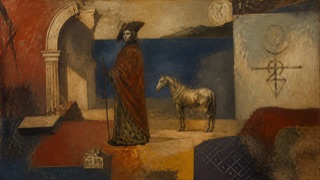
A late-1970s Italian return to painting that crossed myth, classicism, personal signs, and forceful brushwork after Conceptual art, treating history as a subjective field that can be entered from several eras at once.
| Neo-Expressionism | Transavantgarde | |
|---|---|---|
| Era | 1978–1990 | late 1970s–1980s |
| Family | Postwar Abstract Painting | Modern and Contemporary Art Movements |
| Kind | Style | Style |
| Cues | Large formats and coarse brushwork / Subjects from myth and history / Heavy use of muddied colour and black / Mixed-in materials and physical thickness | Large simplified mythic figures, animals, and masks / Thick marks colliding earth color with primaries / Classical, folk, and private symbols together / Isolated figures in shallow or destabilized space |
| Best used for | Record sleeves and gig posters that need heat, mess and myth · Fashion and editorial imagery trading polish for raw painterly attack | Repositioning classical and mythic images as private signs rather than revival · Comparing Italy's return to painting with German and American Neo-Expressionism |
| Type | Scrawled, hand-painted headlines; letterforms attacked rather than set | Use one classical serif and one handwritten phrase, citing every quotation. |
| Composition | Oversized central figures crowding the frame; layers colliding without hierarchy | Offset an isolated figure or animal and scatter signs from different eras across a shallow ground. |
| Material | Muddied colour, black, and matter mixed into the paint—straw, sand, collage | Layer thick earth, red, and blue on rough canvas and preserve redrawn contours. |
| Caution | Avoid controlled, tasteful roughness—the style demands real excess, and a tidied version reads as a costume of rebellion. | Expressionist brushwork alone does not identify it. Keep the Italian context, historical quotation, and turn away from Conceptual art. |
Postwar Abstract Painting / Modern and Contemporary Art Movements