Dansaekhwa vs Minimalism
単色画(ダンセクファ) / ミニマリズム
Dansaekhwa comes from Postwar Abstract Painting and Minimalism from Functionalism. They are reached for with some of the same intent, which is where they get confused.
Dansaekhwa
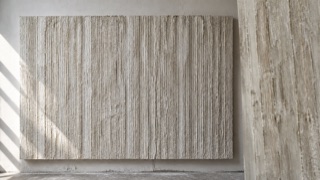
Korean painting in which narrow fields of white, earth, and grey are joined to repeated acts of pressing, pulling, soaking, tearing, and marking; duration and resistance of the support create density beyond the monochrome look.
Minimalism
%201%E2%80%935%20(1987)%2C%20Tate%20Modern%2C%20London%2C%20UK.jpg)
Removes elements to maximize the meaning and tension of what remains.
| Dansaekhwa | Minimalism | |
|---|---|---|
| Era | 1970s– | 1960s– |
| Family | Postwar Abstract Painting | Functionalism |
| Kind | Style | Style |
| Cues | Restricted white, raw, grey, and earth palette / Lines, points, folds, or pressure repeated across the field / Hemp, hanji, and paint showing absorption and relief / Quiet at distance and densely tactile up close | Vast white space / Few elements / Quiet color / Precise spacing |
| Best used for | Holding the time of handwork and material resistance inside a quiet monochrome field · Balancing distant calm and close tactility in space, packaging, or print | Focusing attention on a single value · Letting quality speak quietly |
| Type | Keep type sparse and outside the repeated field. | A light sans-serif or a well-cut serif |
| Composition | Repeat one unit across the surface while preserving small differences in pressure, interval, and absorption. | One message, one focal point, wide margins |
| Material | Press, pull, or soak white-earth pigment through hanji or another visibly fibrous support. | Nearly achromatic; texture in exactly one place |
| Caution | Do not explain it only as white Minimalism. Name its Korean postwar history, artist-specific processes, and actions upon the support. | Missing information is not minimal. Decide priorities before you cut. |