Art Informel vs Dansaekhwa
アンフォルメル / 単色画(ダンセクファ)
Both sit in Postwar Abstract Painting, so the question is not what they belong to but how they behave. They are reached for with some of the same intent, which is where they get confused.
Art Informel

A postwar European abstraction that refused both geometric composition and figuration, making the surface out of matter and the traces of the act itself. Thickly piled paint, scratches, stains and tears present a state before form. The source of all design that pushes the physicality of material to the front. Tachisme names the same paintings seen from the speed of the gesture, and Lyrical Abstraction names them seen from the lyric side.
Dansaekhwa
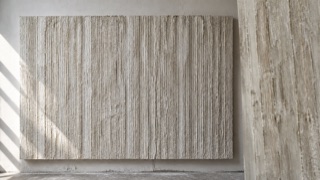
Korean painting in which narrow fields of white, earth, and grey are joined to repeated acts of pressing, pulling, soaking, tearing, and marking; duration and resistance of the support create density beyond the monochrome look.
| Art Informel | Dansaekhwa | |
|---|---|---|
| Era | 1945–1960 | 1970s– |
| Family | Postwar Abstract Painting | Postwar Abstract Painting |
| Kind | Style | Style |
| Cues | Traces of impasto and scratching / Stains that never settle into form / A range of earth and ash tones / Tears and exposure of the support | Restricted white, raw, grey, and earth palette / Lines, points, folds, or pressure repeated across the field / Hemp, hanji, and paint showing absorption and relief / Quiet at distance and densely tactile up close |
| Best used for | Texture-led art direction for craft, ceramics or fashion houses · Cover art and interiors where raw matter carries the emotion | Holding the time of handwork and material resistance inside a quiet monochrome field · Balancing distant calm and close tactility in space, packaging, or print |
| Type | Few words set large, part of them buried in the scratched surface | Keep type sparse and outside the repeated field. |
| Composition | Centreless fields running to the edge, composed by density rather than by figure | Repeat one unit across the surface while preserving small differences in pressure, interval, and absorption. |
| Material | Impasto, plaster and tar in earth and ash tones on thick paper, scraped and torn | Press, pull, or soak white-earth pigment through hanji or another visibly fibrous support. |
| Caution | Avoid faking the texture with clean digital filters—the style lives on real material resistance, and simulated grunge reads instantly as decor. | Do not explain it only as white Minimalism. Name its Korean postwar history, artist-specific processes, and actions upon the support. |