Classical Greek Art
古典期ギリシャ美術 / c. 480–323 BCE / 风格 / 历史样式
古典希腊艺术将人体按照理想的比例和平衡进行安排,通过使用‘对位’、平静的表情和受控的动作来呈现公民、神祇和英雄,使他们成为和谐的典范。

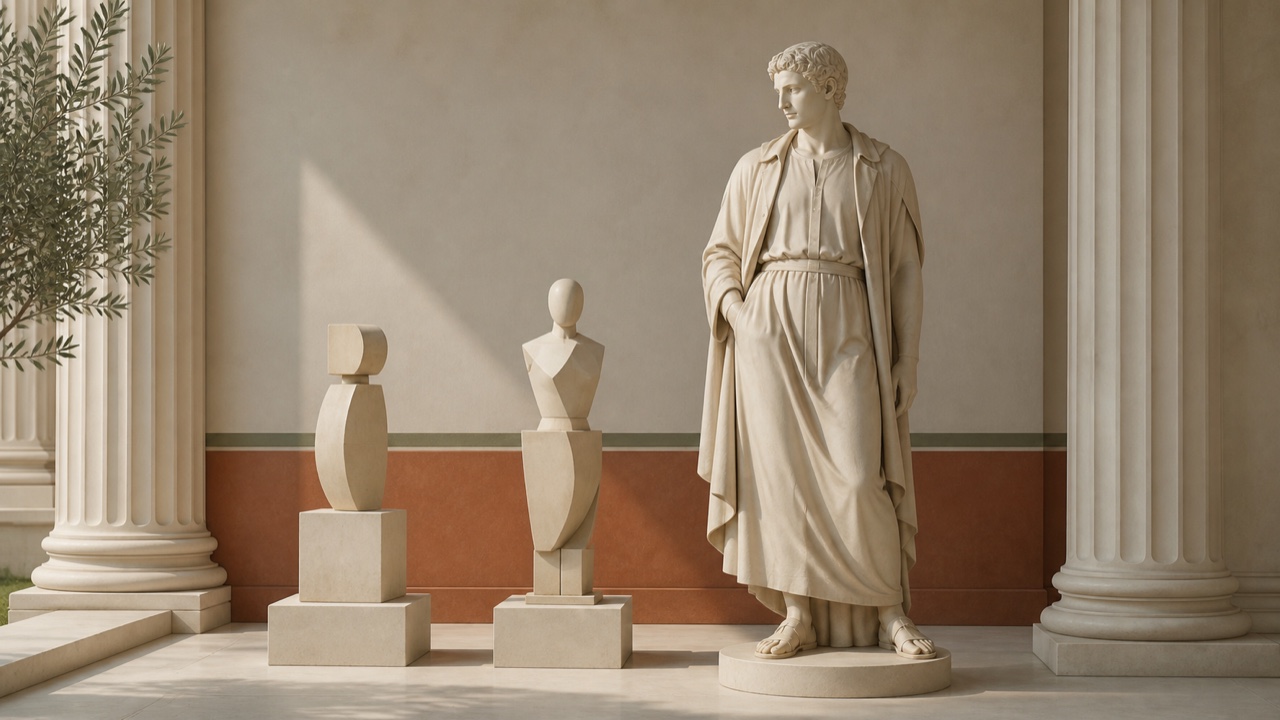
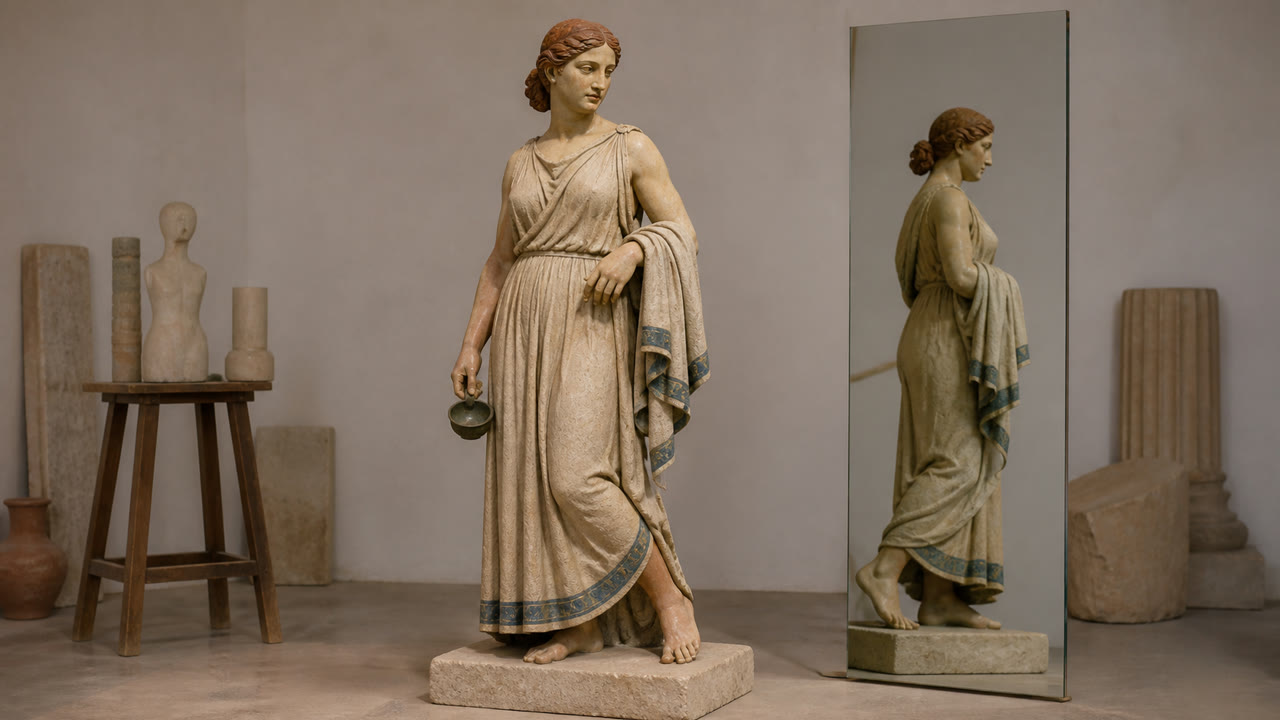
快速判断
视觉特征
- ‘对位’:重心放在一只腿上,并与另一侧肩膀和臀部相对
- 结合观察和理想化的平衡解剖结构
- 即使在动作中,也保持着克制的表情和清晰的轮廓
- 服装展现身体结构和运动
适用场景
- Expressing proportion, restraint and bodily ideals through pose
- Building a classical reference from proportion and weight rather than columns and laurel symbols alone
使用这一风格
把简短指引带入项目,或将结构化规格交给AI工具。
详细方法与出处制作规则、真实案例、比较、研究与引用格式
辞典词条
- 字体
- Keep inscriptional capitals secondary, using balanced widths and open spacing for a quiet order.
- 版面
- Place weight on one leg, oppose shoulder and hip inclinations, and return the asymmetrical pose to overall balance.
- 材料
- Do not mistake today's white marble for an originally colorless world; distinguish stone, bronze and traces of polychromy.
- 注意
- White busts and colonnades alone drift into later Neoclassicism. Center Classical-period proportion, weight and restrained movement.
- 延伸阅读
- Classical Greek art / Contrapposto and ideal proportion / Polykleitos, Parthenon sculpture and Attic vase painting
相关词条
- Ancient Egyptian Art (古代エジプト美術)同属历史样式。比较Classical Greek Art与Ancient Egyptian Art
- Roman Art (古代ローマ美術)同属历史样式。比较Classical Greek Art与Roman Art
继续浏览历史样式
从历史样式中按共同感受优先推荐以下词条。
- Palladianism (パッラーディオ主義)共同感受:Trust / Luxury / Calm。
- Renaissance (ルネサンス)共同感受:Trust / Luxury / Calm。
- Neoclassicism (新古典主義)共同感受:Trust / Luxury / Calm。
引用此条目
这部辞典就是用来被链接的。请取用适合你写作场合的那一种形式。
- Link
- https://indexstyle.org/zh/styles/classical-greek-art
- Markdown
- [Classical Greek Art — IndexStyle](https://indexstyle.org/zh/styles/classical-greek-art)
- HTML
- <a href="https://indexstyle.org/zh/styles/classical-greek-art">Classical Greek Art — IndexStyle</a>