Classical Greek Art
古典期ギリシャ美術 / c. 480–323 BCE / 양식 / 역사 양식
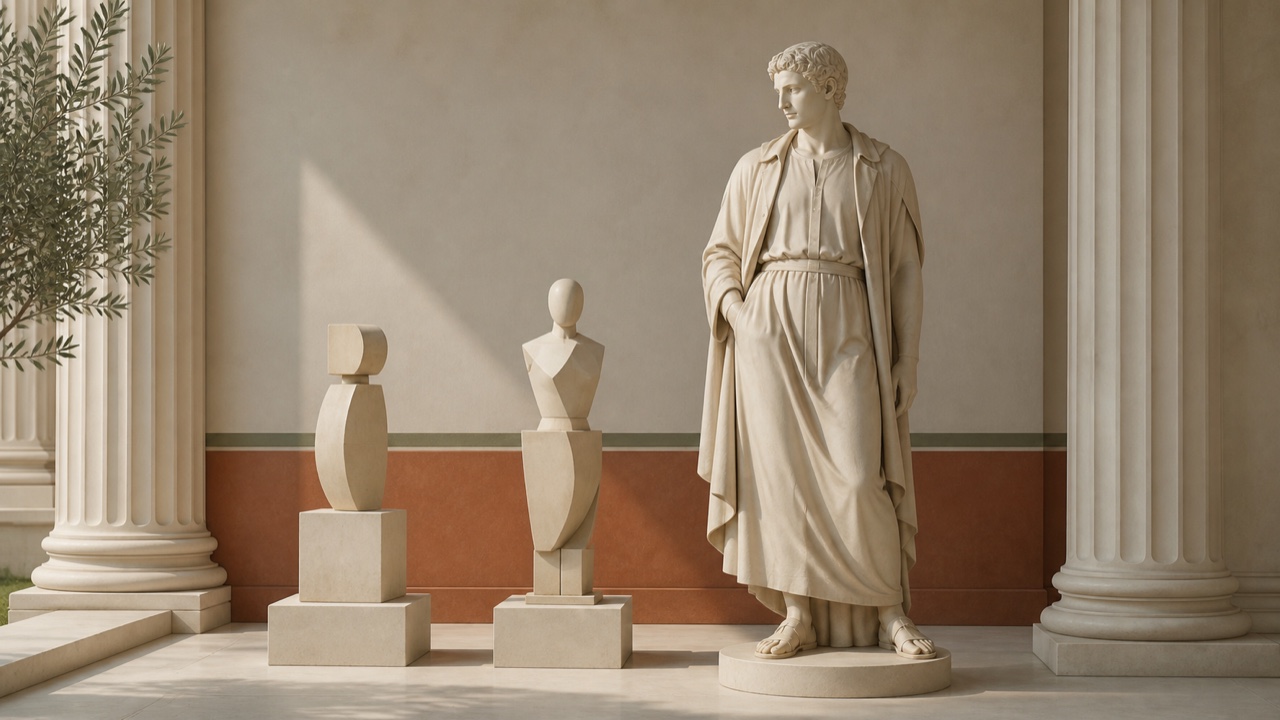
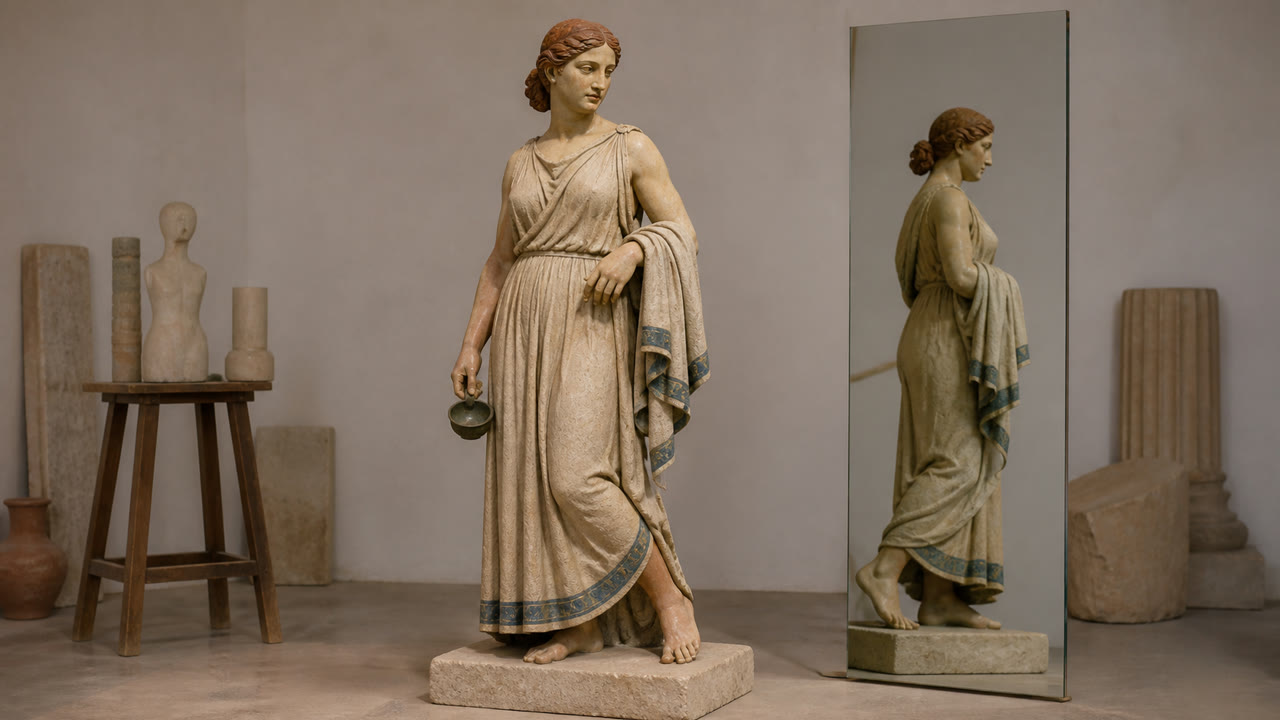
고대 그리스 예술은 관찰된 신체를 이상적인 비율과 균형으로 정돈하고, 카트파스토, 침착한 표정과 통제된 움직임을 사용하여 시민, 신과 영웅을 조화로운 기준으로 제시합니다.

한눈에 판단
시각적 특징
- 한 다리에 무게를 두고 반대 어깨와 엉덩이를 가진 카트파스토
- 관찰 및 이상화를 결합한 균형 잡힌 해부학
- 행동 중에도 통제된 표현과 명확한 윤곽선 유지
- 신체 구조와 움직임을 드러내는 드레이핑
적합한 용도
- Expressing proportion, restraint and bodily ideals through pose
- Building a classical reference from proportion and weight rather than columns and laurel symbols alone
이 양식 사용하기
짧은 지침을 프로젝트에 적용하거나 구조화된 사양을 AI 도구에 넘길 수 있습니다.
자세한 제작법과 출처제작 규칙, 실제 사례, 비교, 연구, 인용 형식
사전 항목
- 타이포그래피
- Keep inscriptional capitals secondary, using balanced widths and open spacing for a quiet order.
- 구성
- Place weight on one leg, oppose shoulder and hip inclinations, and return the asymmetrical pose to overall balance.
- 재료
- Do not mistake today's white marble for an originally colorless world; distinguish stone, bronze and traces of polychromy.
- 주의
- White busts and colonnades alone drift into later Neoclassicism. Center Classical-period proportion, weight and restrained movement.
- 더 읽을거리
- Classical Greek art / Contrapposto and ideal proportion / Polykleitos, Parthenon sculpture and Attic vase painting
관련 항목
- Ancient Egyptian Art (古代エジプト美術)같은 계열: 역사 양식.Classical Greek Art와 Ancient Egyptian Art 비교
- Roman Art (古代ローマ美術)같은 계열: 역사 양식.Classical Greek Art와 Roman Art 비교
역사 양식 더 보기
역사 양식에서 공통 인상이 많은 항목을 우선해 골랐습니다.
- Palladianism (パッラーディオ主義)공통 인상: Trust / Luxury / Calm.
- Renaissance (ルネサンス)공통 인상: Trust / Luxury / Calm.
- Neoclassicism (新古典主義)공통 인상: Trust / Luxury / Calm.
이 항목을 인용하기
사전은 링크되기 위해 있다. 글을 쓰는 자리에 맞는 형식을 그대로 가져가면 된다.
- Link
- https://indexstyle.org/ko/styles/classical-greek-art
- Markdown
- [Classical Greek Art — IndexStyle](https://indexstyle.org/ko/styles/classical-greek-art)
- HTML
- <a href="https://indexstyle.org/ko/styles/classical-greek-art">Classical Greek Art — IndexStyle</a>