Richardsonian Romanesque
リチャードソニアン・ロマネスク / 1870s–1890s / 风格 / 历史样式
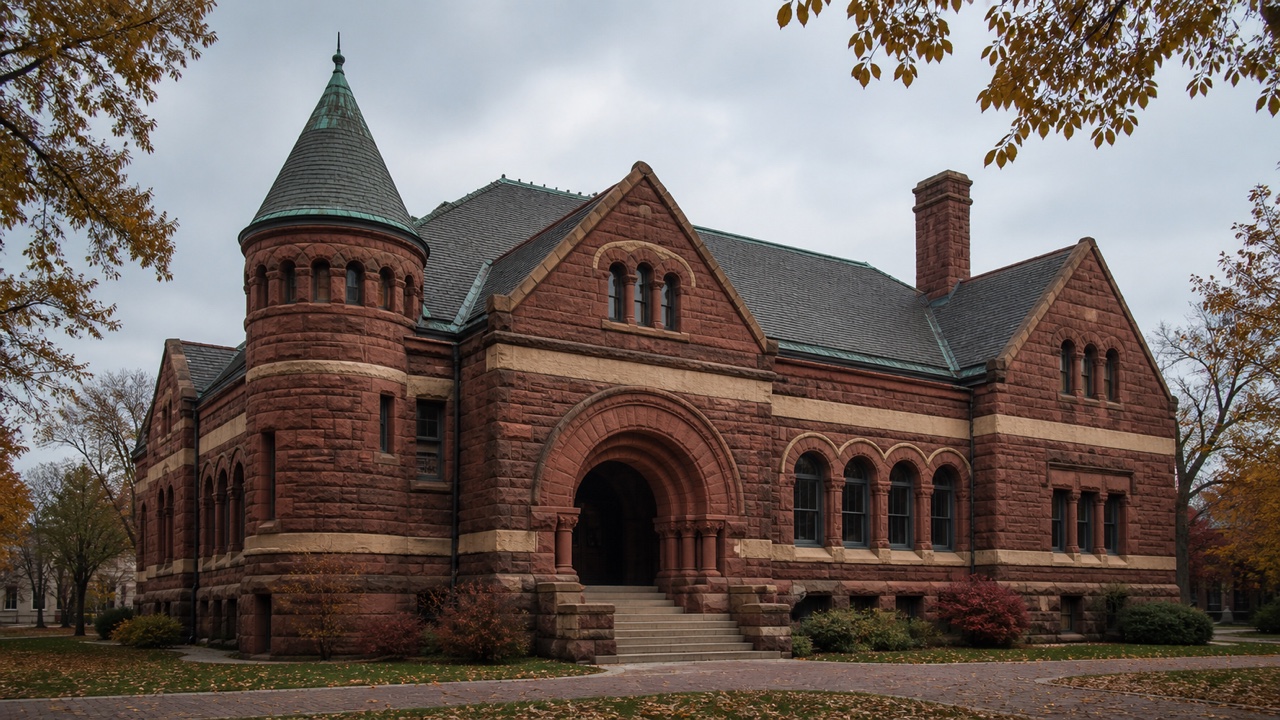
19世纪后期的美国建筑样式,把罗曼式圆拱重构为粗面石砌、深凹开口、不对称塔楼与低矮横展的体量。公共力量主要来自石材的重量和阴影深度,而不是贴附表面的装饰。

快速判断
视觉特征
- 把入口与窗户归并在一起的宽大深凹圆拱
- 粗面厚石墙与异色石带
- 圆锥屋顶的不对称塔楼压在横向轮廓之上
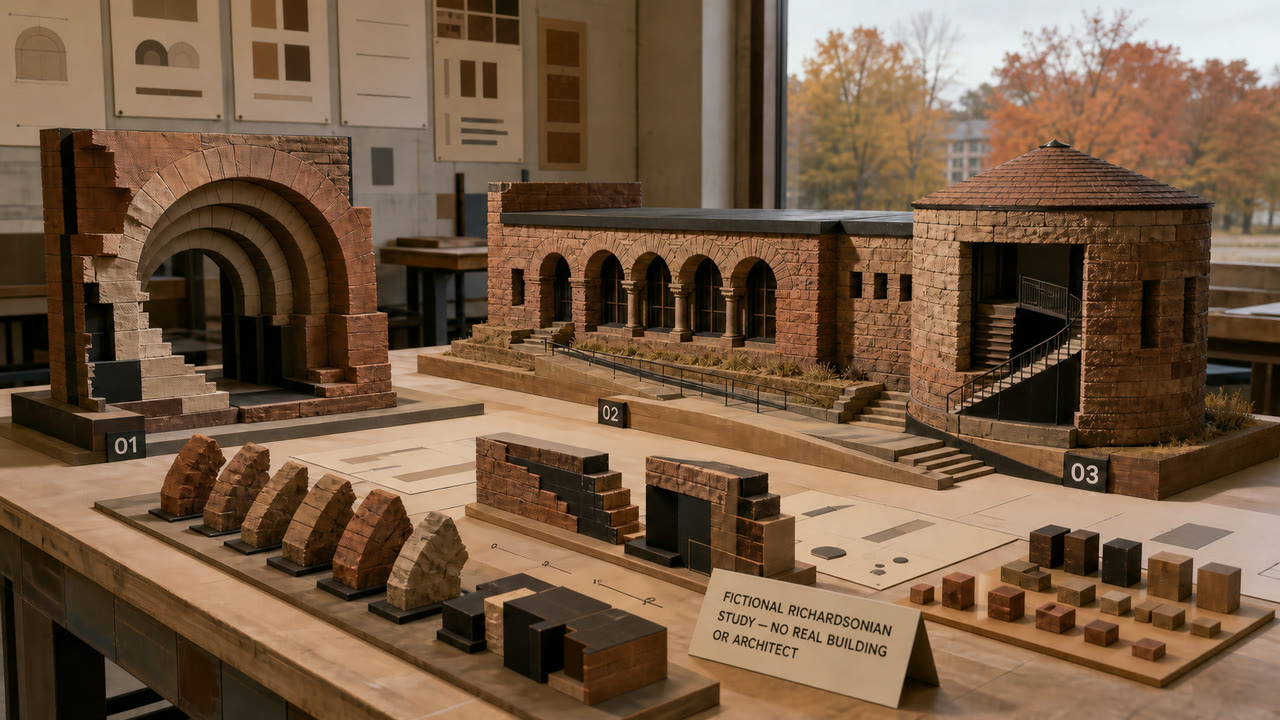
- 层层后退的开口,雕刻只集中在柱头与拱石
适用场景
- Giving libraries, schools or civic buildings trust through material weight instead of applied ornament
- Gathering a hotel or shop entrance into one large arch to create depth and shelter
使用这一风格
把简短指引带入项目,或将结构化规格交给AI工具。
详细方法与出处制作规则、真实案例、比较、研究与引用格式
辞典词条
- 字体
- Fit a broad serif title into a voussoir band and do not add ornamental lines finer than the stone joints.
- 版面
- Group round arches of different sizes into a low horizontal body, add one tower to one side, and pull openings deep enough to reveal wall thickness.
- 材料
- Lay large blocks of rough sandstone or granite, changing color or finish only at arch stones and horizontal bands, with dark timber and metal set farther back.
- 注意
- A round arch alone is not Richardsonian Romanesque. Distinguish it from an ancient or medieval reconstruction through its American civic program, rough massing, asymmetry and deeply recessed openings.
- 延伸阅读
- Henry Hobson Richardson and Trinity Church / National Park Service — Richardsonian Romanesque / round arches, rough-faced masonry and asymmetrical massing
相关词条
- Romanesque (ロマネスク)同属历史样式。比较Richardsonian Romanesque与Romanesque
- Gothic Revival (ゴシック・リヴァイヴァル)同属历史样式。比较Richardsonian Romanesque与Gothic Revival
继续浏览历史样式
从历史样式中按共同感受优先推荐以下词条。
- Palladianism (パッラーディオ主義)共同感受:Trust / Luxury / Calm。
- Renaissance (ルネサンス)共同感受:Trust / Luxury / Calm。
- Neoclassicism (新古典主義)共同感受:Trust / Luxury / Calm。
引用此条目
这部辞典就是用来被链接的。请取用适合你写作场合的那一种形式。
- Link
- https://indexstyle.org/zh/styles/richardsonian-romanesque
- Markdown
- [Richardsonian Romanesque — IndexStyle](https://indexstyle.org/zh/styles/richardsonian-romanesque)
- HTML
- <a href="https://indexstyle.org/zh/styles/richardsonian-romanesque">Richardsonian Romanesque — IndexStyle</a>