Slashing
スラッシング装飾 / late 15th–17th century / revivals / Technique / Fashion History
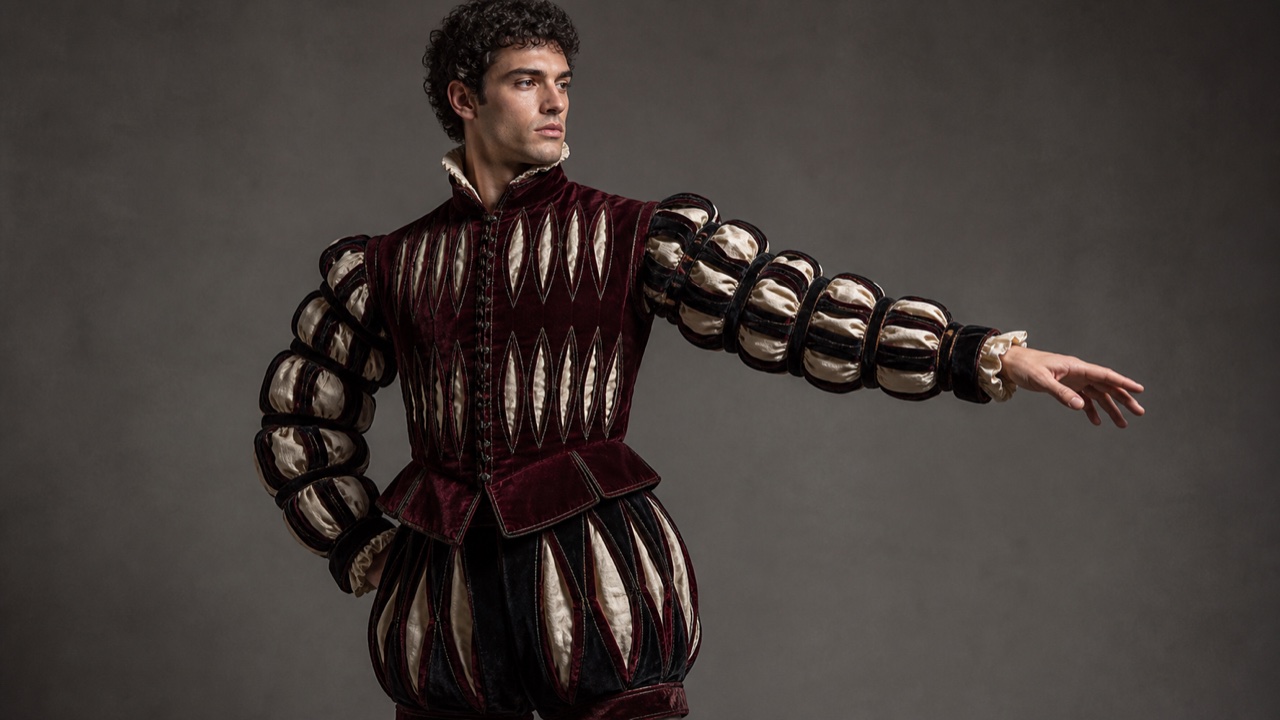
A decorative technique making regular cuts through an outer layer of clothing, hats, or shoes to reveal lining, undercloth, or pulled fabric beneath. Cut shape, spacing, direction, and contrasting color turn the surface into a controlled two-layer rhythm rather than random damage.

At a glance
Visual cues
- Evenly spaced straight, wavy, or crossed cuts through the outer layer
- Contrasting lining or puffed undercloth visible through each opening
- Cut density and size changing with sleeve, torso, or shoe form
- Embroidery, pinking, or paning may join it, but the repeated opening remains primary
Best used for
- Revealing a second color through cuts rather than applied trim in historical reconstruction
- Using surface cuts and inner color as a repeat pattern in contemporary clothing, shoes, or stage costume
Use this style
Take the compact brief into a project or hand the structured version to an AI tool.
Detailed guidance and sourcesProduction rules, reference works, comparisons, research and citation formats
Dictionary entry
- Type
- Keep lettering intact and use only short rules matching the cuts' angle and interval.
- Composition
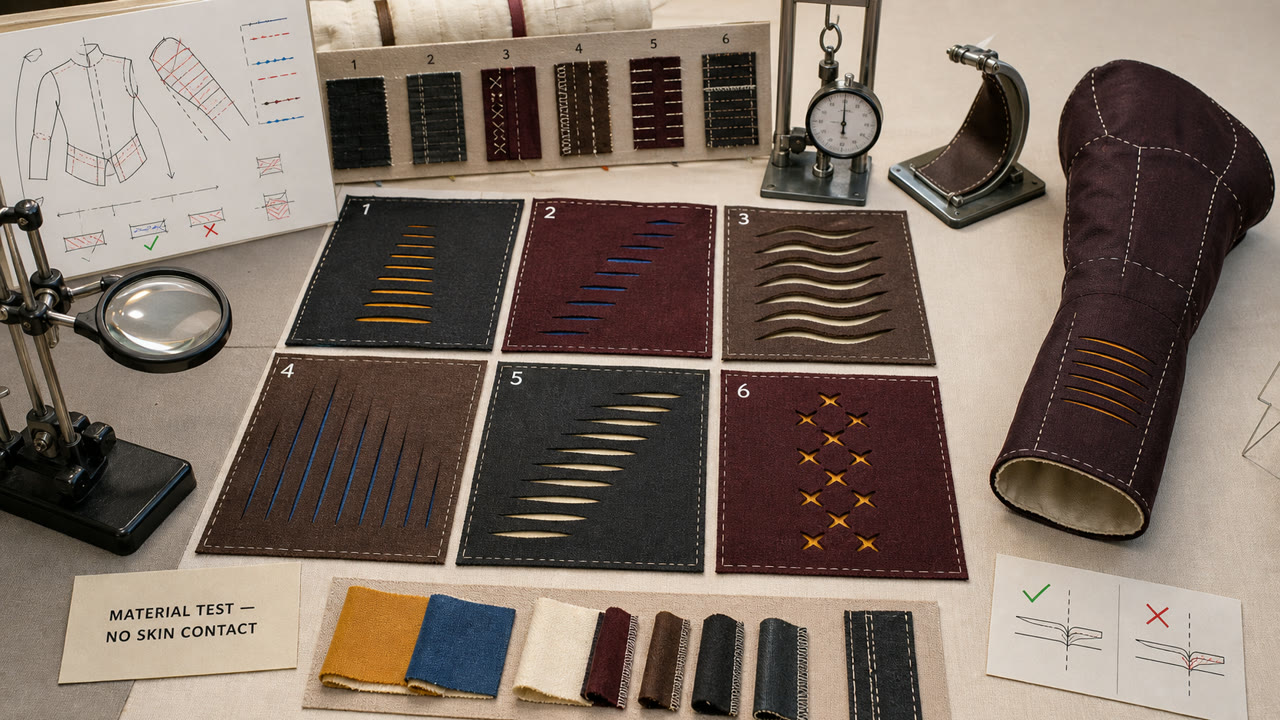
- Avoid seams, load points, and body folds; grade cut length and spacing on the pattern before assembly.
- Material
- Layer a tested outer cloth over saturated lining, reinforce where required, and perform whole-garment durability tests after cutting.
- Caution
- Do not confuse controlled slashing with random distressing. Keep cuts away from structural seams, skin, and movement zones; never irreversibly alter heritage, borrowed, or protective clothing.
- Further study
- late-fifteenth- and sixteenth-century slashed dress / regular cuts, pinking and contrasting linings / Vivienne Westwood's Cut, Slash & Pull and modern revivals
Related entries
- Mannerism (マニエリスム)Shared effects: Luxury / Rebellion.Compare Slashing and Mannerism
- Fashion Deconstruction (ファッションの脱構築)Same Fashion History lineage.Compare Slashing and Fashion Deconstruction
More from Fashion History
Continue through styles in the same Fashion History family, prioritised by shared effects.
- Peacock Revolution (ピーコック・レボリューション)Shared effects: Exhilaration / Rebellion / Luxury.
- Dandyism (ダンディズム)Shared effects: Luxury / Rebellion.
- Flapper (フラッパー)Shared effects: Exhilaration / Rebellion.
Browse all Fashion History entries
Cite this entry
The dictionary is meant to be linked to. Take whichever form fits where you are writing.
- Link
- https://indexstyle.org/styles/slashing
- Markdown
- [Slashing — IndexStyle](https://indexstyle.org/styles/slashing)
- HTML
- <a href="https://indexstyle.org/styles/slashing">Slashing — IndexStyle</a>