Fashion Deconstruction
ファッションの脱構築 / 1980s– / Style / Fashion History
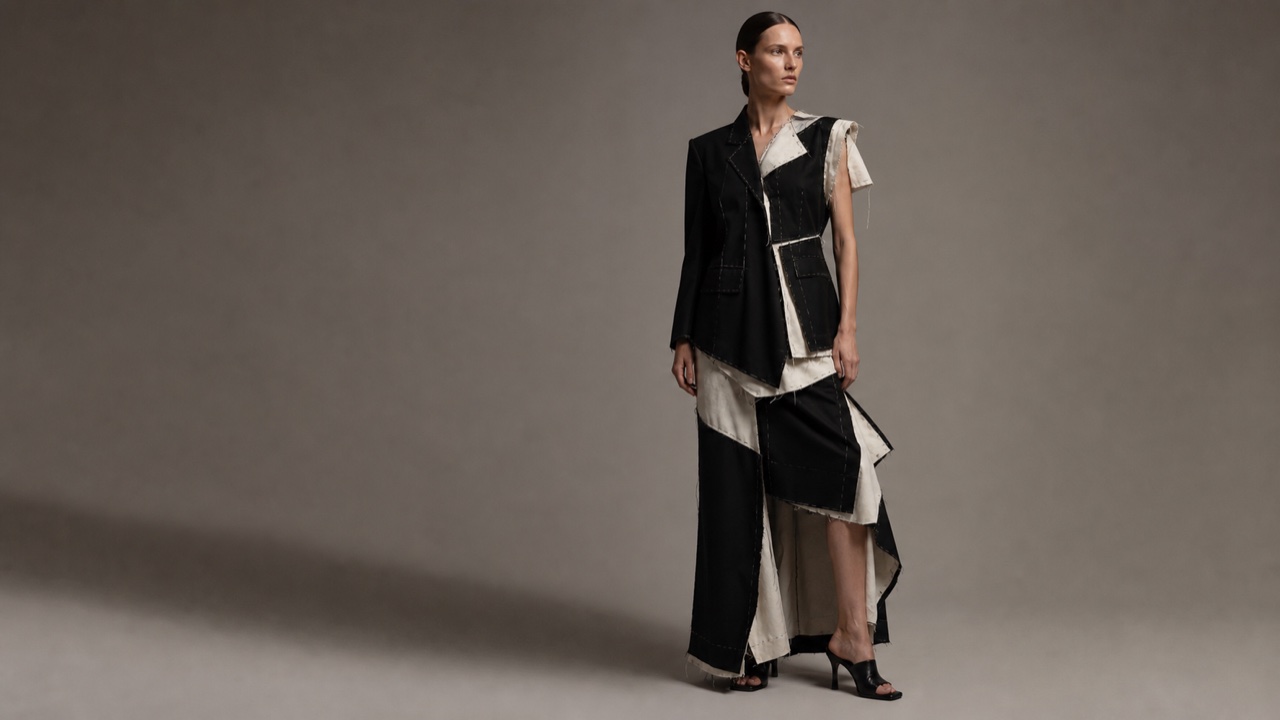
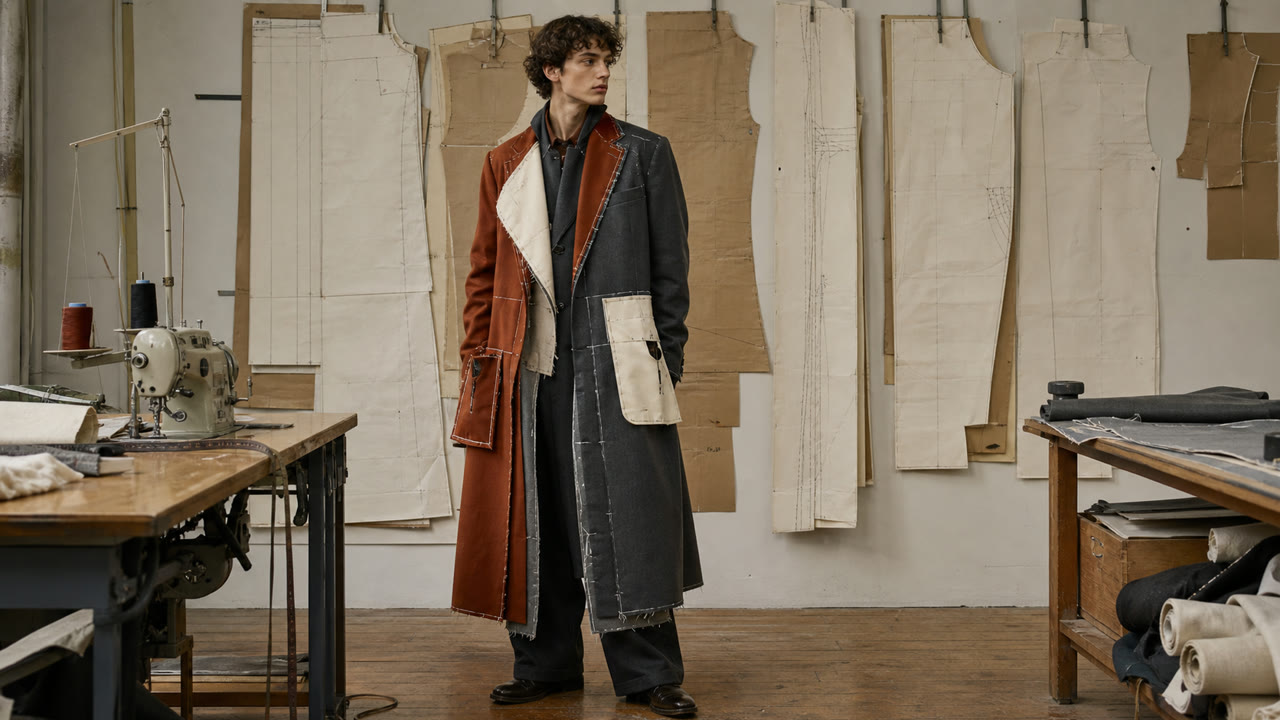
Exposes seam allowance, lining, raw edge, pattern and asymmetric joining instead of hiding clothing as a seamless whole. It does not merely destroy; it dismantles conventions and builds a different body from their parts.

At a glance
Visual cues
- Seam allowances and lining turned outward
- Raw edges and deliberate fraying
- Asymmetric joins and displaced balance
- Patterns and interfacing treated as finished surfaces
Best used for
- Collections where garment structure and making are the subject
- Clothes and displays that value assembly and repair traces over polished finish
Use this style
Take the compact brief into a project or hand the structured version to an AI tool.
Detailed guidance and sourcesProduction rules, reference works, comparisons, research and citation formats
Dictionary entry
- Type
- Leave labels, basting thread and pattern notation visible as part of the structure.
- Composition
- Break symmetry so joins and excess cloth draw another contour around the body.
- Material
- Expose lining, interfacing, seams and cut edges so the order of assembly can be read.
- Caution
- Torn and frayed cloth alone is not deconstruction. The viewer must see what convention was dismantled and what replaced it.
- Further study
- Rei Kawakubo and Comme des Garçons / Martin Margiela / Exposure and reconstruction of structure
Related entries
- Deconstructivism (脱構築主義)Shared effects: Rebellion.Compare Fashion Deconstruction and Deconstructivism
- Punk (パンク)Shared effects: Rebellion.Compare Fashion Deconstruction and Punk
More from Fashion History
Continue through styles in the same Fashion History family, prioritised by shared effects.
- Dandyism (ダンディズム)Shared effects: Rebellion / Calm.
- Rational Dress (合理服運動)Shared effects: Rebellion / Technique.
- Flapper (フラッパー)Shared effects: Rebellion.
Browse all Fashion History entries
Cite this entry
The dictionary is meant to be linked to. Take whichever form fits where you are writing.
- Link
- https://indexstyle.org/styles/fashion-deconstruction
- Markdown
- [Fashion Deconstruction — IndexStyle](https://indexstyle.org/styles/fashion-deconstruction)
- HTML
- <a href="https://indexstyle.org/styles/fashion-deconstruction">Fashion Deconstruction — IndexStyle</a>