Hurufiyya vs Kufic
フルーフィーヤ / クーフィー体
Hurufiyya comes from Modern and Contemporary Art Movements and Kufic from Calligraphic Traditions. They are reached for with some of the same intent, which is where they get confused.
Hurufiyya
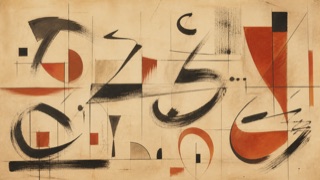
From the mid-twentieth century, Hurufiyya transformed Arabic words, fragments and individual letters into elements of modern painting, sculpture and graphic composition rather than reproducing traditional calligraphy. Letters move among meaning, bodily mark, cultural identity and abstract form.
Kufic
.jpg)
Keeps the uprights short and draws the horizontals long, massing letters of straight strokes and right angles into a band of even height.
| Hurufiyya | Kufic | |
|---|---|---|
| Era | mid-20th century– | 8th century onward |
| Family | Modern and Contemporary Art Movements | Calligraphic Traditions |
| Kind | Style | Style |
| Cues | Repeated single Arabic letters or partly unreadable fragments / Writing embedded in grids, spirals, color fields or figures / Hand pressure coexisting with modern abstract composition / Deliberate switching between legibility and pure form | Horizontals drawn long / Short angular uprights / Letters turning at right angles / Lines massed into an even band |
| Best used for | Treating language, displacement and belonging as tension between readable text and abstraction · Using Arabic script as the structure that carries both meaning and form rather than as scenery | Cutting an inscription into a wall or a vessel as a band · Using the angular letterforms as figure, for titling and marks meant to be read from a distance |
| Type | Verify the letter, word, dialect and writer, and state where reading ends and formal transformation begins. | Fix the ratio of upright to horizontal first, and turn every corner at a right angle |
| Composition | Do not contain writing in a decorative strip; repeat or break it across the main structure of grid, field, body and void. | Align the top and the foot of the line, space the uprights evenly, and run the letters as a band |
| Material | Preserve resistance specific to ink, oil, paper or metal and do not substitute randomly rotated fonts for a physical hand. | Cut into stone, brick and tile, and on parchment hold the stroke to an even weight with the reed pen |
| Caution | Arabic-looking signs used as exotic pattern erase both meaning and lineage. Distinguish the movement from traditional calligraphy and name maker, region, language and modern context. | Copying only the right angles while breaking the joins between letters leaves an ornamental band that no longer reads as a word. |
Modern and Contemporary Art Movements / Calligraphic Traditions