Hurufiyya vs Saqqakhaneh
フルーフィーヤ / サッカーハーネ派
Both sit in Modern and Contemporary Art Movements, so the question is not what they belong to but how they behave. They are reached for with some of the same intent, which is where they get confused.
Hurufiyya
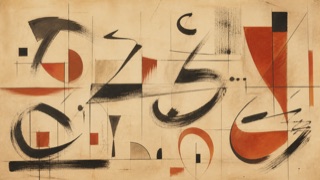
From the mid-twentieth century, Hurufiyya transformed Arabic words, fragments and individual letters into elements of modern painting, sculpture and graphic composition rather than reproducing traditional calligraphy. Letters move among meaning, bodily mark, cultural identity and abstract form.
Saqqakhaneh
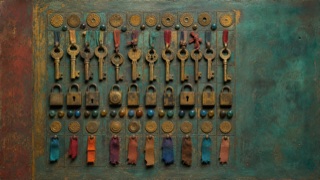
In late-1950s and 1960s Iran, Saqqakhaneh artists reworked street shrines, votive objects, talismanic seals, locks, beads, numbers and letters into modern repetition, accumulation and abstraction in painting and sculpture.
| Hurufiyya | Saqqakhaneh | |
|---|---|---|
| Era | mid-20th century– | late 1950s–1960s |
| Family | Modern and Contemporary Art Movements | Modern and Contemporary Art Movements |
| Kind | Style | Style |
| Cues | Repeated single Arabic letters or partly unreadable fragments / Writing embedded in grids, spirals, color fields or figures / Hand pressure coexisting with modern abstract composition / Deliberate switching between legibility and pure form | Repeated talismanic seals, numbers and letters filling the field / Accumulations of locks, keys, beads, ribbons and votive objects / Tightly gridded or axially compressed talismanic composition / Layered earth, metal, turquoise and red surfaces |
| Best used for | Treating language, displacement and belonging as tension between readable text and abstraction · Using Arabic script as the structure that carries both meaning and form rather than as scenery | Addressing tensions between modernization, popular belief and local material culture through assembled objects and signs · Turning numbers, writing and offerings into contemporary repetition rather than antiquarian display |
| Type | Verify the letter, word, dialect and writer, and state where reading ends and formal transformation begins. | Verify the meaning and provenance of Persian words and numbers rather than inventing occult-looking marks. |
| Composition | Do not contain writing in a decorative strip; repeat or break it across the main structure of grid, field, body and void. | Compress small seals, keys, beads and writing into a grid or central axis, leaving either calm space or one large color field around it. |
| Material | Preserve resistance specific to ink, oil, paper or metal and do not substitute randomly rotated fonts for a physical hand. | Preserve the different wear of brass, iron, pigment and paper, and document the origin and use of devotional objects. |
| Caution | Arabic-looking signs used as exotic pattern erase both meaning and lineage. Distinguish the movement from traditional calligraphy and name maker, region, language and modern context. | Hurufiyya opens writing across several modernisms; Saqqakhaneh is specifically rooted in Iranian popular devotion, offerings and street material culture. Do not merge both into Middle Eastern letter art. |