Die Brücke
ブリュッケ / 1905–1913 / Style / Avant-garde
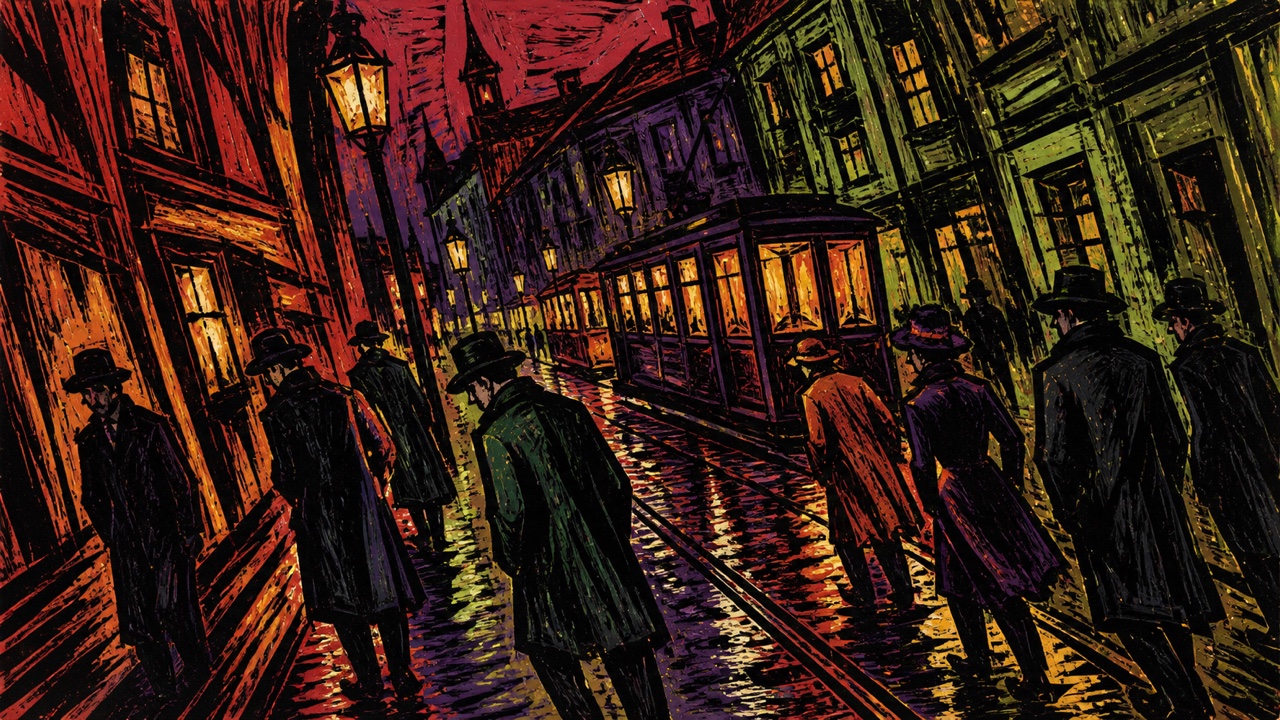
The Dresden group that compressed the city, nude figure, nature, and nightlife into sharp contour, rough woodcut, and non-natural color. Unlike the Blue Rider's spiritual abstraction, it foregrounds the urgent material contact of bodies, streets, and collective making.
.jpeg)
At a glance
Visual cues
- Angular heavy contours and flat non-natural color
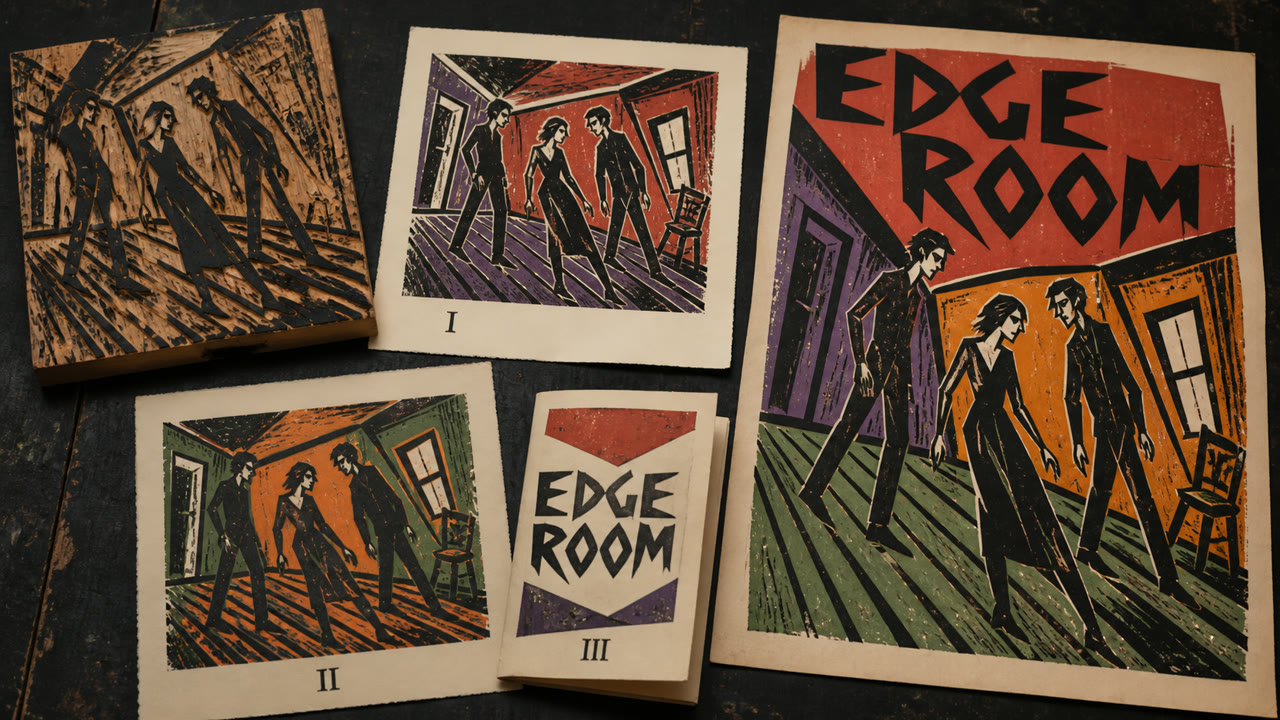
- Black-and-white cuts retaining the resistance of wood
- Elongated urban figures and nudes
- Red, orange, green, and violet creating unstable space
Best used for
- Communicating urban tension through sharp contour and non-natural color
- Unifying woodcut resistance and distorted figures in print
Use this style
Take the compact brief into a project or hand the structured version to an AI tool.
Detailed guidance and sourcesProduction rules, reference works, comparisons, research and citation formats
Dictionary entry
- Type
- Give letters the angular skeleton of carved wood and align the uneven rows with cuts in the image.
- Composition
- Stretch figures vertically and drive street or interior diagonals into shallow depth.
- Material
- Use rough woodcut, heavy black, absorbent paper, and opaque red, orange, and green, leaving chips visible.
- Caution
- Do not anonymize other cultures as primitive source material. Identify provenance and colonial collecting contexts, and do not reduce deliberate distortion to performed incompetence.
- Further study
- Ernst Ludwig Kirchner, Erich Heckel and Karl Schmidt-Rottluff / Die Brücke portfolios and woodcuts / urban modernity and communal studio practice
Related entries
- Der Blaue Reiter (青騎士)Same Avant-garde lineage.Compare Die Brücke and Der Blaue Reiter
- Expressionism (表現主義)Same Avant-garde lineage.Compare Die Brücke and Expressionism
More from Avant-garde
Continue through styles in the same Avant-garde family, prioritised by shared effects.
- Constructivism (構成主義)Shared effects: Rebellion / Exhilaration.
- Dada (ダダ)Shared effects: Rebellion / Exhilaration.
- Italian Futurism (イタリア未来派)Shared effects: Exhilaration / Rebellion.
Browse all Avant-garde entries
Cite this entry
The dictionary is meant to be linked to. Take whichever form fits where you are writing.
- Link
- https://indexstyle.org/styles/die-brucke
- Markdown
- [Die Brücke — IndexStyle](https://indexstyle.org/styles/die-brucke)
- HTML
- <a href="https://indexstyle.org/styles/die-brucke">Die Brücke — IndexStyle</a>