Ashcan School
アシュカン・スクール / c. 1900–1915 / Style / Figurative Painting
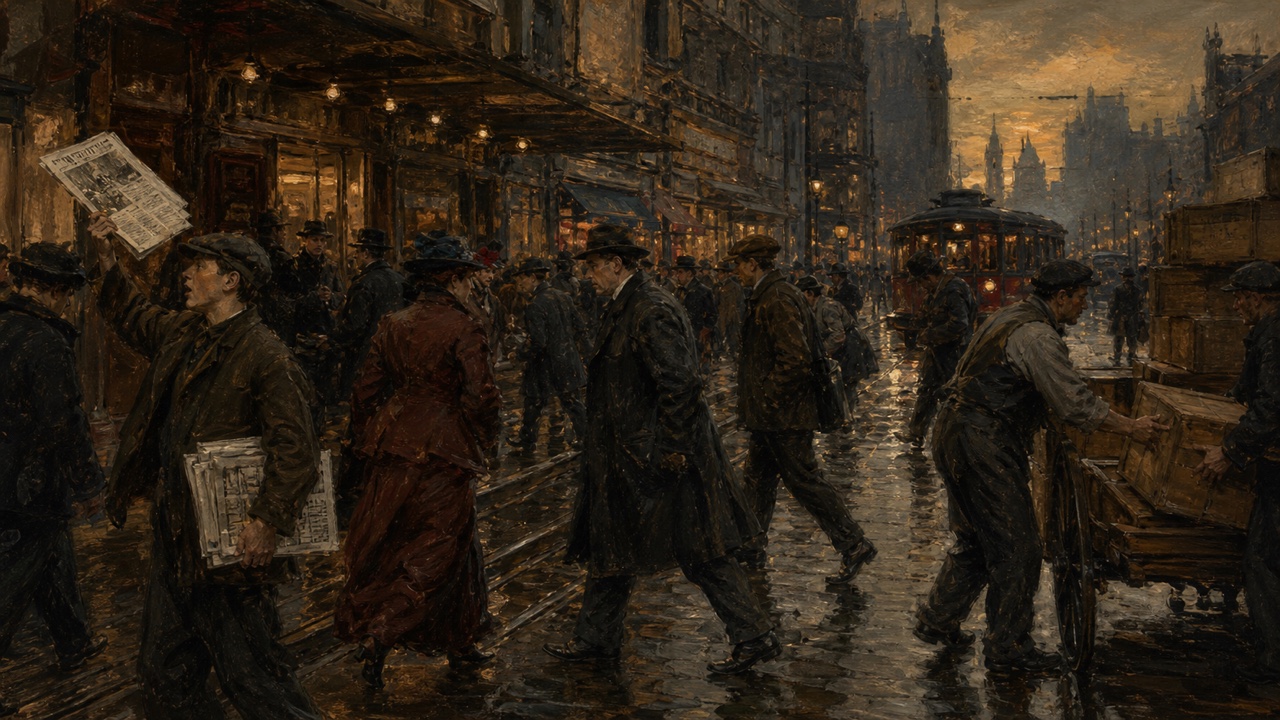
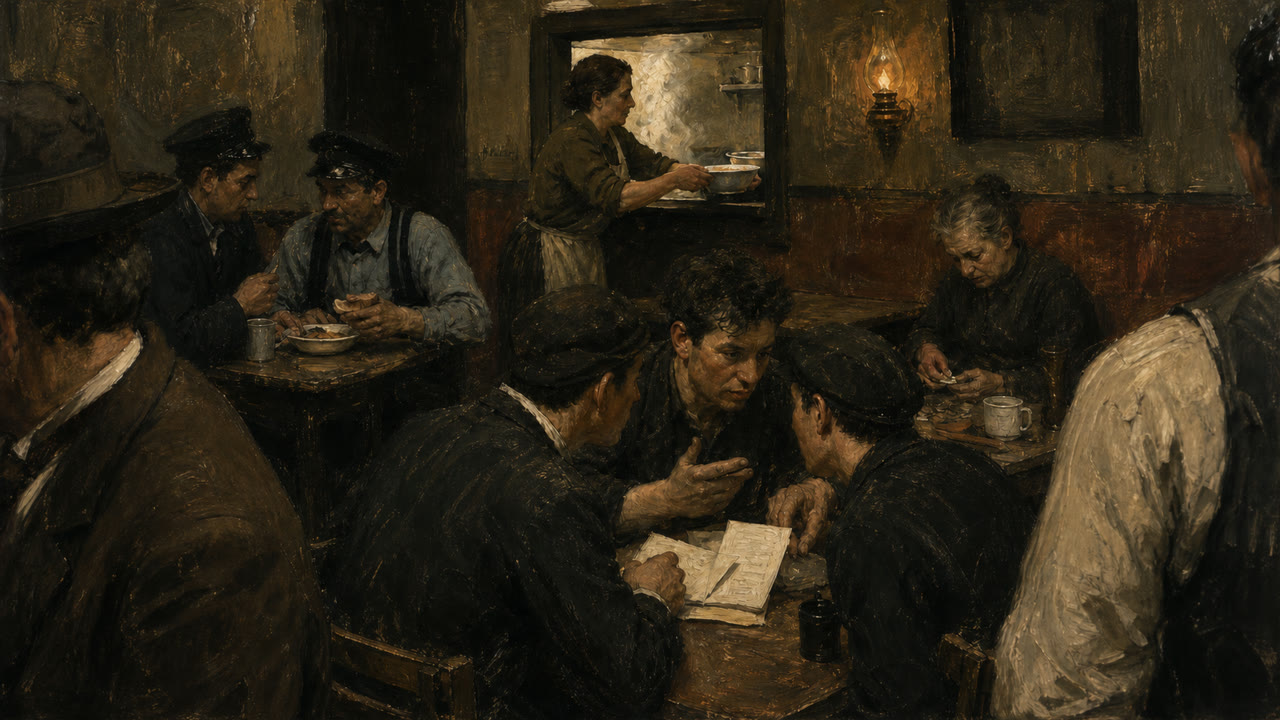
An early-twentieth-century New York urban realism that raised crowded streets, saloons, theaters, and working neighborhoods into major subjects through the speed of newspaper illustration and a dark, rough paint surface.
.jpg)
At a glance
Visual cues
- Crowded street and interior groups
- Dark brown, soot black, and muted red
- Fast broad marks and reportorial cropping
- Workers, immigrants, and entertainment districts without idealization
Best used for
- Showing urban noise and class friction through crowds rather than polished city views
- Giving local history or reportorial publishing the speed and weight of life observed on the street
Use this style
Take the compact brief into a project or hand the structured version to an AI tool.
Detailed guidance and sourcesProduction rules, reference works, comparisons, research and citation formats
Dictionary entry
- Type
- Use a heavy newspaper serif briefly and keep it off faces and gestures.
- Composition
- Set the viewpoint at crowd height, crop figures at the edges, and follow street movement rather than centering a hero.
- Material
- Work in umber, soot black, muddy neutrals, and muted red with fast oil or charcoal that leaves its construction visible.
- Caution
- A dark city is not enough. Name who is doing what and where, and do not turn poverty into atmosphere.
- Further study
- Robert Henri and The Eight / New York newspapers and urban reportage / George Bellows, John Sloan and George Luks
Related entries
- Realism (写実主義)Same Figurative Painting lineage.Compare Ashcan School and Realism
- Social Realism (ソーシャル・リアリズム)Shared effects: Rebellion / Trust / Intimacy.Compare Ashcan School and Social Realism
More from Figurative Painting
Continue through styles in the same Figurative Painting family, prioritised by shared effects.
- Naturalism (自然主義美術)Shared effects: Trust / Intimacy.
- Romanticism (ロマン主義)Shared effects: Rebellion.
- Academic Art (アカデミック美術)Shared effects: Trust.
Browse all Figurative Painting entries
Cite this entry
The dictionary is meant to be linked to. Take whichever form fits where you are writing.
- Link
- https://indexstyle.org/styles/ashcan-school
- Markdown
- [Ashcan School — IndexStyle](https://indexstyle.org/styles/ashcan-school)
- HTML
- <a href="https://indexstyle.org/styles/ashcan-school">Ashcan School — IndexStyle</a>