Op Art Fashion
オプ・アート・ファッション / 1964–late 1960s / 양식 / 패션사
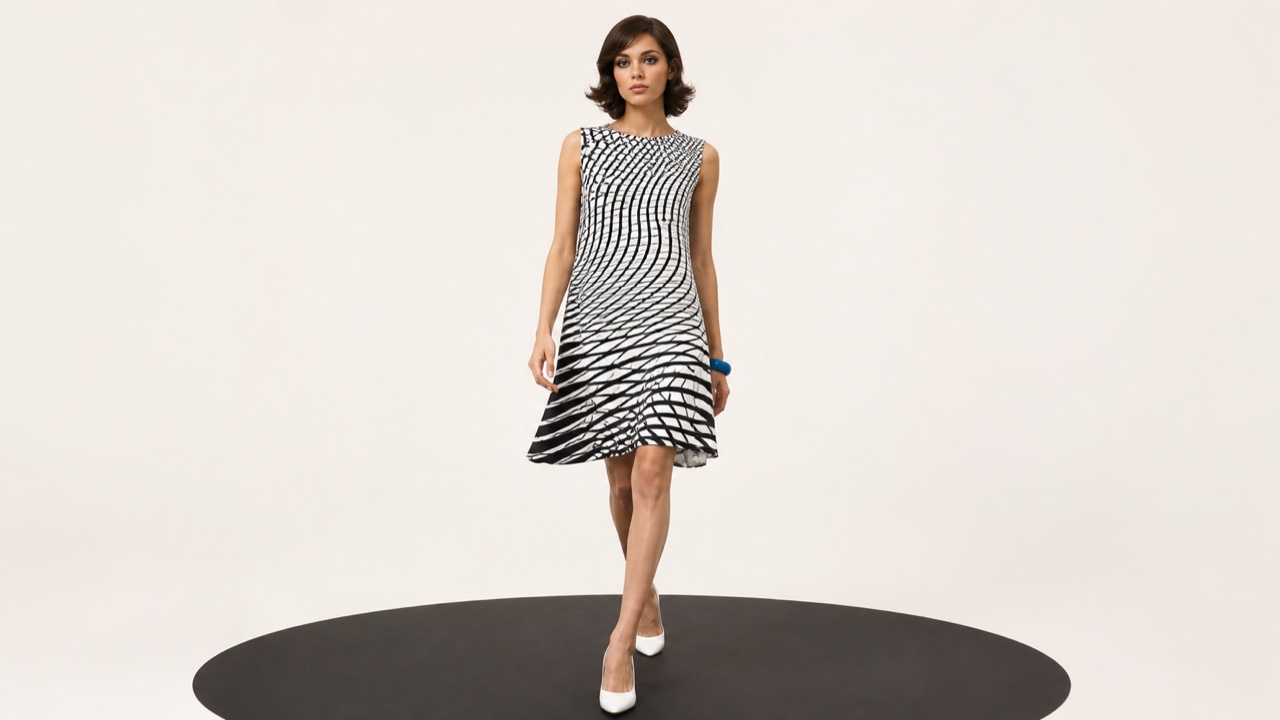
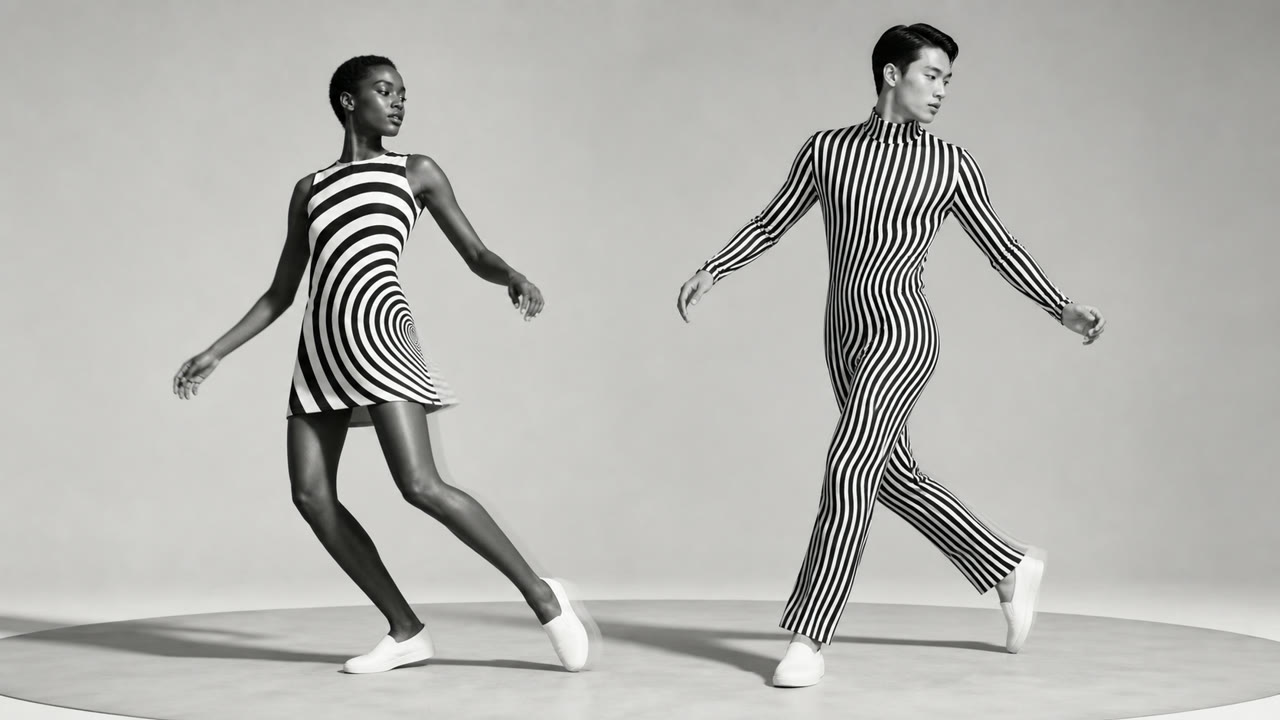
1960년대 오페 아트(Op art) 패션은 반복적인 선, 날카로운 검정색과 흰색 대비, 그리고 인지적 떨림을 직선 미니 드레스, 니트 및 종이 의류에 적용하여 패턴이 몸의 움직임에 따라 부풀어 오르고, 흔들리고 변형되도록 합니다.
한눈에 판단
시각적 특징
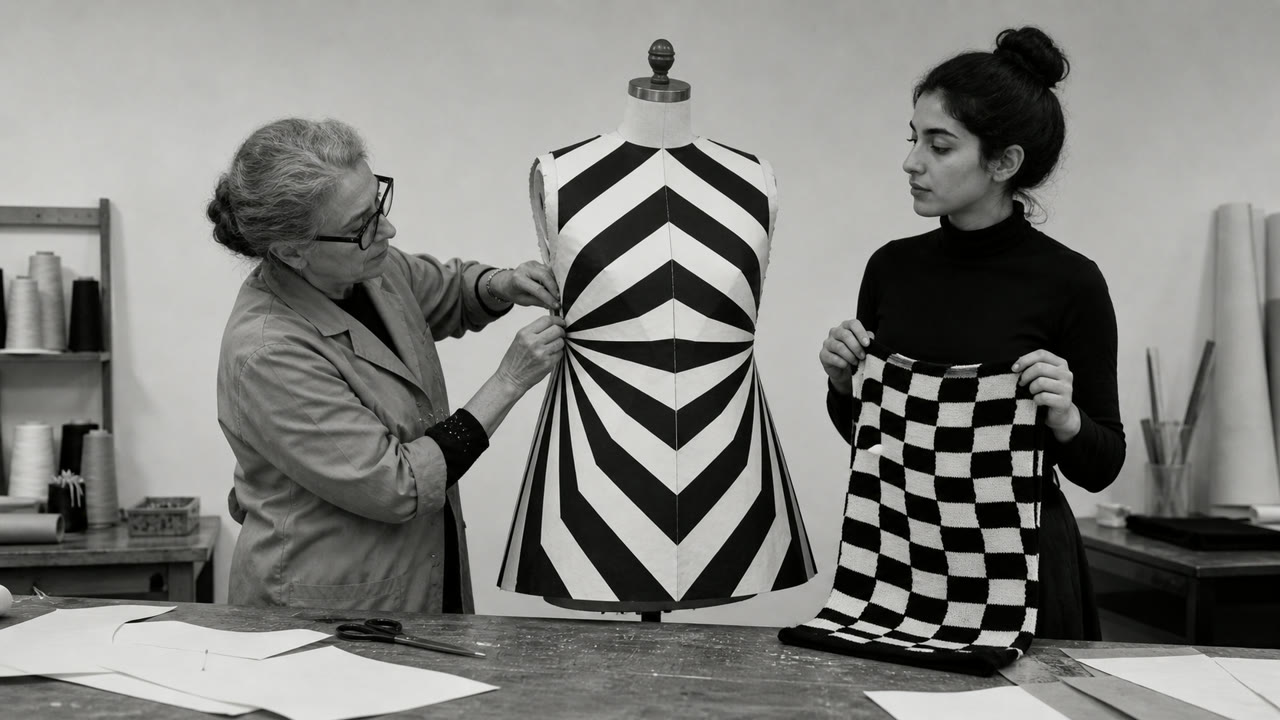
- 높은 대비를 가진 검정색과 흰색 선, 격자, 파도 및 원형 형태
- 눈을 혼란스럽게 만드는 매우 정밀하게 반복된 기하학적 형태
- 패턴이 끊어지지 않도록 하는 단순한 실루엣 변화
- 걷기와 몸의 곡선에 따라 왜곡되는 전체 패턴 인쇄
적합한 용도
- Using body movement to produce stronger optical effects than a still image in performance or photography
- Making a 1960s fashion statement legible at distance with few colors and a simple pattern
이 양식 사용하기
짧은 지침을 프로젝트에 적용하거나 구조화된 사양을 AI 도구에 넘길 수 있습니다.
자세한 제작법과 출처제작 규칙, 실제 사례, 비교, 연구, 인용 형식
사전 항목
- 타이포그래피
- Set a heavy sans in a plain band so it does not compete with the pattern frequency.
- 구성
- Use a straight form with few seams and carry the optical period uninterrupted from chest to hem.
- 재료
- Vary line width and spacing in two high-contrast colors, then fit-test how stretch and curvature alter the effect.
- 주의
- Not every geometric print is Op Art. The structure must create perceptual vibration, expansion or depth.
- 더 읽을거리
- 1966 Scott Paper op-art dress / Bridget Riley and optical pattern / Paper clothing and mass promotion
관련 항목
- Op Art (オプ・アート)공통 인상: Exhilaration / Technique.Op Art Fashion와 Op Art 비교
- Space Age Fashion (スペースエイジ・ファッション)같은 계열: 패션사.Op Art Fashion와 Space Age Fashion 비교
패션사 더 보기
패션사에서 공통 인상이 많은 항목을 우선해 골랐습니다.
- Flapper (フラッパー)공통 인상: Exhilaration / Play.
- Meisen Kimono (銘仙)공통 인상: Play / Exhilaration.
- Camp Fashion (キャンプ・ファッション)공통 인상: Play / Exhilaration.
이 항목을 인용하기
사전은 링크되기 위해 있다. 글을 쓰는 자리에 맞는 형식을 그대로 가져가면 된다.
- Link
- https://indexstyle.org/ko/styles/op-art-fashion
- Markdown
- [Op Art Fashion — IndexStyle](https://indexstyle.org/ko/styles/op-art-fashion)
- HTML
- <a href="https://indexstyle.org/ko/styles/op-art-fashion">Op Art Fashion — IndexStyle</a>