Op Art Fashion
オプ・アート・ファッション / 1964–late 1960s / Estilo / Historia de la moda
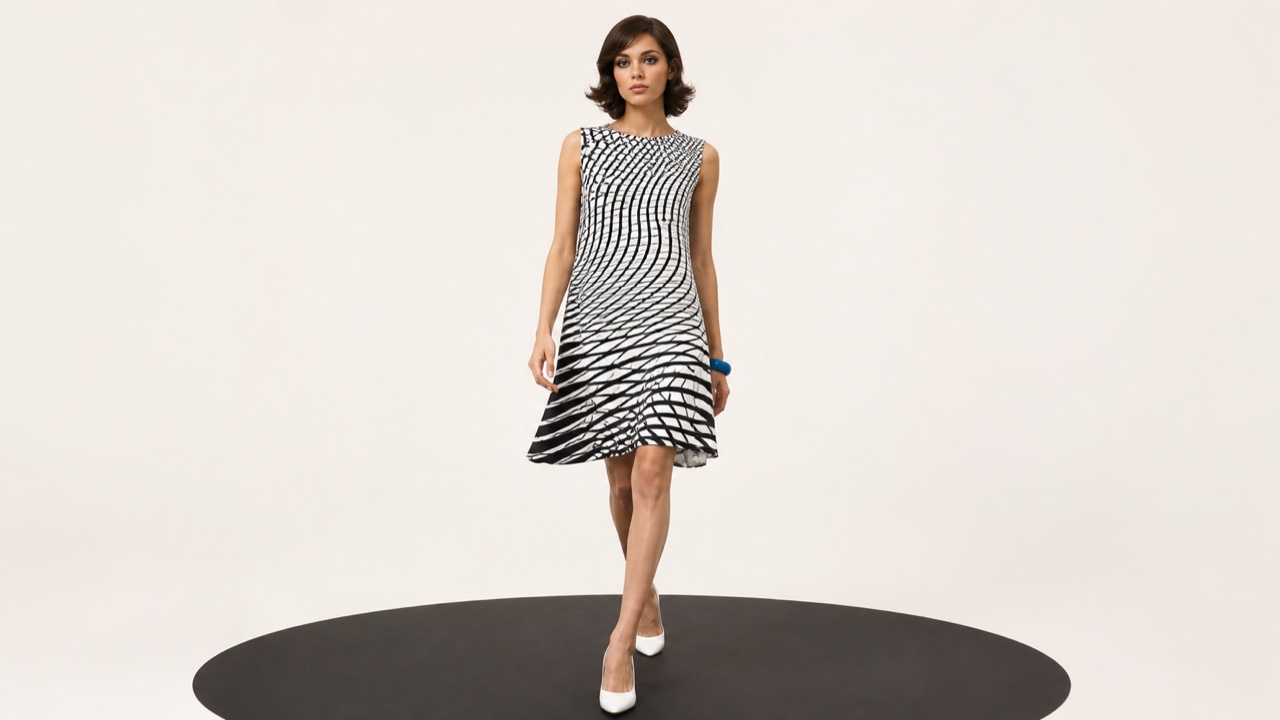
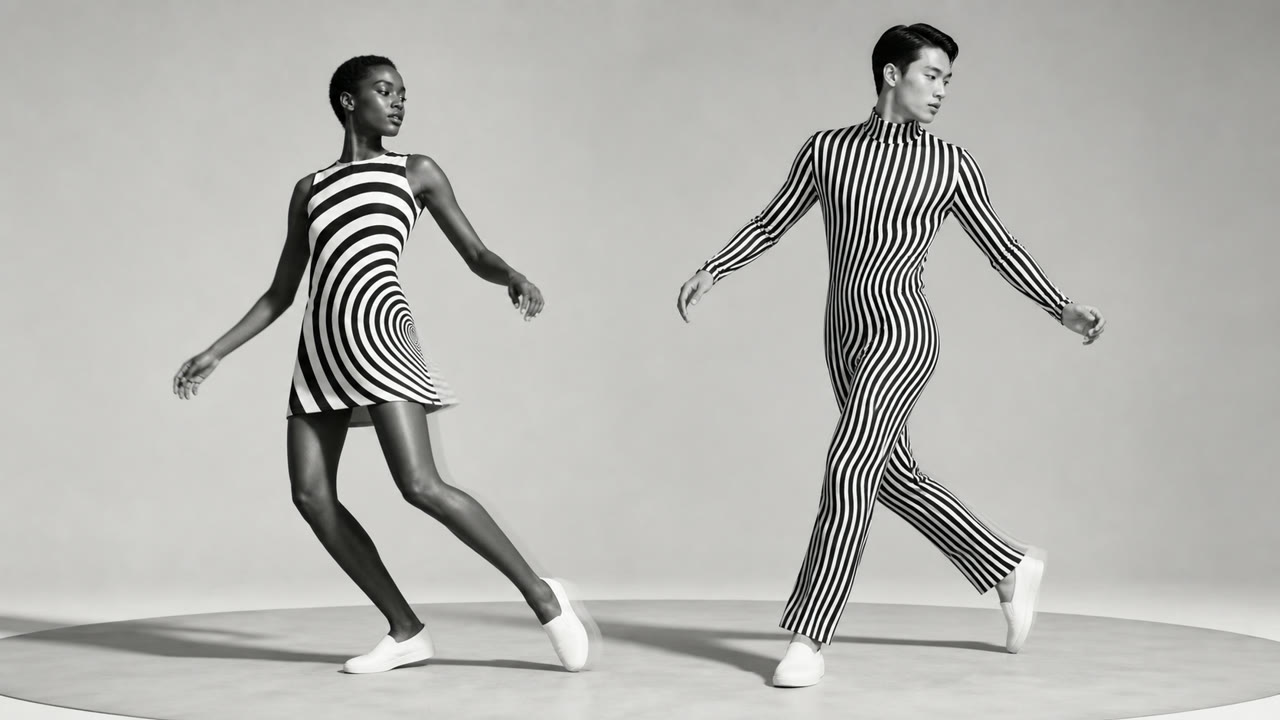
La moda Op Art de los años sesenta llevó líneas repetidas, fuerte contraste blanco y negro y vibración perceptiva a minivestidos rectos, prendas de punto y ropa de papel, dejando que el patrón se hinchara, parpadeara y girara al moverse el cuerpo.
De un vistazo
Rasgos visuales
- Líneas, retículas, ondas y formas concéntricas en blanco y negro de alto contraste
- Geometría repetida con suficiente finura para inquietar la vista
- Siluetas shift sencillas que no interrumpen los patrones
- Estampados totales cuya distorsión cambia al caminar y con la curvatura del cuerpo
Usos idóneos
- Using body movement to produce stronger optical effects than a still image in performance or photography
- Making a 1960s fashion statement legible at distance with few colors and a simple pattern
Usar este estilo
Lleva el resumen al proyecto o entrega la especificación estructurada a una herramienta de IA.
Guía detallada y fuentesReglas de producción, obras de referencia, comparaciones, investigación y citas
Entrada del diccionario
- Tipografía
- Set a heavy sans in a plain band so it does not compete with the pattern frequency.
- Composición
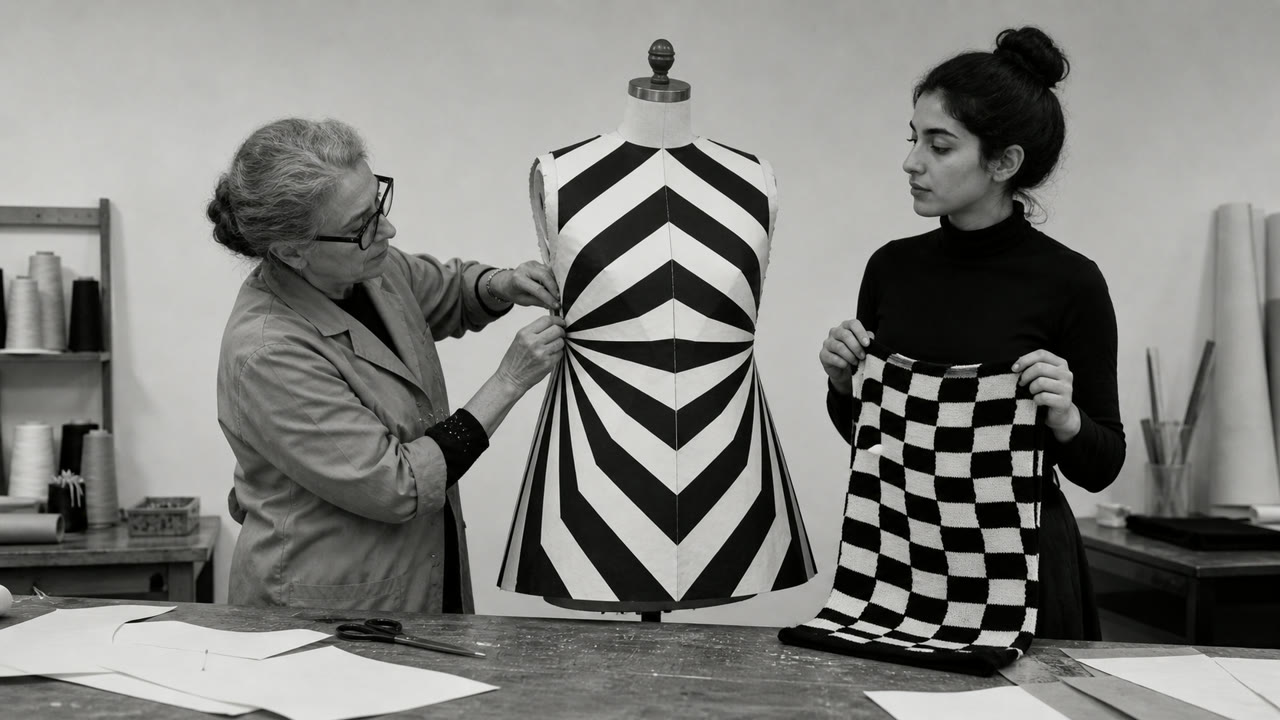
- Use a straight form with few seams and carry the optical period uninterrupted from chest to hem.
- Material
- Vary line width and spacing in two high-contrast colors, then fit-test how stretch and curvature alter the effect.
- Precaución
- Not every geometric print is Op Art. The structure must create perceptual vibration, expansion or depth.
- Para profundizar
- 1966 Scott Paper op-art dress / Bridget Riley and optical pattern / Paper clothing and mass promotion
Entradas relacionadas
- Op Art (オプ・アート)Efectos compartidos: Exhilaration / Technique.Comparar Op Art Fashion y Op Art
- Space Age Fashion (スペースエイジ・ファッション)Misma familia: Historia de la moda.Comparar Op Art Fashion y Space Age Fashion
Más de Historia de la moda
Continúa con estilos de Historia de la moda, priorizados por sus efectos compartidos.
- Flapper (フラッパー)Efectos compartidos: Exhilaration / Play.
- Meisen Kimono (銘仙)Efectos compartidos: Play / Exhilaration.
- Camp Fashion (キャンプ・ファッション)Efectos compartidos: Play / Exhilaration.
Ver todas las entradas de Historia de la moda
Citar esta entrada
El diccionario existe para que se enlace. Toma la forma que encaje donde estés escribiendo.
- Link
- https://indexstyle.org/es/styles/op-art-fashion
- Markdown
- [Op Art Fashion — IndexStyle](https://indexstyle.org/es/styles/op-art-fashion)
- HTML
- <a href="https://indexstyle.org/es/styles/op-art-fashion">Op Art Fashion — IndexStyle</a>