Neo-Dada
ネオ・ダダ / 1953–1965 / 风格 / 战后美国艺术
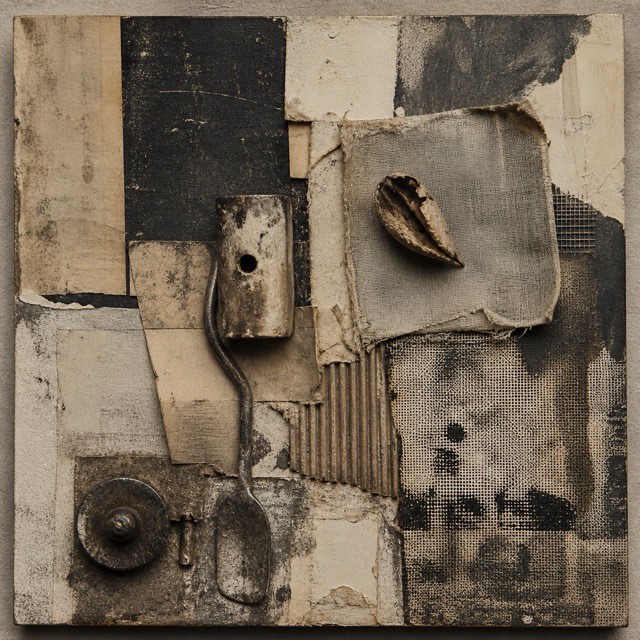
针对抽象表现主义的内向性,把日用品、印刷品与剥制标本带入画面,试图在艺术与生活的缝隙中创作的战后潮流。它承继达达的手法,又把消费社会的材料本身当作构成材料。这是紧接波普艺术之前的分岔点。


快速判断
视觉特征
- 把现成品带入画面
- 印刷品的丝网转印
- 介于绘画与立体之间的形态
- 涂抹、叠加与弄脏的痕迹
适用场景
- 展览和实验音乐的告示,想把捡来的印刷品原样做成版时
- 产品的记录集,想连使用痕迹一起当作素材呈现时
使用这一风格
把简短指引带入项目,或将结构化规格交给AI工具。
详细方法与出处制作规则、真实案例、比较、研究与引用格式
辞典词条
- 字体
- 把报纸和单据上的字转印上版,再局部抹去。
- 版面
- 让平面与实物共处,不掩盖两者的交界。
- 材料
- 把现成品固定在画面上,保留套印的错位和污渍。
- 注意
- 只是把现成品贴上去,看不出选择的理由,最后成了摆小玩意儿的架子。排得整整齐齐,作品所依赖的污渍和尺度就消失,只剩干净的装饰。
- 延伸阅读
- The definition of the Combine painting / Japan's Neo-Dadaism Organizers / Its proximity to Fluxus
相关词条
- Dada (ダダ)共同感受:Rebellion / Play。比较Neo-Dada与Dada
- Pop Art (ポップアート)共同感受:Play。比较Neo-Dada与Pop Art
常被混淆的对象
继续浏览战后美国艺术
从战后美国艺术中按共同感受优先推荐以下词条。
- Funk Art (ファンク・アート)共同感受:Play / Rebellion。
- Abstract Expressionism (抽象表現主義)共同感受:Rebellion。
- Conceptual Art (コンセプチュアル・アート)共同感受:Rebellion。
引用此条目
这部辞典就是用来被链接的。请取用适合你写作场合的那一种形式。
- Link
- https://indexstyle.org/zh/styles/neo-dada
- Markdown
- [Neo-Dada — IndexStyle](https://indexstyle.org/zh/styles/neo-dada)
- HTML
- <a href="https://indexstyle.org/zh/styles/neo-dada">Neo-Dada — IndexStyle</a>