Neo-Dada
ネオ・ダダ / 1953–1965 / 양식 / 전후 미국 미술
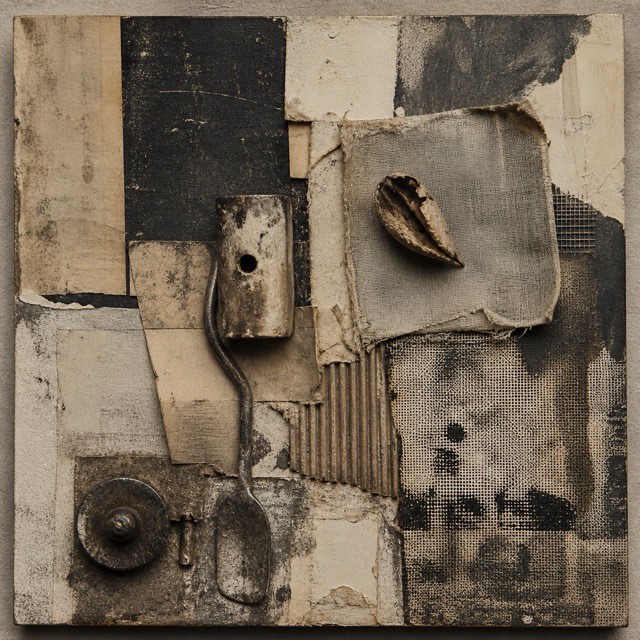
추상표현주의의 내면성에 맞서 일용품과 인쇄물, 박제를 화면으로 끌어들여 예술과 생활의 틈에서 만들고자 한 전후의 흐름. 다다의 손놀림을 이어받으면서 소비사회의 재료 자체를 구성 재료로 삼았다. 팝아트 직전의 분기점.


한눈에 판단
시각적 특징
- 기성품을 화면으로 끌어들이기
- 인쇄물의 실크스크린 전사
- 회화와 입체의 중간 형태
- 지우고 겹치고 더럽힌 흔적
적합한 용도
- 전시나 실험음악 공지에서 주워 온 인쇄물을 그대로 판으로 삼고 싶을 때
- 제품 기록집에서 사용 흔적까지 소재로 보여주고 싶을 때
이 양식 사용하기
짧은 지침을 프로젝트에 적용하거나 구조화된 사양을 AI 도구에 넘길 수 있습니다.
자세한 제작법과 출처제작 규칙, 실제 사례, 비교, 연구, 인용 형식
사전 항목
- 타이포그래피
- 신문과 전표의 글자를 판으로 전사하고 부분적으로 지운다.
- 구성
- 평면과 실물을 함께 두고 둘의 경계를 감추지 않는다.
- 재료
- 기성품을 화면에 고정하고 인쇄가 어긋난 자국과 얼룩을 남긴다.
- 주의
- 기성품을 붙이기만 해서는 고른 이유가 보이지 않아 잡화 진열장이 된다. 가지런히 늘어놓으면 작품이 기대는 얼룩과 치수가 사라지고 깔끔한 장식으로 끝난다.
- 더 읽을거리
- The definition of the Combine painting / Japan's Neo-Dadaism Organizers / Its proximity to Fluxus
관련 항목
- Dada (ダダ)공통 인상: Rebellion / Play.Neo-Dada와 Dada 비교
- Pop Art (ポップアート)공통 인상: Play.Neo-Dada와 Pop Art 비교
자주 혼동되는 것
전후 미국 미술 더 보기
전후 미국 미술에서 공통 인상이 많은 항목을 우선해 골랐습니다.
- Funk Art (ファンク・アート)공통 인상: Play / Rebellion.
- Abstract Expressionism (抽象表現主義)공통 인상: Rebellion.
- Conceptual Art (コンセプチュアル・アート)공통 인상: Rebellion.
이 항목을 인용하기
사전은 링크되기 위해 있다. 글을 쓰는 자리에 맞는 형식을 그대로 가져가면 된다.
- Link
- https://indexstyle.org/ko/styles/neo-dada
- Markdown
- [Neo-Dada — IndexStyle](https://indexstyle.org/ko/styles/neo-dada)
- HTML
- <a href="https://indexstyle.org/ko/styles/neo-dada">Neo-Dada — IndexStyle</a>