Guerrilla Television
ゲリラ・テレビジョン / late 1960s–1980s / 风格 / 实验电影
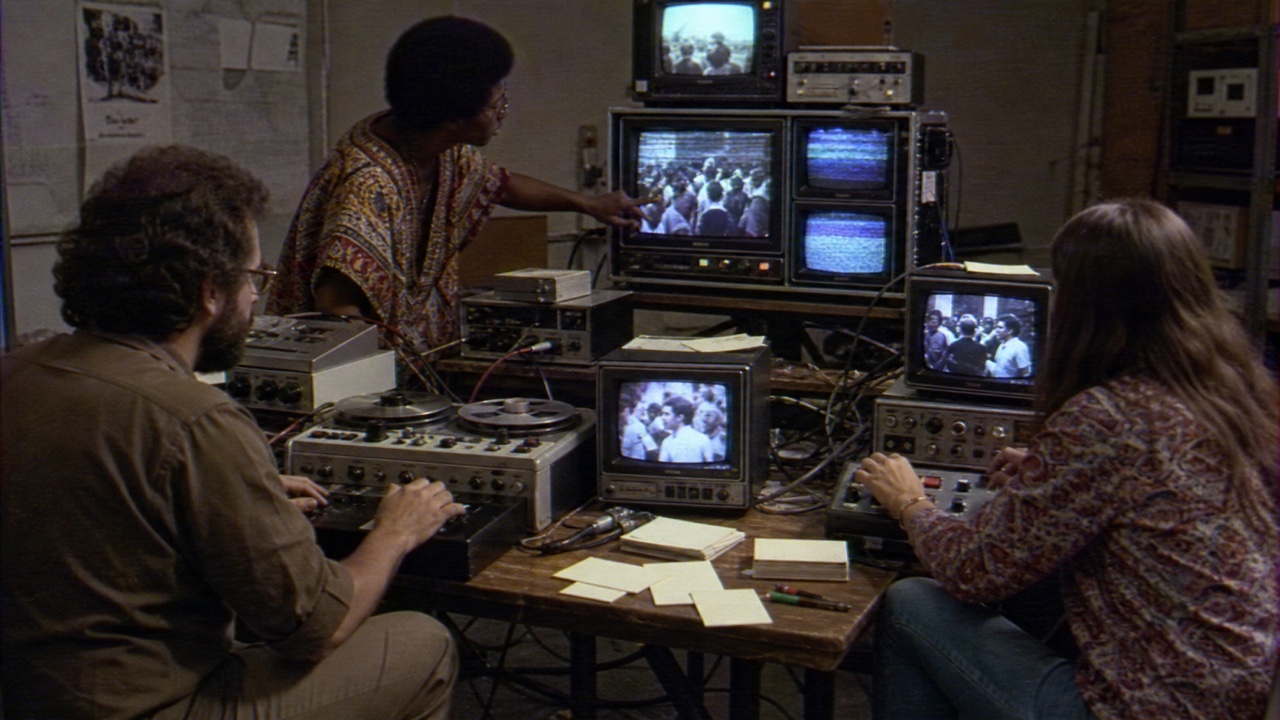
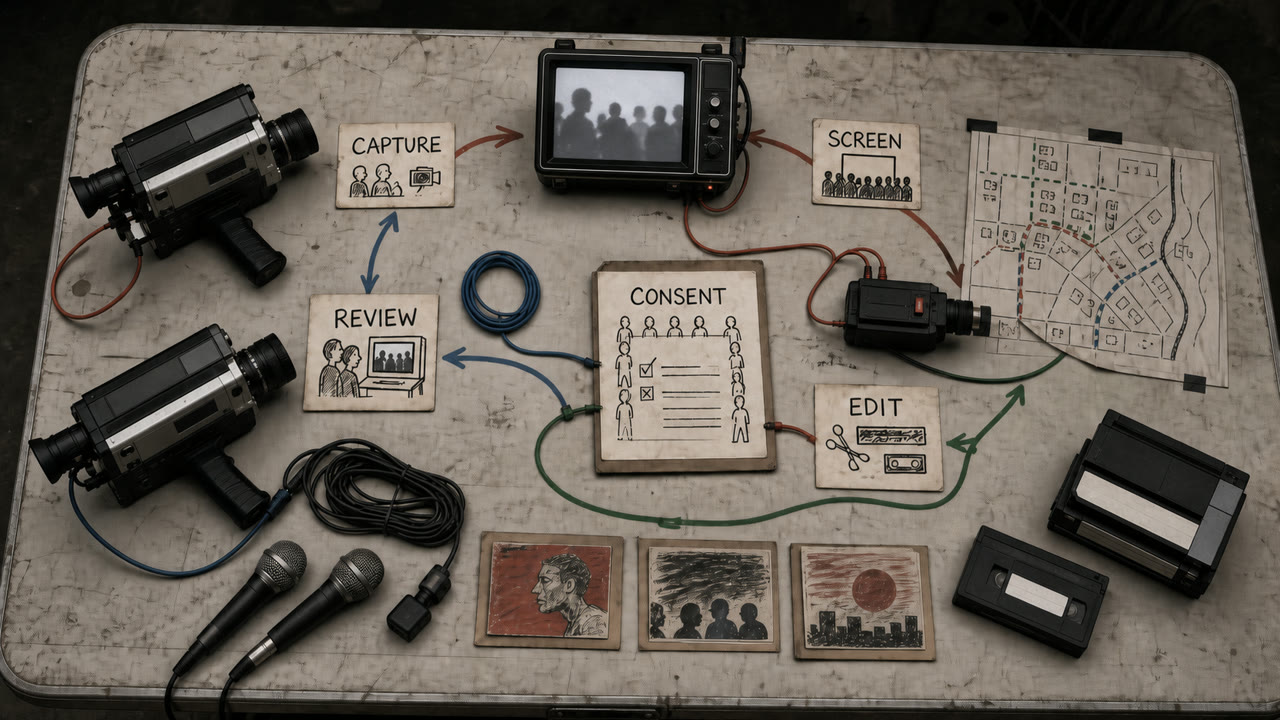
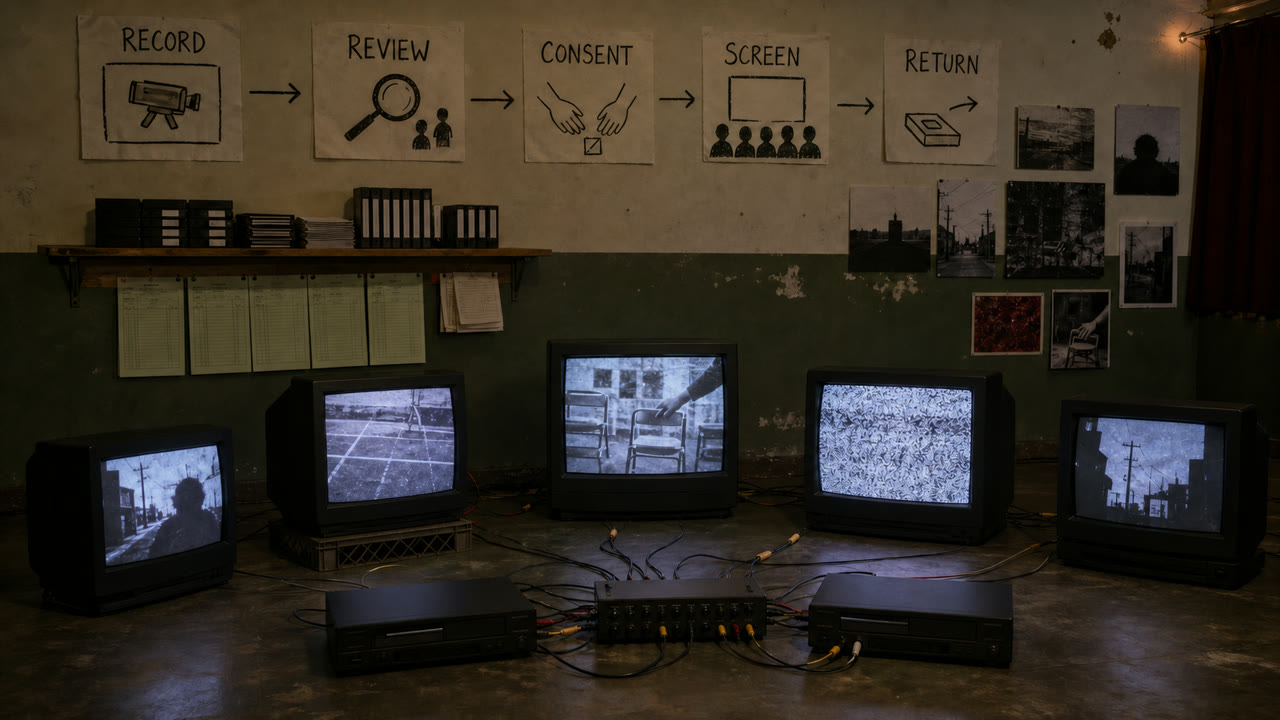
一种媒体运动,小团体使用便携式视频来反对广播权威和单向沟通,记录示威活动、社区和机构,以便进行快速编辑和替代传播。低分辨率、手持访问、反馈、直接标题和多视角构成了它的语言。
快速判断
视觉特征
- 低分辨率的便携式视频、轨迹、剪切和掉落
- 嵌入在事件中的长镜头
- 手写的卡片、粗糙的电子字体和直接的时间或地点标签
- 拆分屏幕、反馈和重新拍摄,从而破坏广播图像
适用场景
- Making viewpoint and production process visible in civic media
- Composing several field records with electronic titles and transmission traces
使用这一风格
把简短指引带入项目,或将结构化规格交给AI工具。
详细方法与出处制作规则、真实案例、比较、研究与引用格式
辞典词条
- 字体
- State place, time, and speaker with coarse electronic type or cards; never borrow a station identity to fake authority.
- 版面
- Keep field footage primary and use split screen, reshooting, or feedback only to expose conflicting viewpoints.
- 材料
- Retain portable-video resolution, location sound, and tape loss instead of applying one uniform malfunction filter.
- 注意
- VHS noise alone does not create counter-media. Name the makers, community, circulation, and consent, and do not imitate real stations or emergency broadcasts.
- 延伸阅读
- Raindance Corporation and Radical Software / TVTV, Ant Farm and portable video collectives / community media and counter-broadcast networks
相关词条
- Video Synthesis (ビデオ・シンセシス)同属实验电影。比较Guerrilla Television与Video Synthesis
- Conceptual Art (コンセプチュアル・アート)共同感受:Rebellion。比较Guerrilla Television与Conceptual Art
继续浏览实验电影
从实验电影中按共同感受优先推荐以下词条。
- Direct Animation (ダイレクト・アニメーション)共同感受:Rebellion / Intimacy。
- Visual Music (ヴィジュアル・ミュージック)共同感受:Technique。
引用此条目
这部辞典就是用来被链接的。请取用适合你写作场合的那一种形式。
- Link
- https://indexstyle.org/zh/styles/guerrilla-television
- Markdown
- [Guerrilla Television — IndexStyle](https://indexstyle.org/zh/styles/guerrilla-television)
- HTML
- <a href="https://indexstyle.org/zh/styles/guerrilla-television">Guerrilla Television — IndexStyle</a>