Eco-Beige vs Gen X Soft Club
エコ・ベージュ / ジェネレーションX ソフトクラブ
Eco-Beige comes from Furniture and Interiors and Gen X Soft Club from Digital Retro. They are reached for with different intent, which is the fastest way to tell them apart.
Eco-Beige
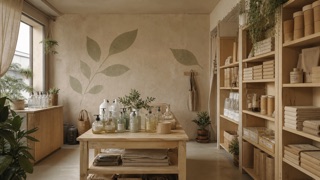
An early-1990s consumer aesthetic that turns away from 1980s gloss through unbleached cloth, branches, pale wood, earth walls, and natural color. It is less raw nature than a staged appearance of restraint and environmental virtue.
Gen X Soft Club


Paints vague hope for the future in the teal glow bleeding through club darkness.
| Eco-Beige | Gen X Soft Club | |
|---|---|---|
| Era | late 1980s–mid-1990s | late 1990s |
| Family | Furniture and Interiors | Digital Retro |
| Kind | Style | Style |
| Cues | Low-saturation ecru, sand, and pale gray-green / Linen, raffia, branches, pale wood, and rough plaster / Small serif type and widely spaced labels / Quiet product photography arranging plants and craft materials | Teal / Blurred light / Translucency / Abstract 3D |
| Best used for | Food, cosmetics, and household goods needing the historical feel of early environmental branding · Reconstructed early-1990s retail and residential advertising | Nocturnal softness for music and fashion · A calmer retro-future than Y2K |
| Type | Use a small oldstyle serif or humanist sans with wide tracking and short lines. | Thin extended or monospace faces |
| Composition | Leave the center open, line up a few material samples low in the frame, and move explanation into the margins. | Float elements at low contrast |
| Material | Use unbleached cloth, raffia, pale timber, rough paper, and earth-colored plaster without gloss. | Blue, green, black, lens blur |
| Caution | Beige alone becomes contemporary minimalist packaging. Include period-specific natural materials, craft signals, and staged product photography. | Blur alone erases the contours. Keep the title or a structural line hard. |