Concrete Art
コンクリート・アート / 1930s–1960s / Style / Geometric Abstraction
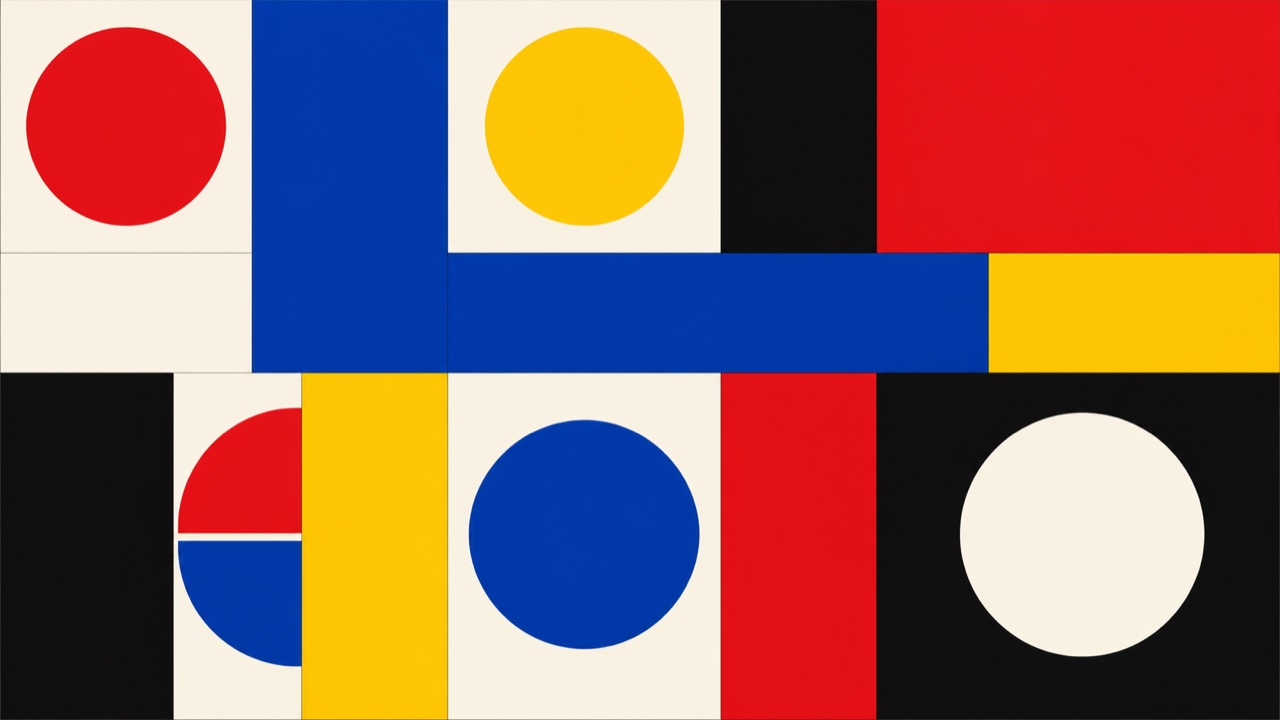
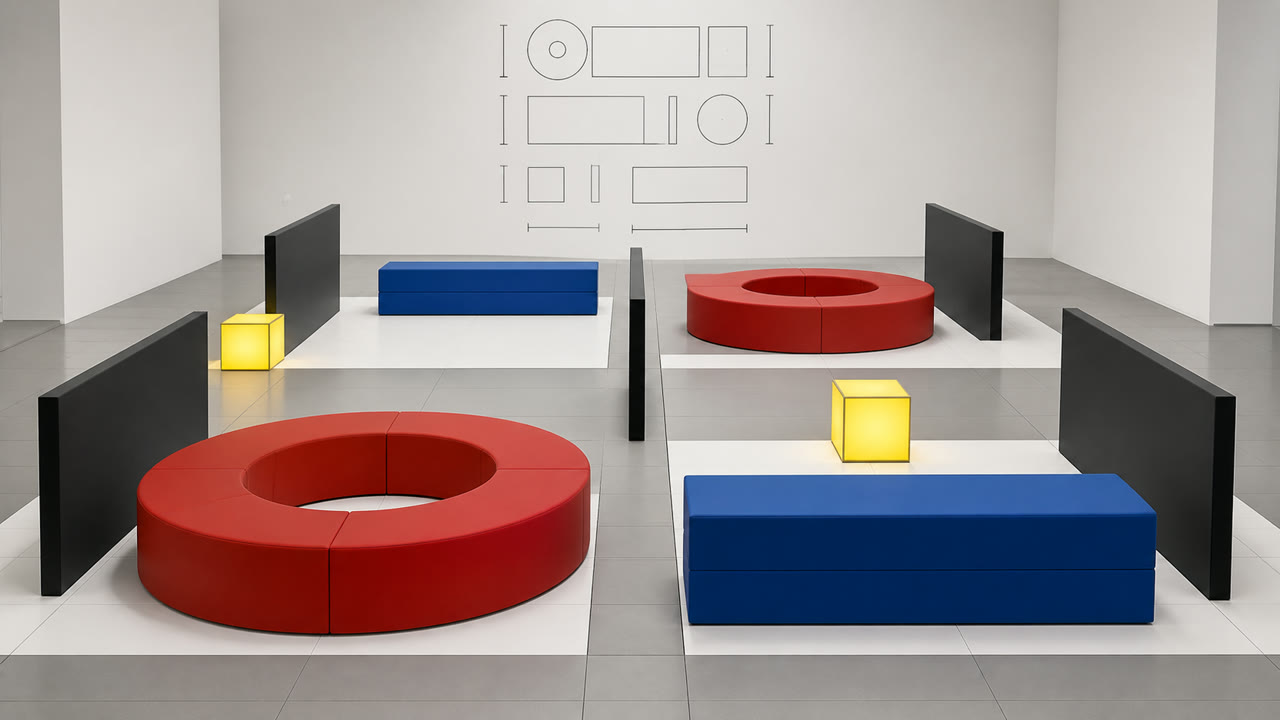
A movement constructing autonomous compositions only from line, plane, color, and proportion rather than abstracting nature or narrative. It suppresses chance and brushwork in favor of measurable relations and clear color fields across painting, print, object, and graphic design.
.jpg)
At a glance
Visual cues
- Circles, rectangles, and lines placed by measurable ratios
- Hard color boundaries without expressive brushwork
- Flat relations without perspective or natural outlines
- Variation produced from a small palette and repeated unit
Best used for
- Building identity from proportion and color rather than imagery
- Extending one geometric rule across painting, signage, and objects
Use this style
Take the compact brief into a project or hand the structured version to an AI tool.
Detailed guidance and sourcesProduction rules, reference works, comparisons, research and citation formats
Dictionary entry
- Type
- Use a neutral geometric sans and place type width and size on the same numerical series as the forms.
- Composition
- Set the unit and ratios first, lock forms to a grid, and keep every position numerically reproducible.
- Material
- Use opaque color and a smooth support, masking boundaries to suppress accidental bleed and gesture.
- Caution
- Geometric shapes arranged by feel do not yet form concrete relations. Keep Neo-Concrete bodily participation and soft transformation as a distinct response.
- Further study
- Theo van Doesburg's 1930 manifesto / Max Bill and concrete art / Brazilian Arte Concreta and Neo-Concrete response
Related entries
- De Stijl (デ・ステイル)Same Geometric Abstraction lineage.Compare Concrete Art and De Stijl
- Neo-Concrete Art (ネオ・コンクリート・アート)Editorially linked for a useful contrast.Compare Concrete Art and Neo-Concrete Art
More from Geometric Abstraction
Continue through styles in the same Geometric Abstraction family, prioritised by shared effects.
- Neo-Impressionism (新印象主義)Shared effects: Technique / Trust / Calm.
- Hard-Edge Painting (ハードエッジ・ペインティング)Shared effects: Trust / Technique / Calm.
- Geometric Abstraction (幾何学的抽象)Shared effects: Technique / Calm / Trust.
Browse all Geometric Abstraction entries
Cite this entry
The dictionary is meant to be linked to. Take whichever form fits where you are writing.
- Link
- https://indexstyle.org/styles/concrete-art
- Markdown
- [Concrete Art — IndexStyle](https://indexstyle.org/styles/concrete-art)
- HTML
- <a href="https://indexstyle.org/styles/concrete-art">Concrete Art — IndexStyle</a>