DeepDream
ディープドリーム / 2015– / Técnica / Arte digital
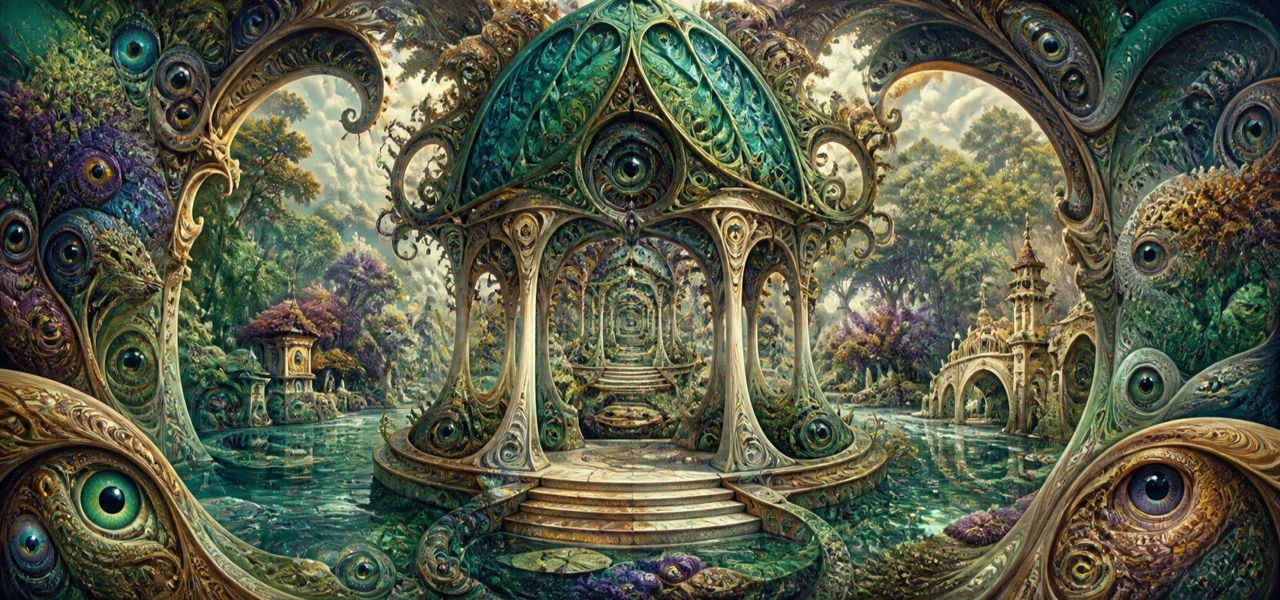
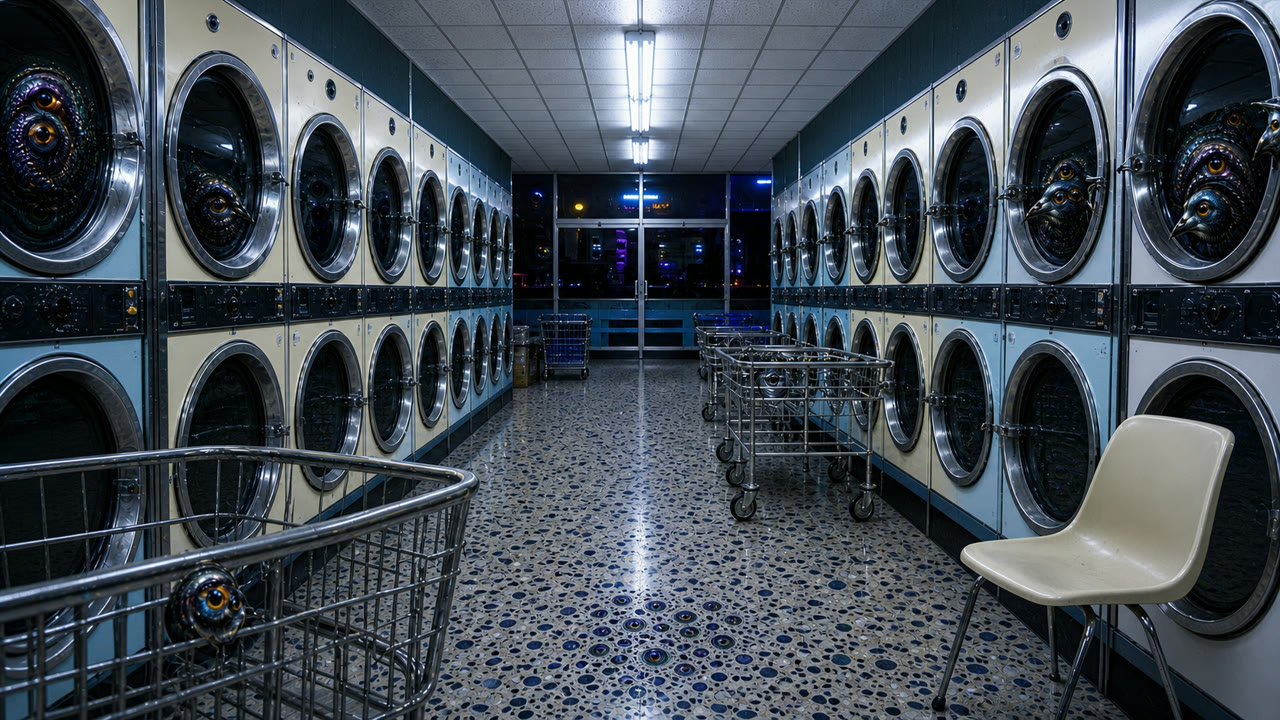
La técnica de visualización de Google amplifica repetidamente los rasgos aprendidos por una red de reconocimiento de imágenes, haciendo emerger ojos, animales y torres de nubes, rocas y hojas hasta convertir el error de reconocimiento en una superficie alucinatoria recursiva.

De un vistazo
Rasgos visuales
- Ojos y rostros animales repetidos por todo el encuadre
- Textura arremolinada que se multiplica a lo largo de los contornos originales
- Repetición a varias escalas que revela nuevas figuras al acercarse
- Azules, amarillos y violetas saturados que fluyen de forma continua
Usos idóneos
- Exhibits and critical images that make machine misrecognition immediately visible
- Music video and cover imagery that keeps a source landscape beneath a multi-scale hallucination
Usar este estilo
Lleva el resumen al proyecto o entrega la especificación estructurada a una herramienta de IA.
Guía detallada y fuentesReglas de producción, obras de referencia, comparaciones, investigación y citas
Entrada del diccionario
- Tipografía
- Add type after processing, keeping it short, bold and simple enough not to fight the detail.
- Composición
- Preserve the source's large composition and amplify related features at several scales to create recursion into depth.
- Material
- Choose layers in a trained vision model and iteratively increase their activation through gradient ascent.
- Precaución
- It is not a swirl filter or pasted dog faces. Preserve which layer and feature were amplified and how they bind to the source.
- Para profundizar
- Feature visualization and layer selection / Iterative zoom and octave scales / GoogLeNet ImageNet feature bias
Entradas relacionadas
- Generative Art (ジェネラティブアート)Misma familia: Arte digital.Comparar DeepDream y Generative Art
- Psychedelic (サイケデリック)Efectos compartidos: Exhilaration.Comparar DeepDream y Psychedelic
Más de Arte digital
Continúa con estilos de Arte digital, priorizados por sus efectos compartidos.
- Low Poly (ローポリ)Efectos compartidos: Technique / Futurity.
- Cracktro (クラックトロ)Efectos compartidos: Technique / Exhilaration.
- Net.art (ネット・アート)Efectos compartidos: Technique.
Ver todas las entradas de Arte digital
Citar esta entrada
El diccionario existe para que se enlace. Toma la forma que encaje donde estés escribiendo.
- Link
- https://indexstyle.org/es/styles/deepdream
- Markdown
- [DeepDream — IndexStyle](https://indexstyle.org/es/styles/deepdream)
- HTML
- <a href="https://indexstyle.org/es/styles/deepdream">DeepDream — IndexStyle</a>