Western Wear
ウェスタン・ウェア / 19th century– / Style / Fashion History
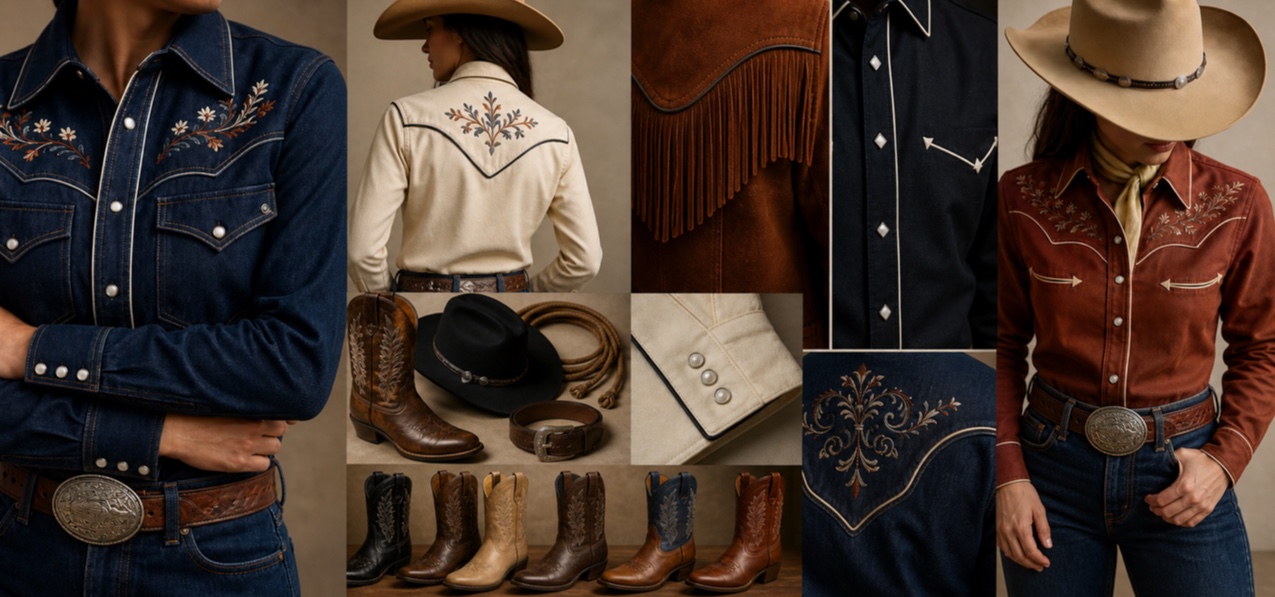
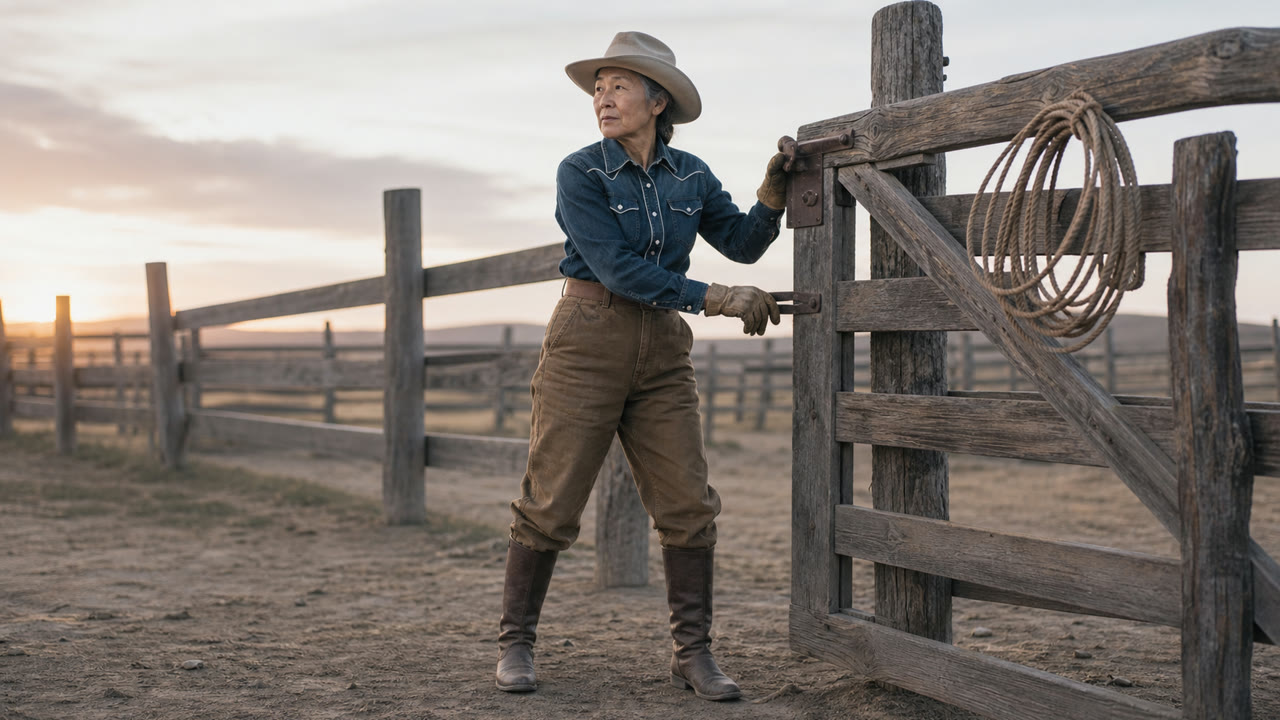
Western wear developed from ranch and riding utility into rodeo, film and country stage dress, adding embroidery, fringe, studs and emphatic color to functional yokes, snaps, boots and hats.

At a glance
Visual cues
- Pointed western yokes dividing chest and back
- Curved-brim hat and high-shaft boots
- Pearl-like snaps and contrast piping
- Symmetric embroidery, fringe and studs
Best used for
- Designing shirts, boots and outerwear that retain riding function
- Making a western silhouette legible at distance through stage embroidery and color
Use this style
Take the compact brief into a project or hand the structured version to an AI tool.
Detailed guidance and sourcesProduction rules, reference works, comparisons, research and citation formats
Dictionary entry
- Type
- Run a narrow slab serif or drawn sign face along garment curves.
- Composition
- Divide shoulder and chest with a yoke and flow mirrored embroidery along edges and pockets.
- Material
- Start with denim, suede, leather and pearl-like snaps, adding metallic thread, stones and fringe only for performance.
- Caution
- Do not use a cowboy hat as a lone symbol. Distinguish riding construction from decoration added by rodeo and music.
- Further study
- Working cowboy clothing / Rodeo tailoring / Nudie suits and country performance
Related entries
- Biker Style (バイカー・スタイル)Shared effects: Exhilaration.Compare Western Wear and Biker Style
- Teddy Boys (テディボーイズ)Shared effects: Nostalgia.Compare Western Wear and Teddy Boys
More from Fashion History
Continue through styles in the same Fashion History family, prioritised by shared effects.
- Meisen Kimono (銘仙)Shared effects: Exhilaration / Nostalgia.
- Ivy Style (アイビー・スタイル)Shared effects: Intimacy / Nostalgia.
- Sportswear as Fashion (スポーツウェア・ファッション)Shared effects: Intimacy / Exhilaration.
Browse all Fashion History entries
Cite this entry
The dictionary is meant to be linked to. Take whichever form fits where you are writing.
- Link
- https://indexstyle.org/styles/western-wear
- Markdown
- [Western Wear — IndexStyle](https://indexstyle.org/styles/western-wear)
- HTML
- <a href="https://indexstyle.org/styles/western-wear">Western Wear — IndexStyle</a>