Teddy Boys vs Western Wear
テディボーイズ / ウェスタン・ウェア
Teddy Boys comes from Subculture Style and Western Wear from Fashion History. They are reached for with some of the same intent, which is where they get confused.
Teddy Boys

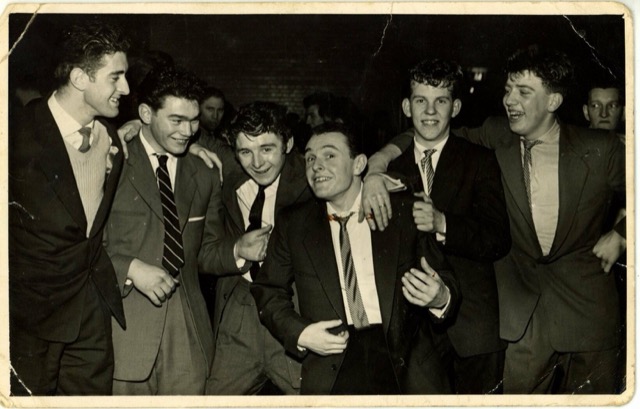

Working-class youths appropriated Edwardian upper-class dress. Postwar Britain's first youth subculture, it set the pattern for every youth culture that followed.
Western Wear

Western wear developed from ranch and riding utility into rodeo, film and country stage dress, adding embroidery, fringe, studs and emphatic color to functional yokes, snaps, boots and hats.
| Teddy Boys | Western Wear | |
|---|---|---|
| Era | 1950s– | 19th century– |
| Family | Subculture Style | Fashion History |
| Kind | Style | Style |
| Cues | Long drape jackets / Slim ties / Crepe-soled shoes / The quiff | Pointed western yokes dividing chest and back / Curved-brim hat and high-shaft boots / Pearl-like snaps and contrast piping / Symmetric embroidery, fringe and studs |
| Best used for | Borrowing dress from a higher class and shifting what it means · Building a group look tied to music through agreed details | Designing shirts, boots and outerwear that retain riding function · Making a western silhouette legible at distance through stage embroidery and color |
| Type | No lettering, the hair and the shoe declare the affiliation | Run a narrow slab serif or drawn sign face along garment curves. |
| Composition | Drop the jacket long and add contrast collar and cuffs to stress the vertical | Divide shoulder and chest with a yoke and flow mirrored embroidery along edges and pockets. |
| Material | Thick crepe soles, narrow woven ties, cloth that takes a drape | Start with denim, suede, leather and pearl-like snaps, adding metallic thread, stones and fringe only for performance. |
| Caution | The more carefully the Edwardian detail is reproduced the more authentic it looks, and the joke about class quietly disappears. | Do not use a cowboy hat as a lone symbol. Distinguish riding construction from decoration added by rodeo and music. |