Hudson River School
ハドソン・リヴァー派 / 1820s–1870s / Style / Landscape Painting
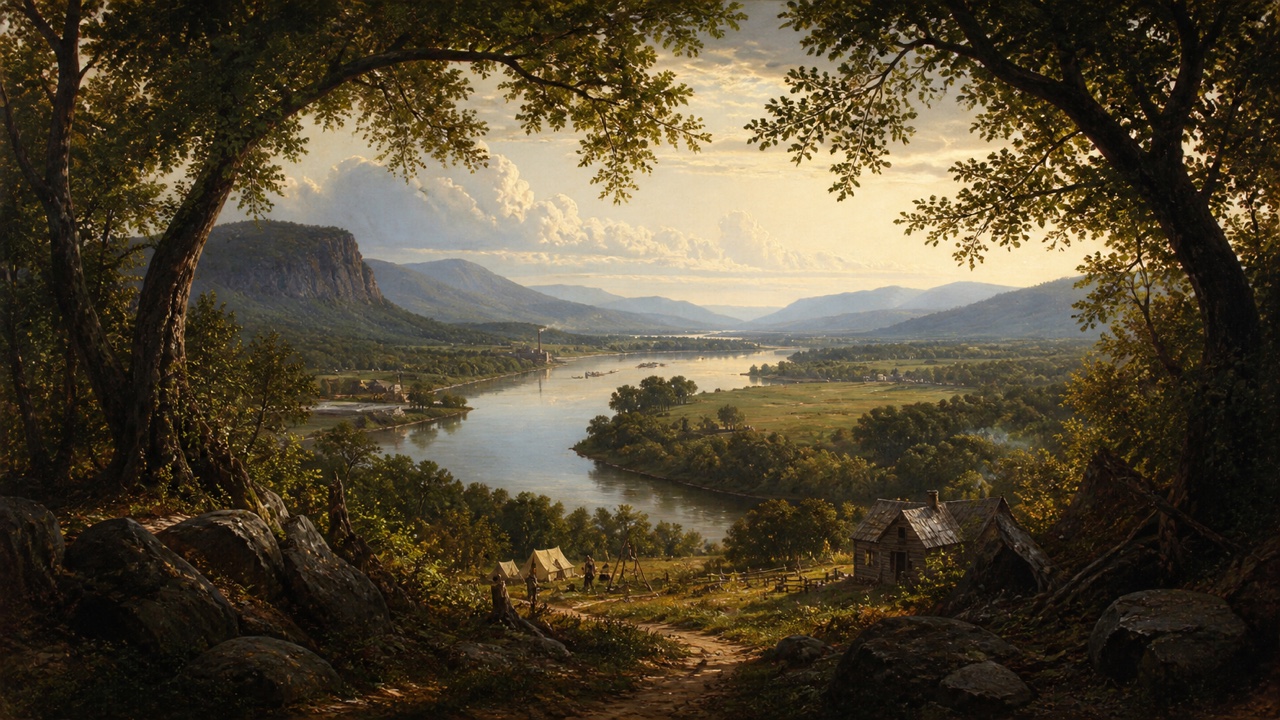
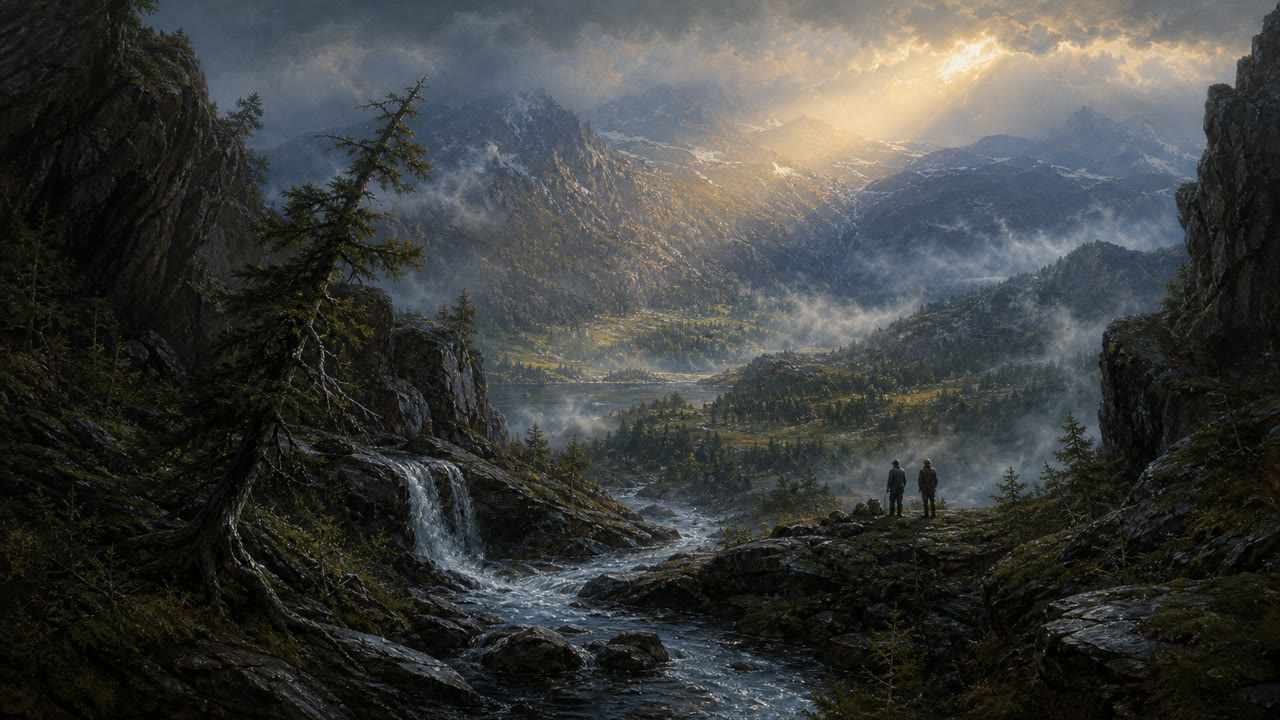
A nineteenth-century American landscape language that joined mountains, rivers, and forests to national grandeur, spirituality, and expansion through immense distance, precise detail, and theatrical light.

At a glance
Visual cues
- Vast distance framed by dark trees or rock
- Golden light breaking onto a valley or water
- Tiny people or buildings against immense nature
- Precise vegetation, geology, and atmospheric depth
Best used for
- Making geographic scale and light the protagonists of an environmental exhibition
- Placing human activity at a small scale so a campaign can carry deep time and distance
Use this style
Take the compact brief into a project or hand the structured version to an AI tool.
Detailed guidance and sourcesProduction rules, reference works, comparisons, research and citation formats
Dictionary entry
- Type
- Set place names and distances in a fine restrained serif.
- Composition
- Frame the sides with dark foreground, lead through water in the middle distance, and open into a luminous sky.
- Material
- Glaze deep greens and browns, reserving transparent blue-grey and gold for the far distance.
- Caution
- Do not present a sublime empty wilderness while erasing Indigenous land and the politics of expansion. Keep the composition more dramatic and narrative than Luminism.
- Further study
- Thomas Cole and the Catskill Mountains / Frederic Edwin Church and exhibition pictures / landscape, nationhood and Indigenous dispossession
Related entries
- Luminism (ルミニズム)Shared effects: Calm.Compare Hudson River School and Luminism
- Romanticism (ロマン主義)Shared effects: Exhilaration.Compare Hudson River School and Romanticism
More from Landscape Painting
Continue through styles in the same Landscape Painting family, prioritised by shared effects.
- Barbizon School (バルビゾン派)Shared effects: Calm / Trust.
- Group of Seven (グループ・オブ・セヴン)Shared effects: Exhilaration / Calm.
Browse all Landscape Painting entries
Cite this entry
The dictionary is meant to be linked to. Take whichever form fits where you are writing.
- Link
- https://indexstyle.org/styles/hudson-river-school
- Markdown
- [Hudson River School — IndexStyle](https://indexstyle.org/styles/hudson-river-school)
- HTML
- <a href="https://indexstyle.org/styles/hudson-river-school">Hudson River School — IndexStyle</a>