Social Realism
ソーシャル・リアリズム / 1920s–1940s / Style / Estampe et mouvements sociaux
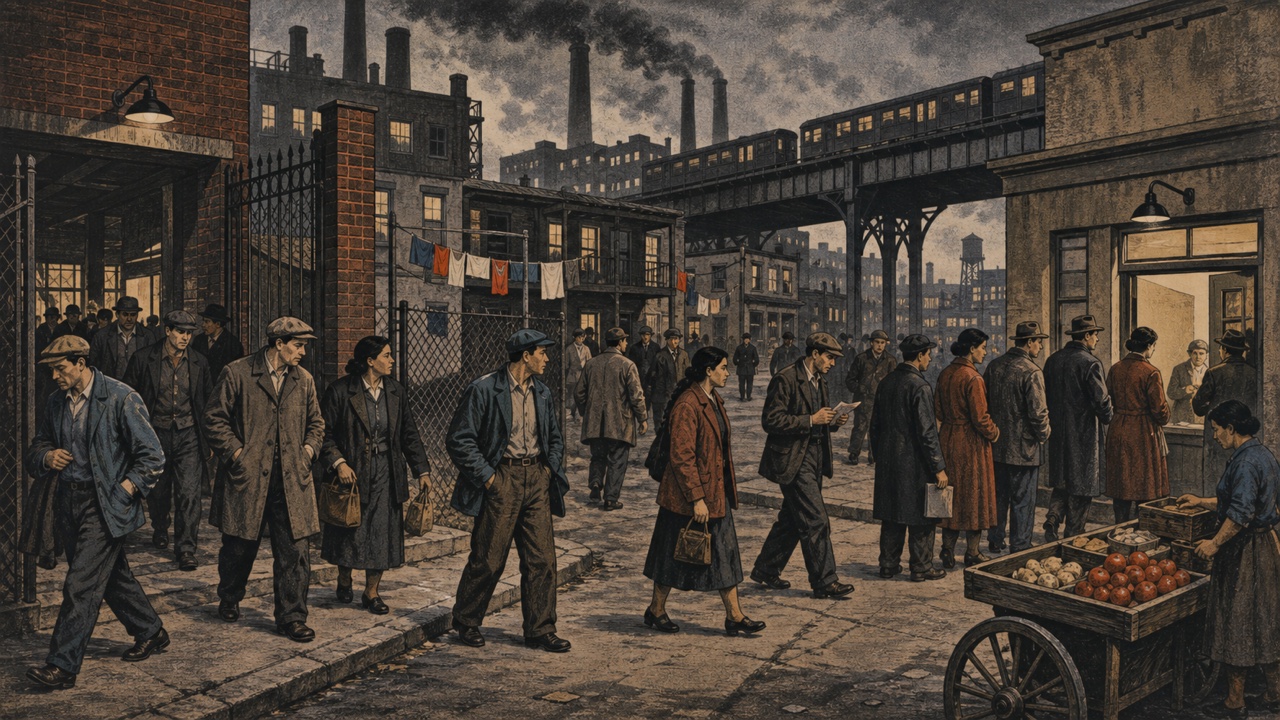
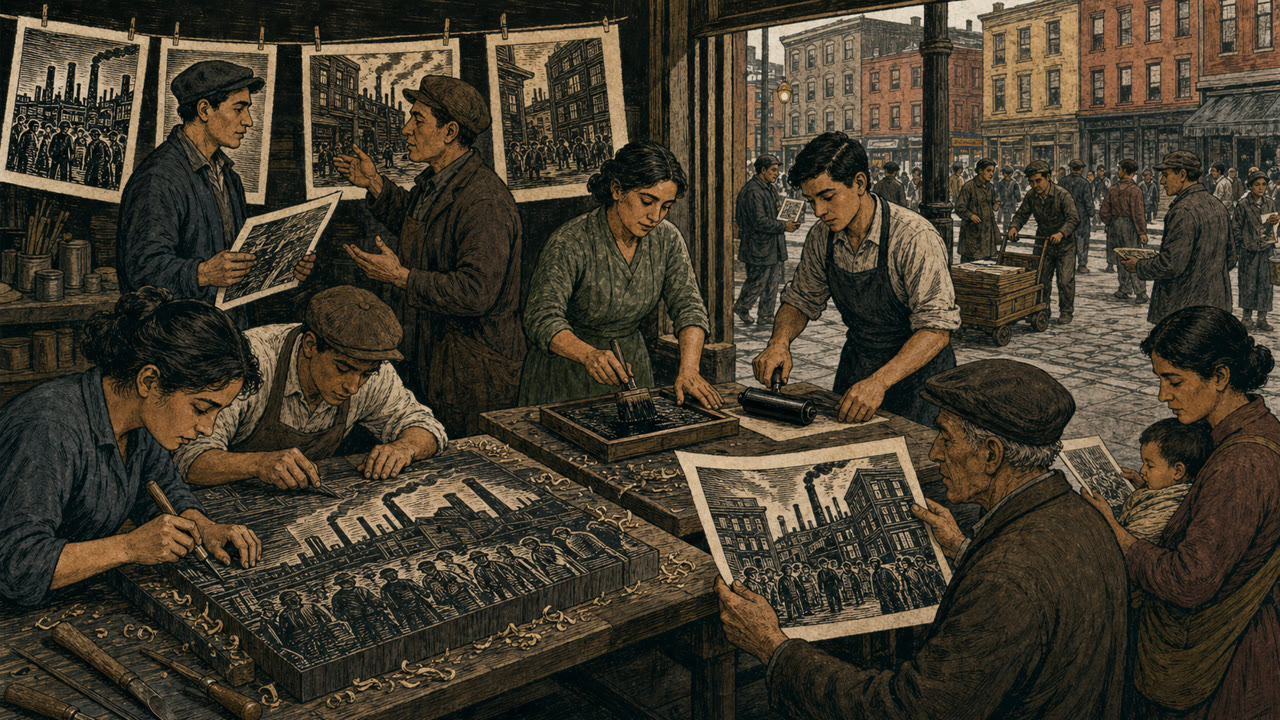
Le réalisme social a utilisé des figures lisibles, l'art public, l'imprimerie et la photographie pour exposer le travail contemporain, la pauvreté, le racisme, la migration et les conditions urbaines. Il est distinct du réalisme social prescrit par l'État.
.jpg)
En un coup d’œil
Signes visuels
- Travailleurs, personnes sans emploi, migrants et foule urbaine au centre
- Usines, logements et rues rendant les conditions lisibles
- Figuration directe s'étendant aux estampes, aux fresques et aux photographies
- Difficultés individuelles liées à des institutions ou à des problèmes collectifs
Usages idéaux
- Communicating labor and inequality publicly through people and environments rather than statistics alone
- Translating social critique into legible posters, murals, editorial work or exhibitions
Utiliser ce style
Appliquez le brief concis au projet ou transmettez la spécification structurée à un outil d’IA.
Guide détaillé et sourcesRègles de production, œuvres de référence, comparaisons, recherche et citations
Entrée du dictionnaire
- Typographie
- Use short direct headings plus names, places and dates; do not overwrite a subject's voice with decorative slogans.
- Composition
- Put human action forward and connect it to factories, streets, housing and crowds as readable causes and relations.
- Matière
- Use the forceful contrast of woodcut, lithograph, mural or grain-bearing photography suited to reproduction and public display.
- Précaution
- Do not consume labor or poverty as dramatic material. Separate it from the state heroics of Socialist Realism and state who represents whose conditions for what purpose.
- Pour approfondir
- Social Realism / Labor, inequality and urban life / Ben Shahn, Dorothea Lange and Mexican muralism
Entrées liées
- Realism (写実主義)Effets partagés : Trust / Rebellion / Intimacy.Comparer Social Realism et Realism
- Socialist Realism (社会主義リアリズム)Même famille : Estampe et mouvements sociaux.Comparer Social Realism et Socialist Realism
Plus de Estampe et mouvements sociaux
Poursuivez avec des styles de Estampe et mouvements sociaux, classés par effets communs.
- OSPAAAL Poster (OSPAAAL連帯ポスター)Effets partagés : Rebellion / Trust.
- Atelier Populaire (アトリエ・ポピュレール)Effets partagés : Rebellion / Intimacy.
- ACT UP Graphics (ACT UPのグラフィック)Effets partagés : Rebellion / Trust.
Voir toutes les entrées Estampe et mouvements sociaux
Citer cette entrée
Le dictionnaire est fait pour être lié. Prenez la forme qui convient là où vous écrivez.
- Link
- https://indexstyle.org/fr/styles/social-realism
- Markdown
- [Social Realism — IndexStyle](https://indexstyle.org/fr/styles/social-realism)
- HTML
- <a href="https://indexstyle.org/fr/styles/social-realism">Social Realism — IndexStyle</a>